By Dan Salter
Photos by Hannah Morgan
Last week we ran an opinion piece by our features editor making the case that Glastonbury, as the hippy ideal that it once was, is dead and all that remains is a corporate behemoth. I’d like to now argue that this simply isn’t true.
I went to my first Glastonbury in 1977 as a 5 year old and have been going on and off for the 35 years since then; I have also been to many, many other festivals in that time. I went this year for the first time since 2000 and the erecting of the ‘super wall’ and was fully prepared to be part of the ‘it’s not like it used to be’ crowd but actually nothing could have been further than the truth. What I found was the most vibrant, active and powerful example of music being used as a force for change that I have ever seen. Glastonbury didn’t die, it just grew up and got organised.

Yes, it’s true that it no longer has the endearingly shambolic organisation and it’s true that the ticket price now excludes all but a certain demographic cross section but that’s the realities of running an event on the scale of Glastonbury.
The modern music consumer wants a slick experience and if they don’t get it there are plenty of other places to go these days no matter what the heritage of the event is and in terms of cost you get 5 days and over 2000 bands, not to mention the many hundreds of other performers that take part. When you think about it like that it doesn’t seem too expensive now does it?
Many of those who bemoan Glastonbury’s apparent demise are failing to look beyond the main stages. It is true that some of the headline acts this year were a bit questionable, largely because these days there seems to be a dearth of bands of sufficient stature to fill those slots (that in itself is a discussion for another time), but frankly who cares when there’s so much going on that there’s actually no need to go anywhere near those stages and still not have time to get around everything that is worth seeing.
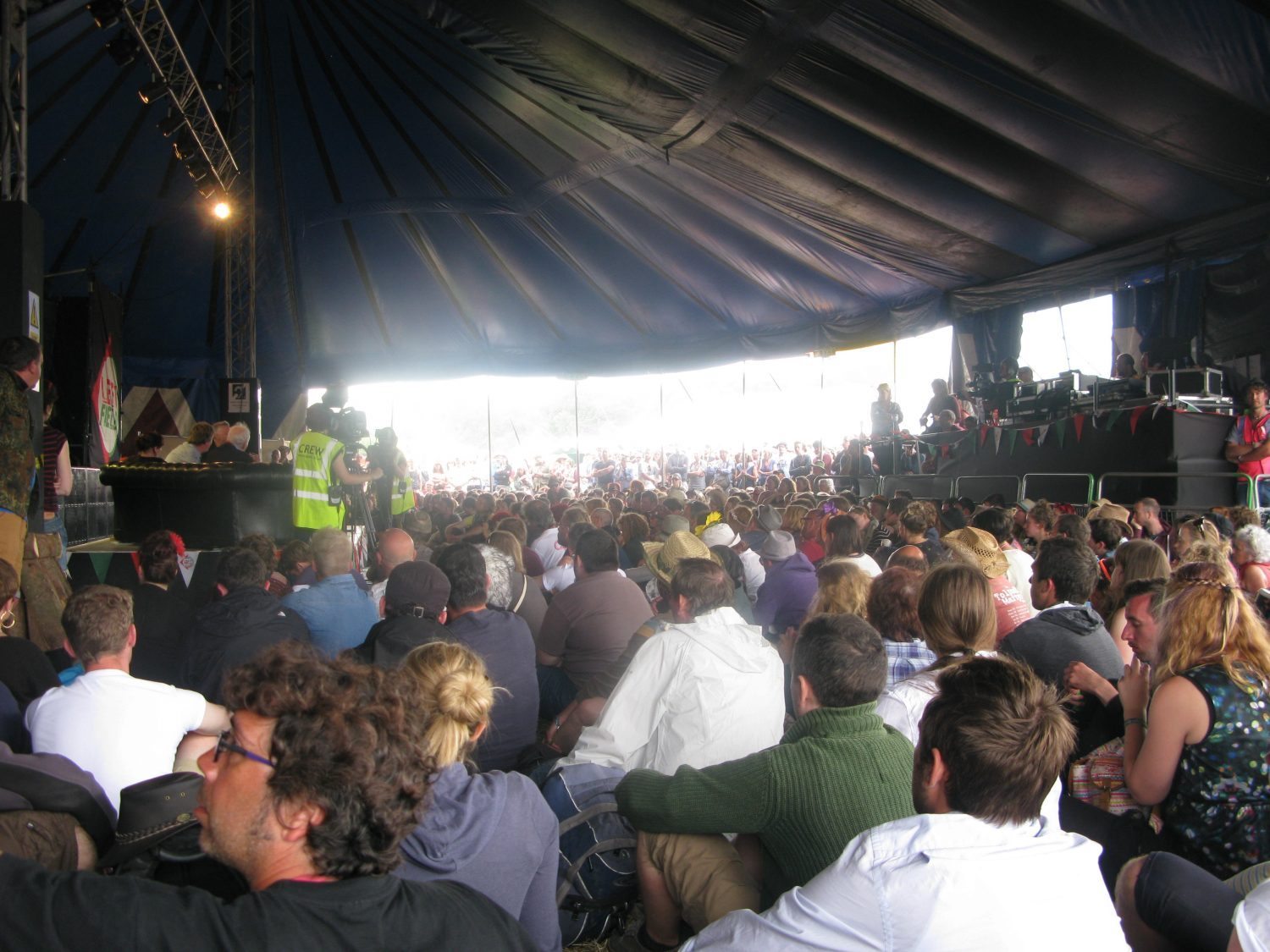
Where else would you find 2,000 people sitting in a tent like Leftfield, raptly attentive to Tony Benn's soaring rhetoric, while at the other end of the site you find hedonistic utopia in the bacchanalian splendor of Shangri-la; where else gives you a circus & theater FIELD, not tent, field, Greenfields, Avalon, Block 9, Spirit of 71, The Glade? The list just goes on & on, everywhere you look is the product of unbridled imagination.
More new, up and coming, undiscovered, obscure and downright obtuse bands get to play Glastonbury, to good, receptive crowds, than probably all the other festivals put together. That alone for me is why Glastonbury is not only not dead but continues to be one of the most vital music events in the global calendar.
Over and above all of that, Glastonbury is the friendliest place I've ever visited. Everyone is smiling, everyone is chatting, sharing tips and commiserating when things don't quite go to plan. When you complain that you sprinted all the way to the other stage with a raging hangover to see Atoms for Peace, only to arrive and find Beady Eye instead; when you complain to Beady Eye fans and they understand your disappointment rather than showering you with abuse, that's really quite something.
And that's entirely down to the atmosphere and creativity the site breathes. I'm not claiming Glastonbury somehow attracts a different type of festival goer; that's the point: the same people who go to V-festival and not speak to a single other person all weekend come to Glastonbury and meet 100 strangers within the space of 2 hours. And they love it. It doesn't change people, not forever (although Tom Watson may argue with that) - but for five days it makes humanity better.