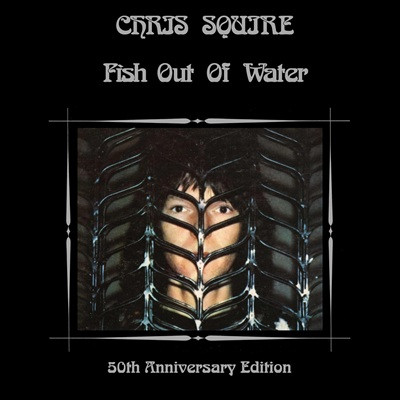
In 1975, Yes temporarily stepped away from group activities following the release of their landmark 1974 album Relayer, giving each member the opportunity to pursue a solo project. The result was an extraordinary collection of albums that showcased the individual personalities within the band.
Steve Howe delivered the eclectic Beginnings; Jon Anderson created the ambitious fantasy concept album Olias of Sunhillow; Alan White explored a more rock-oriented direction with Ramshackled; and Patrick Moraz embarked on the vibrant, energetic, and world music-inspired journey of The Story of I. Both Anderson’s and Moraz’s albums were later recognized by Classic Rock Magazine in issue 97 covering the history of Prog Rock in its “Maddest Prog Albums” feature as among progressive rock’s most adventurous recordings.
Yet among these solo releases stands an album that remains remarkably faithful to the classic Yes sound while establishing its own unique identity: Chris Squire‘s Fish Out of Water. Originally released on Atlantic Records in November 1975, it remains not only one of the finest solo albums produced by any member of Yes but also one of progressive rock’s most enduring hidden gems.
At the height of his creative powers, Squire crafted an album that perfectly balanced symphonic grandeur with emotional intimacy. His unmistakable Rickenbacker bass tone, rich vocal harmonies, and Andrew Pryce Jackman’s magnificent orchestral arrangements combine to create music that still sounds fresh and inspiring more than fifty years later.
Much of the album’s enduring appeal comes from the remarkable musicians who helped bring Squire’s vision to life. Bill Bruford returns behind the drum kit with his unmistakable precision, Patrick Moraz contributes dazzling keyboard performances, Andrew Pryce Jackman supplies elegant orchestral arrangements, Jimmy Hastings adds expressive woodwinds, Alan White appears on percussion, and King Crimson’s Mel Collins contributes beautifully textured saxophone and flute. Together they create a lush sonic landscape that blossoms with every listen, effortlessly blending progressive rock, classical music, jazz, and orchestral pop.
Listening to the album once again through Stephen W. Tayler’s new remix feels like rediscovering an old friend from a fresh perspective. Every instrument has greater definition while preserving the warmth and atmosphere that made the original recording so beloved. This is not the first remix the album has received. In 2018, Jakko Jakszyk remixed Fish Out of Water for Esoteric Recordings as part of a two-disc edition that also included the original mix.
Both remixes offer worthwhile interpretations, but they approach the material differently. Jakszyk’s version emphasizes brightness, clarity, and separation between the instruments. While many listeners appreciate its increased detail, others have felt that its more forward presentation can become fatiguing during extended listening sessions. Tayler, by contrast, opts for a warmer, fuller, and more dynamic soundstage. Rather than dramatically reshaping the album, he enhances its natural depth and allows the orchestration, bass, and vocals to breathe more organically. Neither approach is objectively superior; each highlights different aspects of Squire’s masterpiece, and personal preference will ultimately determine which version listener’s favour.
From the opening moments of ‘Hold Out Your Hand,’ Tayler’s work immediately becomes apparent. The orchestra bursts confidently from the speakers before Bill Bruford’s instantly recognizable drum pattern enters with tremendous impact. Squire’s infectious vocal performance radiates warmth and optimism, while the entire arrangement carries an exhilarating sense of movement. The explosive orchestral accents feel almost cinematic, evoking the impression that Roger Dean’s iconic artwork has sprung to life in animated form.
‘You By My Side’ shifts into a gentler and more romantic mood. Its graceful blend of piano, flute, bass, and subtle percussion evoke hints of The Beatles and Motown without ever abandoning Squire’s progressive sensibilities. The melody unfolds like the sunrise over a peaceful landscape before seamlessly transitioning into the far more adventurous ‘Silently Falling’.
Here the album reaches one of its greatest artistic peaks. The pastoral orchestral passages gradually evolve into an intricate fusion of classical elegance and progressive rock complexity. Jimmy Hastings’ expressive flute dances effortlessly around Patrick Moraz’s keyboards while Squire’s commanding bass anchors every movement. The piece recalls the spirit of Close to the Edge, yet it never feels derivative. Instead, Moraz builds upon the musical vocabulary established by Rick Wakeman while bringing his own adventurous harmonic language into the composition.
As the arrangement grows increasingly complex, the rhythm section launches into exhilarating instrumental exchanges. Squire’s bass performance is nothing short of astonishing, driving the music forward with extraordinary confidence and power before allowing the piece to resolve into a breathtaking finale filled with hope, beauty, and emotional release. It remains one of the greatest compositions ever recorded by any member of Yes outside the band itself.
‘Lucky Seven’ changes direction once again, embracing jazz fusion with infectious energy. Moraz’s electric keyboards provide an irresistible groove while Mel Collins delivers superb saxophone improvisations that glide effortlessly through Andrew Pryce Jackman’s sweeping orchestral textures. At times, the dramatic string arrangements even evoke the grandeur of a classic spy film score, giving the composition an adventurous cinematic atmosphere.
The album concludes with the magnificent ‘Safe (Canon Song)’. Assisted by Pete Sinfield’s thoughtful lyrics, Squire reflects upon sanctuary, spirituality, personal growth, and universal love. Jackman’s orchestral writing reaches its emotional peak here, surrounding Squire’s heartfelt vocal performance with breathtaking beauty. The result is both intimate and majestic, bringing the album to a deeply satisfying conclusion.
Of course, which version of Fish Out of Water ultimately belongs on your shelf, or in your regular listening rotation, is a conversation that will likely continue among Yes fans for years to come.
Some listeners will always gravitate toward the warmth, familiarity, and historical authenticity of the original 1975 mix. Others may prefer Jakko Jakszyk’s 2018 remix for its brighter presentation, enhanced clarity, and greater instrumental separation. Still others will find Stephen W. Tayler’s new remix to be the ideal balance, preserving the album’s original spirit while revealing new depth, dynamic range, and sonic detail.
There is no definitive answer, and perhaps that’s exactly how it should be. Each mix offers a different perspective on Chris Squire’s masterpiece, inviting listeners to experience the album through a slightly different lens. Debating which version is “best” is a discussion worthy of any progressive rock fan, but it’s ultimately a matter of personal taste rather than objective fact.
What remains beyond debate, however, is the brilliance of Fish Out of Water itself. More than fifty years after its original release, Chris Squire’s singular vision continues to inspire and captivate, standing as one of the greatest solo albums ever produced by a member of Yes and one of progressive rock’s most enduring achievements.
Regardless of whether your preference lies with the original mix, Jakko Jakszyk’s reinterpretation, or Stephen W. Tayler’s thoughtful new remix, the music itself remains timeless. Each version simply offers another opportunity to appreciate the artistry, imagination, and heart that Squire poured into this extraordinary recording, and for that, progressive rock fans are all the richer.