With such an unusual ideology inspiring their music, it should come as no surprise that Sabbath Assembly’s music appeals to only a small niche of fans. Which is a shame, since their music is beautifully written, smartly arranged, and, incredibly evocative. I spoke to Dave Nuss, the mastermind behind the project, about his inspirations and beliefs, and learned some key details about the future direction of the band.
(((o))): Obviously, the Process Church itself is no longer active. To what degree is Processean ideology still alive? Do its old followers still believe, and have you succeeded in attracting new ones?
Dave: Our intention isn’t to attract any followers to the Church. The Church is definitely long past, and we haven’t met any original members who still believe or practice. As with all the new religious movements from the 60’s, there is a super fascination there, but that moment in history was so different from ours now. The Process Church was very primitive sociologically, hence the mind control that was happening, and for us what’s most important now is psychic liberation rather than entrapment. Even though the Process theology is relevant for the band to share, we are definitely not defining our success by the number of new recruits to these beliefs. What does success mean to us? That’s a good question. I suppose it’s more about connecting rather than convincing.
(((o))): Where have the fans been most receptive to the ideology?
Dave: Well we can’t seem to book a show or hardly sell a record in the US, and that feels pretty significant. Our record label is in Finland and so far we have toured exclusively in Scandinavia and Northern Europe. That part of the world is more in touch with their pagan roots and thus can connect better with our themes; or at least Christianity doesn’t have such a repressive aspect as it does here in America, so therefore people won’t be as afraid off by these subjects. I am consistently surprised here that even my most liberal and open-minded friends are still a bit uneasy about this project.
(((o))): Why do you think it's so hard to market your music in most places? Are listeners simply unable to wrap their heads around the concept of praising Satan and Lucifer alongside Jesus and Jehovah, or does it stem from something deeper?
Dave: Religion is such a personal thing for people, and it’s easy to cross boundaries in this area, consciously and unconsciously. I’ve found the oddest assortment of people connecting with the message of the Church – mostly I hear about it at the merch table while on tour in Europe – ‘odd’ because there seems to be no particular pattern for who ‘gets it’. Mostly I feel like its book-nerds and scholarly types, but then there’s some that really don’t care about the texts and just enjoy the tunes. On the other hand when I was living in NYC, that scene basically took no notice because there’s no fashion or hip element about the band. And now I live in Texas, and anyone that hears about my involvement with this project sort of smiles politely and walks away. Others who choose to get closer – even the most liberal – seem to reach a block. Everyone has their own association with “Satan” – whatever that means to them – and it tends to create suspicion. I suppose the same is true with “Jesus”. For me Jesus is much harder to deal with than Satan. If you look historically at the amount of devastation done in the name of Jesus it’s about a billion times more than ever happened in the name of Satan. So why does the devil get such a bad rap?
(((o))): What problems, in your mind, does Processean theology solve that other religions have yet to figure out?
Dave: I think of it as a holistic kind of path in that it is affirming of the totality of our psychology. Rather than beginning with a premise that there is something wrong with us, as Christianity does, it begins with the idea that we are creative, complex beings with a wide array of forces at play within. Rather than needing to correct this, the Process encourages us to embrace our eccentricity, our passions, our ‘evil’—in harmony with our other aspects, including love, compassion, and charity. Shame is not a part of the theology at all.
(((o))): What made you choose the lineup of musicians that perform on the album?
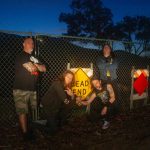
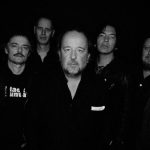
Dave: Guitarist Kevin Hufnagel recorded one song with Jamie and I on Ye Are Gods, ‘We Come From the One’, and Jamie and I felt this was a good starting point for the next recordings, which became Quaternity. We love working with Kevin and have already begun more demos with him for the next album. Jamie has known Daron Beck of Pinkish Black since they were kids in Ft Worth, TX, so she chose him as the figure with the most terrifying voice. Mat and Marja from Hexvessel are kindred spirits and label mates, so we thought it’s appropriate to have them on as well, which led to a subsequent tour with us. We invite guests on to fill a specific role – for Mat and Marja it was recitation on ‘The Four Horsemen’.
(((o))): In a 2012 interview with Invisible Oranges, you stated in reference to the first two Sabbath Assembly albums that "both albums were recorded instrumentally with hired guns and it came across", and that you were excited for the new chapter of the band because the new members were more in tune with the ideology. Has that carried over into 2014? Is the current lineup on board, and how did their acceptance (or lack thereof) impact the album?
Dave: Our preference is to work with people with a metal background because that is the ‘spirit’ we want to be in the music. So for Jamie and I, we don’t care whether someone ‘believes’ in the Process Church’s message, but we do care that the person is ok with singing about Jesus and Satan – whether they believe in the message or not, or even are just apathetic about it, or even think the whole thing is just a fucking comedy. Any of those options is fine, but believe it or not that’s pretty hard to find! Most people are pretty concerned.

(((o))): Are any of the new performers permanent additions to the band?
Dave: Kevin Hufnagel. The strings on Quaternity were recorded with pros, but we do have viola and stand-up bass players coming on the upcoming tour to play those parts.
(((o))): Quaternity has a very ethereal, almost ritualistic atmosphere to it. Musically, what influenced the album to make this atmosphere?
Dave: The song on Ye Are Gods, ‘We Come From the One’, we found so enchanting with Kevin’s 12 string and Eyvind Kang’s viola, we started off on that trip for the new songs and just stayed with it. It wasn’t really an outside influence, we just liked the clarity that we were getting with all the acoustic stuff. Also we felt the songs were coming out way creepier that way than with distorted power chords and double bass. My friend was saying to me today that the album is a tease – like it’s building towards a climax you never get. It never exactly “kicks in”. That will be the next album…..
(((o))): What about 'I, Satan?' It still retains that ethereal atmosphere, despite being extremely harsh and heavy. What inspired it?
Dave: The melody and riff for that song actually was inspired by a Tibetan chant, and Kevin played it on his Gibson SG tuned to C, so it just portrays complete brutality along with the meditative quality of a Buddhist prayer. Then we adapted lyrics from the Process’ text called Gods on War in which Satan is proclaiming his power and might and intentions to destroy all of humanity. We all really love this track, and it indicates the direction of the band for the next record.
(((o))): This is the first album to feature primarily original material from the band, as opposed to primarily Process Church hymns. Why the change in approach?
Dave: It’s really time, and it looks like the next album will be all original. I think we’ve done all we can do with the hymns, and are more interested in expressing our own thoughts, passions, dreams, ideas. Take a hymn like ‘The Four Horsemen’. That hymn on the album has been altered, added to, and subtracted from so much that it hardly resembles the original sheet music at all. So we started to wonder, why are we even using the hymns at all? We have our own songs, so let’s just do those. The band will remain in the spirit of the Church always somehow, based on its inception, and we’ll continue dealing with similar themes. But as far as working on the hymns, it’s time to move on.
(((o))): You mentioned in that Invisible Oranges interview that music is your "most sacred scripture". Do you see music itself as a religious or spiritual experience, independent of the views it may espouse?
Dave: To me music has to be safe place where we can explore whatever we want to explore. I am 100% against censorship because I don’t believe in the correlation that, for example, if someone sings about suicide it causes the listener to kill himself. So in this freedom of expression comes the potential to access the ineffable because we can completely let our unconscious roam. And in this roaming – the writing process, or improvising – we land on these unknown places that we can’t explain but the melody or harmony or vomited lyric says it for us. That act of ‘seeking and finding’ is a religious experience, as you say, independent of the views the lyrics espouse. That’s why a Tibetan Buddhist chant, for example, can be moving to me even though I am not a Tibetan Buddhist and don’t even know what they’re singing about. And then that melody can get metal-ified in the band and it can in turn move others. We are transmitting a religious experience.