Flood Of Red | website | facebook | twitter |
By: Magda Wrzeszcz
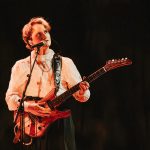
Magda Wrzeszcz met with Graham Griffith (drums) and Jordan Spiers (vocals) from Flood Of Red in the small bar of The Garage in Islington a couple of hours before they were due on stage to support Maybeshewill at a gig that was launching the ‘Fair Youth’ tour, which was quite a while ago, but the time doesn’t take an inch from the interview’s relevance.
Graham certainly came across as the one in charge and ironically Jordan, the voice of the band, turned out to be the slightly more shy and timid one. It was also apparent that we had a lot to talk about – their experiences as a band combined with my passion for independent music made for a great chat and allowed the guys to open up about their initial struggles before they got signed to Superball Music and their experience is probably a textbook example of how difficult it is to get a break in the industry.
Among many laughs, ghost stories and mutual appreciation for Meat Loaf, here’s Flood Of Red’s blood, sweat and tears (happy ones) squeezed into one – albeit long – interview.
(((o))): We’ve got the two of you here, who else is in the band?
Graham: There’s six of us in total, we have Graham the drummer [points at himself], Jordan…
Jordan: Nice to meet you, I sing along.
Graham: Dale who plays keyboards, Sean who plays guitar, Ross who plays guitar and the most recent touring member is Chris who plays the bass. Chris joined the band for touring about a month ago now, so he’s done three of four shows with us, this is the first tour he’s been on. Our previous bass player decided to stop touring, he wanted to focus on family life and that.
(((o))): That leads well into my next question. You’ve been going on for quite a while now, quite impressively! What’s the band’s history? For a band that’s been going on for so long, you’ve managed to keep under the radar for quite a bit, didn’t you?
Graham: We like that expression! No, it’s definitely not deliberate. We’ve been touring since we were 16, 17 and we’re 27 now, so it’s over a decade of touring. We started the band when we were all in school, most of us went to school together. We met through living in a small town, everyone knows everyone, we were the kind of kids that would go skateboarding, live a bit alternative lifestyle, so we kind of gravitated towards each other, started making music, enjoyed it, started to try and make it a bit more serious, do something with it, see the world, travel.
Jordan: Once we got a taste for it… I remember our first out of Scotland show was actually here…
Graham: It was in Kingston actually, but The Garage was shortly after this. The Garage was shortly after we finally made it out of Scotland.
Jordan: After playing gigs out of Scotland we just got the appetite for it.
Graham: Can’t think of anything better than to travel the world with your best friends, playing music, which was the main goal for all of us. It’s hard to keep it going and that’s why we went under the radar for so long. We struggled financially, none of us are from privileged backgrounds at all, we’re all from working class, struggling families. Just trying to keep the band going requires a lot of constant effort and attention. And we never see much from it apart from the gratification of enjoying playing music and meeting people. That’s the only reward for it.
Jordan: The driving force even.
Graham: Which is more than enough of us. Even if we didn’t have that, we’d still enjoy making music.
(((o))): You have been under the radar, but having read through your history, you’re one of the great examples for Echoes and Dust readership. You also had one particularly interesting moment in your career with your first album, when you had a deal and that somehow…?
Graham: …disappeared, yeah!
(((o))): What happened then? It might be a painful memory to ask about, but I think it will be a really great insight into how the industry works.
Graham: Of course, yeah! We’d like to share it with people because we’d like them to learn from our – not necessarily mistakes, but just to make them aware that what happened to us can happen to anyone. When we first started to take things seriously, we’ve had a deal with a friend who became our Artist Manager, very early in our career, with MAMA group, who actually own this venue [The Garage], so better be careful what I say! [laughs] It’s a very large company, they used to own all the Academies, a lot of venues, especially in London. And our investors were a part of MAMA group – they had their fingers in a lot of pies in the music industry, one of them was the management company. We just started to take it properly serious and trying to be a professional band. At that time we were touring a lot with out friends The Blackout and Enter Shikari and they had a few years of advance on us, they were touring for longer, they’ve been doing it for longer and had more experience. And as they were being courted by big record labels, we were being courted by big record labels. We saw that they decided to do it themselves and try to retain as much control over what they did. And for us it was always an obvious decision, we didn’t want to be told what to do at any point, we were very much against that, we wanted to make our own decisions. So we chose to do a deal which basically involved us getting some money to be able to record the album – no personal money, we’ve never made money like that – this deal which would allow us to retain all creative control, which was exactly what we wanted. We got to go to America to record the album with a number one producer, we decided that Brian [McTernan] was the guy we wanted to do it with and we were lucky enough that he was interested in it. And once we recorded the album, we came back to the UK and got into the marketing and release plan, getting the schedule together and we had a grand vision of how this is all gonna work. Then maybe a month or two into that plan, which was very early in – the things were not even meant to start until five or six months in – the company got bought over and they decided that they would close down the management leg, which meant that our investment was in a difficult place, unsure whether it would continue. At the time we were still due – I think it was a five figure sum, it was a lot of money – to continue the plan, but they decided: either we can give you the money and you can finish what you were doing, but we’re retaining the copyright for your music, or we give you the copyright for your music, but we don’t give you anything else. You can just keep the music you recorded, the mastered disk basically – which we wanted, because we created it – but without any money. So the choice was: do we take the money and try make this work, but then lose any rights to the record, or do we keep the record and nothing else. We decided to obviously keep the record, which left us with no plan anymore, because we couldn’t realise all the stuff that we came up with, because we didn’t have any money to do it. We couldn’t find any money elsewhere at that time, and being with a manager from a company that went down – it just became a horrible situation, where we were left with a CD and that was kinda it. And that was… 2009 – 2010. We got halfway through that plan and we couldn’t really sell it, so we decided to just give it away on our website for a dollar. Because that was that time: Radiohead have just released an album that was ‘pay what you want’. Downloading was at all time high, everyone was doing it, everyone had access to data in those days. It’s not who you’re playing the music for, but I guess the targeted market for our band was people our age, all ages really. So it got to the point – why don’t we just give it away so that everyone can get it and if we can get anything from it to keep us going – that’s all that we’re after. After we put the album up for a dollar, we’ve sold a good few, mainly internationally, not necessarily in the UK, and then Rock Sound, who’d always been a great champion for us, offered to release the album with the magazine – that would’ve been early 2010. We decided to give it away to people and if they’re interested – maybe we can keep doing it? And we got great reception from people who otherwise wouldn’t have chosen to listen to it. So it was a horribly difficult period, especially when we found out that we can’t release an album that we’ve always dreamt of. And at that time – that was lifelong income, to make an album, and that was the first album we’ve ever done. So when everything went wrong – that was the most deflating experience of our lives. But then we’ve made a decision that this was still what we wanted to do so let’s just try our best and do what we can.
Jordan: And some of us are still here!
Graham: Exactly! [we all laugh] Once we got over that, the band as it was then – the bass player who recorded the first album left shortly after because it was just unfeasible for him to keep doing it, personally as well as financially – we got another friend to join and we carried on like that, working on the second album. We were really struggling. But we wrote a couple of new songs.

Jordan: We just thought: we weren’t touring a lot, people didn’t seem to know what was happening, didn’t know we had any new songs out and we’ve just done it – all hand made bootleg sort of copies. As much DIY as possible. We’ve done a pre-order as well, which was great. We said we were going to put out an EP and we got a bit of funding through it so we could release it, all off the back of people wanting something more from us and just being interested. That was a bit overwhelming, at the time we thought we could have been done, but there were still people wanting more music.
Graham: We were at that stage as a band, where we were akin to a sullen teenager who doesn’t want to leave their bedroom, when everything is too difficult – that’s what it felt like. And then we released a song, we’ve done a video with our friend Ben of Sitcom Soldiers. We recorded a live song in a studio in Wales and they filmed it beautifully. And people liked that song, even though it was just something that we were working on, the reaction from that was even more surprising than the first album.
Jordan: First of all they [Sitcom Soldiers] did ask us if we were interested and they gave us a sum of how much would that be for their time. And we really wanted to do this, but we had no money at that time. We just funded an EP by selling downloads. Then Sitcom just said ‘I love you guys, I’ll just do this just as a favour’.
Graham: I didn’t want to say this, because I didn’t want to make other people jealous that they gave us preferential treatment, but there was no way we would’ve been able to do that and for Ben to just turn around and say ‘we like your band, we want to do this’, that was the nicest thing that anyone has ever done for us.
Jordan: It wasn’t out of the blue, we’ve always worked with him.
Graham: He’s done all the videos for our first album as well, so we knew him quite well and we’ve been very loyal to him, and after that – we’ll always be working with him. But at that time, when we released that song – that’s when Superball got on board and we started chatting to see what we could do. And they very kindly offered to help us do the next album, which is the album we’re currently on, Throw.
(((o))): How did working with Superball change things for you guys?
Graham: It’s been a huge change! On the first album we didn’t have a label, so we didn’t have anyone to answer to.
Jordan: They gave us extra push.
Graham: They really helped to encourage and get us going, get things done, even though the process of making the second album was still distressing all the way through. But they were there supporting us, all the way. So far I’ve been extremely happy with them, they’ve been great! To help us release an album and take us on the road to places we’ve never seen before… And that’s just an everyday standard.

(((o))): It sounds like you’ve been through a lot of iconic generation turning points in your career as a band. You first started out on MySpace and that got you quite a lot of attention, then obviously MySpace just… died its natural death. After that – everything that happened to your first album tied in with Radiohead releasing In Rainbows as a ‘pay what you like’ download, which was another milestone for the independent music scene. How are you finding the scene right now? Do you think that the over-presence of social media is helping or distracting? How are you finding your fans now, how do you communicate with them?
Graham: That’s a very good question.
Jordan: We try to stay in tune with the social media.
Graham: Personally, I feel social media is very overwhelming, because there’s so much of it and so much content available to the consumer, so many bands. How do you sort the good from the nonsense? So I find, not necessarily from a band’s point of view, but from a music listener’s, that there’s so much variety there to chose from, it’s very difficult. And obviously once some people start doing one thing, others do a similar thing and things progress, evolve… That process itself can sometimes feel like copying, which people do, unlike the originality, like back in the 60’s, where one album would be the band’s content for the whole year. Now you can just do a 5-minute video, put it straight online and publish it to the world. So my one-world description is: overwhelming. I think for us, for gaining new fans now, because we’ve had media exposure, but not in a great amount, now that we have a label, press agents and awesome things, that’s really helped us so far with this album, gave people introduction to us. But another way, the only way I’d prefer to make new fans, is live performance. I’ve always envisioned being in a band where people really enjoy watching us live, as well as enjoy the recorded music. We started the band to play live music and that’s always been the main driving force. I like when people get into us because they’ve see us live.
(((o))): You’re starting the tour with Maybeshewill. Whereabouts are they taking you?
Jordan: Everywhere…
Graham: It’s 34 days, visiting 10 countries. The way I was describing that to my mum and dad was: everywhere in Europe, from Poland to Portugal, in a month. It’s covering a lot of places that we’ve never been to as well. We’ve toured in Europe before, but we’ve never been to Poland or Slovenia. It’s very exciting, especially with such a cool band like Maybeshewill.
(((o))): Any expected highlights? What are you looking forward to the most?
Graham: There is a lot. There’s somewhere that I’m most looking forward to, but it might sound bad when I say it… Auschwitz. We want to visit Auschwitz and then hopefully write a song about it one day. We’ll be in the area and we’re not there often. So that’s probably the dark side of what we’re looking forward to. And travel. Again – we started the band to play live and to see the world.
(((o))): I know you don’t really like to pigeon-hole yourselves into a genre. I think no one does, the best music is the one that you can’t really define. But what would you say are your main inspirations? What do you guys personally listen to and how do you envision your sound?
Jordan: Whenever we get asked that, we just tend to go for bands that are the common link, bands that we all like.
Graham: There’s six of us and we all have a completely individual taste in music. But if we combine all of us together, we certainly have bands and artists that we all share common love for. The main one I would say for that is… Meat Loaf! Which is probably unbelievable.
Jordan: We get a lot of different reactions when we say that, but whenever we are together and we put Meat Loaf on, we genuinely have the best time.
Graham: It’s powerful, intricate, technical, theatrical, melodic music. It’s got everything. He’s a big inspiration to the band as a whole. But independently we like stuff from classic rock, like Pink Floyd, Led Zeppelin, The Band, Fleetwood Mac… Right up to modern bands, like Night Verses.
(((o))): So if I was to ask you personally about your life-changing record, each of you, what would it be? You can make it a top 3, because I know it’s hard.
Jordan: I can work with that…
Graham: For me, the album that became the reason why I started to play the drums was Funeral For A Friend’s Casually Dressed. Which maybe some people wouldn’t admit to now, but I have no problem saying that. Life-changing is maybe a little too strong word… But I loved everything about it. It came out just when the band was starting, we wanted to be a band – they were a band, and they made music that we liked! The one that I’d say had probably more influence was Refused’s The Shape Of Punk To Come. I went through 2 or 3 years of listening to it every single day, without fail, even at Christmas.
Jordan: Of late, I’m a huge Björk fan, I loved the Biophilia record, I went to see the live performance in Manchester and I just think she’s an incredible human, she’s a massive influence. Going back, there was The Cardigans record called Gran Turismo that is a huge influence, even for all of us. And there’s a great Scottish band Idlewild and they had The Remote Part album and we all grew up listening to that.
Graham: Yeah, that’s one of the other band’s common loves.
Jordan: At that time we’ve seen them as the band from Scotland who were doing amazingly, they put out a fantastic record and we aspired to that. That was before Biffy Clyro started to take off.
(((o))): And on a more humorous note, is there one comparison that you keep hearing all the time from the reviewers and are absolutely tired of hearing?
Graham: Circa Survive. And that is purely this guy’s fault [points at Jordan], because he has a high vocal range. When we’ve done the first album, we got a lot of Circa Survive comments.
Jordan: And also Brian McTernan, who recorded our first album, recorded Circa Survive in the studio. So there’s a lot of common themes.
Graham: And I can hand on heart say that I’ve never listened to Circa Survive, I know Jordan and some others did, but it was never an influence on the band, maybe it was on a couple of people, but that’s why it annoys me, because I’ve never listened to them and we always get pigeon-holed like the ones ‘who sound like, wannabe’ Circa – and that’s really not true!
(((o))): That’s interesting, because if I had to pick anyone I think you sound like, I’d go with The Mars Volta.
Graham: Oh that would be great! We played with Antemasque a while ago, it was absolutely incredible, they were one of the best live bands I’ve seen in a long time.
Jordan: Also we get quite a lot of The Music comparisons for some reason. It’s the same story again – a high register voice. What else… I’m sick of hearing that I sound like Mel C from Spice Girls. Apart from that – it’s all fine. [we all laugh]

(((o))): When it comes to your album Throw, can you tell us a bit more about it? Was there a concept behind it? You had a lot of things written for it very soon after the first record, didn’t you?
Graham: We actually had half an album written right after the first one, because we were so excited about the recording, we went straight back in there. But then it took two years to get through all the miserable stuff that I’ve told you about and to find our way to release it, which was the label. When the label came on board, we had half of the album written. We just thought – let’s refresh it and do something that we want to do now rather than what we were doing a year ago. I think the concept for the album was to be able to make an album more than anything else! [laughs] We didn’t have one particular idea for it, apart from – we knew we wanted it to be shorter than the previous album, track number – wise. The first album got 14 songs on it, which we got slated for, which we didn’t understand, we thought that surely giving someone more for their money was a good thing!
(((o))): I don’t understand that either, that used to be the standard length of an album back in the day!
Jordan: Yeah, we’ve done 14 and they weren’t happy, so we just though we’d give them fewer now, we’d give them 9.
Graham: The whole thing is only about 5 minutes shorter though, we decided to play longer songs! On the new album we all progressed as musicians as well, which helped, so I think we tried to be maybe a little bit more self-indulgent. This is perhaps subconscious, it’s coming straight from the top of my head now, but maybe on the second album, because we were on a label and we were actually answering to someone at this point, we went a bit further with it than we would if we weren’t, just to try and push it and see if they’d say ‘no’, but they never did, they’ve supported everything we came up with, which is a dream come true, because it’s not what we thought a record label was going to be like, at all.
Jordan: the album really started to take shape when we were in, recording it. We had lots of home demos, we were tired of going back and back and just adding new things, and when it came to it – it was just us finally doing it.
(((o))): Who writes the lyrics?
Jordan: I do.
(((o))): And do you have any particular inspiration behind them?
Jordan: Sometimes I genuinely get a new meaning from what I write every time I perform. It’s just everyday life and thoughts. Some are subconscious. I like that people don’t get it straight away. I like when people, when they’re listening, take away their own meaning. When they ask me about the meaning – I just think ‘how do I tell you what it is about?’ If you like it as what it is, just take it as what it means to you.
Graham: Yeah, I like that it’s up to the listener to decide what they want it to be about. Obviously when Jordan wrote it it had a meaning, but that meaning can be personal, it doesn’t necessarily need to be shared, everyone can come up with what they think it means and that’s more exciting that someone telling you ‘that’s what this is’. It can be anything, whatever you want it to be!
(((o))): That might be a funny question for you guys, but it just dawned on me right now. Nowadays I listen mainly to instrumental music, but back in the day, when the CDs had beautiful booklets, you could print the lyrics inside and fans could actually listen to the music, learn the words by heart and write their own meanings into them. Nowadays, when physical copies are somewhat in decline, although vinyl is making a great comeback, music is released mainly on downloads. Does that make an impact? Do you release your lyrics somewhere for people to be able to sing along at your shows?
Jordan: Sometimes we get asked about the lyrics in a Facebook message and I’ve done a quick type and just sent it. Or one of the boys would say ‘someone is asking for lyrics’ and I’d just send them directly because it only takes 2 minutes.
Graham: Again, with the lyrics, we’ve done a nice package with out CD so the inside, instead of a booklet there’s a poster, on one side there’s the album cover and on the other side’s the lyrics. So we do recommend, if anyone would like the lyrics, that they buy the album, get the physical copy and have a nice poster.
(((o))): Is there vinyl as well?
Graham: Not at the moment. It wasn’t actually a part of the plan, but I think we finally managed to convince the label so it should be coming out soon [it came out on 14.01.2015].
Jordan: I personally would love one. Just for selfish reasons.
Graham: The actual album cover that we’ve done – it was Dale, our keyboard player, who took the photograph for the it, and we had the idea for the album cover specifically for vinyl so it would be a travesty if it won’t actually get pressed.
Jordan: We just took a random picture of the woods and got it developed and this one came back with a figure in it.
Graham: A ghost! It was so weird!
(((o))): One last question. Is there something that throughout your whole career no one has asked you about, but you’d genuinely like the people to know about you as a band?
Graham: That’s a great question!
Jordan: It’s making me think now…
[long silence]
Graham: That we actually play other instruments than the ones that we play in the band. We can actually play each other’s parts as well, although we don’t do it live, but we’re thinking about perhaps doing it in the future, swapping on stage. We are all self-tough, the only lessons that a couple of us got were at school that would’ve been when we were young teenagers. People probably don’t know that about us – that we are more talented than we look!