Interview: Christian Death
We really want to pay tribute to Rozz, who really was the catalyst for all of what we're doing.
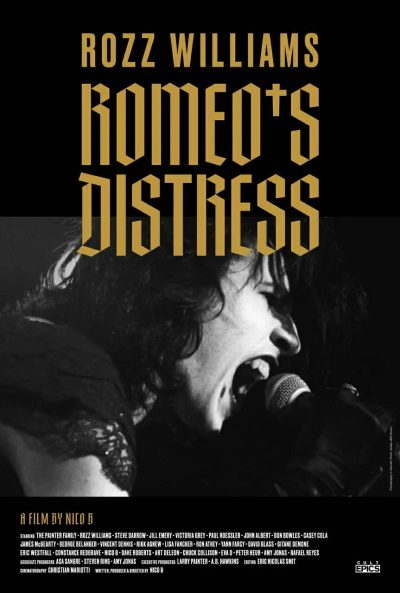
When it comes to dark gothic rock, legendary names don’t come bigger than Christian Death, with the band being an influence on everyone from Type O Negative and Nine Inch Nails, to Jane’s Addiction and Cradle Of Filth. The bad were led by the late and much missed vocalist Rozz Williams, who fronted the goth rock legends in their earliest and most influential years and it is Williams (and in turn, Christian Death) who is the subject of the forthcoming documentary Rozz Williams: Romeo’s Distress. The documentary explores the life of Williams and features contributions from a whole host of Christian Death members.
To celebrate the first screening of the documentary on April 18th in Los Angeles, there will be a special musical performance featuring original Christian Death legends Rikk Agnew (guitar), James McGearty (bass) and David Glass (drums) with vocal performances by Eva O, Gitane Demone and a special guest appearance by death rock singer Patrik Mata (Kommunity FK), and all will join together to celebrate Rozz Williams and Christian Death.
Ahead of this, Gavin Brown had the pleasure of talking to David Glass, who played on the classic Christian Death albums Catastrophe Ballet, Ashes, Atrocities and The Scriptures and he told us all about the documentary and live performance and memories of his time with Rozz Williams and Christian Death in a fascinating interview that celebrates a legendary frontman and a legendary band.
E&D: The new documentary Rozz Williams: Romeo’s Distress is coming out next month. Can you tell us about the documentary honouring Rozz and his memory and how it came about?
David: Well, it’s been a long time coming. Rozz is a pretty influential persona. He did a lot of very interesting things that people, even today want to know about. He was such a mysterious guy, which was great. He had that great mystery, like rock stars, should. So this film was something that Nico B, his former manager, decided needed to be put together. He started assembling all the footage he could and images and talking to all the old band members and really trying to get an insight into Rozz and how he became Rozz Williams. He wasn’t always Rozz Williams. He was a child at one point, so in the movie they show his childhood, which is really very interesting to see, because everybody knows him as Rozz Williams from Christian Death, with the crosses and the dress and everything. But they don’t know him as Roger, the child that came up and decided he wanted to be, a rock and roll star and did Christian Death. It really dips into that, and his art, and, of course, his music. He did so much different types of music, not just Christian Death, but Premature Ejaculation, and all his other types of really interesting arty music and art that he did. Nico decided that the story had to be told. There was other stuff on YouTube, but he really wanted to be a little more comprehensive, and he wanted to talk to the people that were in the bands with him, and spent time with him on the road and in hotel rooms and really get more of an insight I think that’s what the movie gives us. It’s a sad story, but it’s also an interesting story about an interesting person who just gave his life to art.
E&D: Members of Christian Death, including yourself, are playing live again in celebration of the documentary and Rozz’s life. Can you tell us more about that and are you excited to be revisiting the music of Christian Death after all these years?
David: Yeah, I’m very excited. I haven’t played in decades. I put my sticks down for a while to raise a family like a lot of people do. I stayed in the scene. I was managing bands and doing some playing, but not that much, but this was a great opportunity. When Nico interviewed me, I had decided I wanted to start to play again, so I said, Well, we decided, let’s do the movie screening, and then we’ll put the band on stage to play some of the music from the first three albums that Rozz did with us, so it was a great opportunity to reconnect with like Gitane and people that I had played with in the past that were in Christian Death, and other people that I hadn’t really met, like Rikk Agnew and James McGearty. So this has been a really great experience meeting them, and I’ve been practicing with James and Vince, who’s also playing guitar with us, and it’s been really great to just bond and spend time playing. Everybody is just so excited about this show. It’s really coming at the right time. Everybody wants to do it. They have the time to do it and it’s really coming together. I’ve been practicing with the various musicians to cover all the music from those three albums, and it’s just really great to get in a room with them, and they’re so excited to play the music. I think the audience is going to love it, because it really covers a lot of ground. All the musicians on stage. No one’s doing it for a payday. This isn’t about money. This is just like we want to play this. We want to pay tribute to Rozz and support this film, and just get out there and have a great night. Right now everybody’s just completely crazy about it, as well as the audience. We’re getting such feedback. We have people flying in from all over, from the UK, from France, from, Mexico, all of the United States, they are flying in to see this, at what could be the one and only last show
E&D: Is it a celebration of Rozz’s life and his art?
David: We really want to pay tribute to Rozz, who really was the catalyst for all of what we’re doing. I mean, everybody has been been in other bands. We have other outlets. But Christian Death was really a unique opportunity, and is one of those moments in time where people can come together, and the audience really gravitated towards it and it’s evident by the fact that we’re selling out this big theatre fort five years later, and people are just really excited to see this band.
E&D: You said it might be the last time, but has the discussion come up that it could lead to more live shows, or are you just going to wait and see?
David: We’re focused on this one show. Nico’s got the movie out there, and he’s getting offers for screening and premiering in different countries, and they’re asking about the band. Brazil, Argentina, Peru, Mexico, talking about a big show in Paris. The opportunity is there. I want to get through this show, and I want everybody to have a great time and a great experience, and if we decide we can do more, then we will. I mean, we’re all adults with different responsibilities, and certain things that might preclude us from doing long touring but flying out and do shows here and there, it could happen. But for now, we’re super hyper focused on just doing one great show.
E&D: How did it feel for yourself picking up the drumsticks again?
David: You know, it’s not quite like riding a bike. but it is a little bit. I’m older now, the mechanics are a little different. I’m not twenty years old, but the playing feels good. We’ve had a few rehearsals now with some of the core members to work on the arrangements and more pre production work, and we’re all getting used to playing it again. Some of them have been playing up to this date. Some of us not so much. But there are moments, where we’re just locking in and it just clicks. It’s like, there it is again. So we’re working hard to try to put a great show together and give them the best that we can.
E&D: Going way back, how did you come to join Christian Death in the first place after being in the band Pompeii 99 and what were your first impressions of Rozz?
David: We had done shows with Christian Death before, when I was in Pompeii 99 and we were doing bigger shows because we knew the owner of Golden Voice, so he would put us opening for bigger acts like Public Image and New Order and bands like that. But we also did a lot of shows where there’d be a variety of different acts, and so we would play and Christian Death would also be playing. So we were exposed to the band and to Rozz. There was a point where Rozz wanted changes. Rozz was always making changes. He got to a point, and he always wanted to keep moving. He didn’t want to stand still. He wanted to do new things, different things. So I guess there was a point where he came to our record release party for Pompeii 99 and he was speaking with us and saying, I want to do something different. I want to try something with different people. And we’re like, okay, let’s do that, and we were going to go on a tour where there’s going to be Pompeii 99 opening, and then we would do Christian Death with Rozz, and then it just made sense to just to do Christian Death. So that’s how we ended up getting in the band with him and making those records. And then, once again, after a couple records, he wanted to do new things again. He wanted to do more experimental things as well. He split off from us, and we kept going. And, the rest is kind of history.
E&D: What are some of your favourite memories of Rozz during your time with Christian Death?
David: Well, Rozz, as a as an artist, was really unique. He was great. He was on top of things in the studio. He would go in with his little notebook, and he would lay down his tracks. He knew what he wanted. He was really amazing that way. Live, it was a little more unpredictable, because you never knew. Rozz was an interesting character, and some days he would just come up and just nail it, and other days he would come up and just do different things and be in a different head space. But it was always a great opportunity to try things and work hard and play interesting music with a very interesting and magnetic guy. I mean, the fans loved him. He was just incredibly magnetic, and he had a certain mystery about him, and everybody just fed on that.
E&D: What your memories about making the Christian Death albums that you played on, the first one was Catastrophe Ballet which you recorded at the legendary Rockfield Studios in Monmouth, Wakes. How was that experience?
David: It was a magical place, in and of itself. It’s a farm in the Welsh countryside but you have the studios in there, and you put all that history in there, and all the people that came before us, when we went in there, it was just like magic. When you’re twenty years old and they ship you out to Rockfield, and you spend a number of weeks in there making an album, it’s just amazing. And we’re living out there, and all we were focused on, was making the record. The owners were big characters, and all the people that worked there were really amazing. It was a great place. It wasn’t fancy, like some of the new studios. It was really kind of lived in. It was like going home and we did a few albums there, and every time was just great. Recording Catastrophe Ballet, we had just come off the road, we had some songs, we were writing new songs, and it was really a great experience to go in there and make that record, and it came out sounding great. Today, it’s still a classic goth record, and I think doing it there was a big. part of that.
E&D: Can you tell us about recording Ashes, the next album you did with the band?
David: Ashes was done here in Los Angeles at Rusk studios. We knew the owner. We had recorded our Pompeii 99 record at his other studio. So we went into his new studio, and he was doing a lot of mainstream bands, older bands, like The Whispers and things like that. So it was an established studio, and we didn’t have a lot of time, but we went in and the record came out great. It’s a shorter record, but the songs are really powerful, and I think it really holds up. It was a good addition to what we were doing on Catastrophe Ballet, once again, moving in a little bit of a different direction, but it was a great recording.
E&D: What are you main memories of making the Atrocities and The Scriptures albums, and did it feel bit strange making Christian Death albums without Rozz?
David: After Ashes, that’s when Rozz left. We had planned to change the name and just keep going and doing something, but when we got to Italy, he left right before an Italian tour. We had a big tour lined up, and literally, right before he left, we were like, what are we going to do? So we went over anyways, and we were going to change the name. We tried. But, the promoters are like, we want Christian Death. You guys played on the last record, you’re Christian Death. They were doing posters and advertising, and it just got to the point where it’s like, okay, we’re just going to keep going. That’s what the audience is wanting and what the record labels wanted. Everybody seemed to want it, and a decision was made that we would just keep going. I mean, eventually Valor and Rozz came to an agreement in court, and that’s how that whole thing went down. Atrocities, we went back to Rockfield and we did that, and that was a great experience. I think that’s a solid record as well. We did a couple more after that, before I left, but and we always went back to Rockfield, it was just so cool there.
E&D: Did you look back on your time with Christian Death with fondness, even after you left the band and did you continue playing music?
David: Of course, at the time, it doesn’t really sink in. It’s not as heavy as when you look back on it. To me, I was just moving forward. I was starting a family. I went back to the States and started my family. I was staying in music. I was managing a music rehearsal studio as well. I reconnected with Rozz and Eva and Johan, who had played bass with us. We started Shadow Project with Rozz and Eva, and they ended up moving back to Los Angeles and recording the album with other people, which was great. Shadow Project was amazing and that was a great time to reconnect with Rozz and Eva. I played in some other bands after that, and when I decided to semi retire. I managed a band called Switchblade Symphony, so I stayed involved, but I wasn’t playing. It allowed me to support my family and still stay in music.
E&D: Did you still follow the career of Christian Death after you left the band?
David: I was following what Valor was doing with Christian Death, and of course, what Rozz was doing with Shadow Project. Just kseeing what they were doing. They were both out there. Everybody was still playing music, and it was great to see that. Rozz was in LA, and he would come over, and we’d hang out every now and then, which was really cool. It was always good to see he and Eva. After that we lost touch a little bit, but right before his passing, he called over and he spoke with my wife at length, and it was really sad when I got that news.
E&D: You have a very distinctive drumming style, when you listen to those Christian Death records. Who are your biggest influences as a drummer?
David: You know, it’s so weird, because I was young when I made Catastrophe Ballet, I was twenty, I’d been in just a couple of bands before that, and still kind of learning how to play and learning about music and how to be a musician and stuff. Early days, there was different influences. Of course, I was listening to some bands like Siouxsie & The Banshees. Budgie, was great, he was doing some really interesting, tribally stuff, and I’m sure it influenced me, but I was just influenced by what the songs needed. We were coming off of a big album Only Theatre Of Pain, that the original group had made, it had a very distinctive sound, and Rozz really wanted to change things up. He changed his whole vocal style. His whole delivery was different on Catastrophe, and we had to mould to that, but we also had to stay true to some of what had come before, so that, I think, influenced what I had to do on that record. Some was pretty straightforward rock stuff, some I added more, toms in there, tribally stuff, to move it in a different direction from the previous album, and I think that was the biggest influence. Although I do listen to a lot of great drummers. There’s some amazing people out there, but it’s hard to really pinpoint who was influencing me. I was just twenty years old. I’m in Rockfield. I’m making this record, I’m just doing what the music needs, or what I think it needs. It’s a very linear playing style, not a lot of swing, but just very attack oriented stuff.
E&D: Did it feel with Catastrophe Ballet in particular, that you were making something special at the time?
David: You don’t really know. You just kind of go in. I was just absorbing what was going on. It was my first time abroad. We flew into Paris and did a big show, and then we did a tour, and then we got shipped off to Rockfield, my first time in the UK, my first time for a lot of things. I was just absorbed in the moment, and I didn’t have time to think about it. I just went with it, did it, and looking back, it was just an amazing experience.
E&D: How do you feel about the legacy of Christian Death and the countless bands that you’ve inspired?
David: I’ll tell you what, the Christian Death family tree has got to be crazy. I really wish somebody would do that, because the amount of bands that everybody was involved with is crazy. I was speaking with William Faith, who’s playing bass with us on part of the show, and we were just acknowledging that we were in a lot of the same bands, not at the same time, but then everybody split off and did all these other bands. It’s such a huge family tree. Christian Death in general, was always surrounded by drama. There was always something going on. There was always changes. We had tons of bass players, Rozz was in and out. It’s amazing that the band held together. But it did, and Valor’s kept it going, and kept that legacy going. Rozz did his thing, and has a real big following even today. I mean, we’re doing a feature film on him, and we’re packing a a big theatre downtown. The band, us as a band, hasn’t ever played together, so we’re just playing the music that we each played on, on the different records. So it’s really not even a band. It’s crazy, because we don’t even have a name. We’re trying to figure out if we have a name, right now, we’re just the band but if you think about it, forty five years later, people are literally really excited and flying in and going crazy for this. That says a lot about the band and the music, and about Rozz, and how magnetic he is. Anything to do with Rozz, you’re going to get a response, and obviously there’s older people my age that came up with it. They saw us in the clubs. Other people were a little too young to see us when we’re out there. But they picked up on the records. They came in at different times. Oh, my first record was Only Theatre Of Pain, Oh, my first record was Catastrophe Ballet. My first record was Atrocities. So we have all these age groups that are interested in the band and new kids getting into goth they’re going to hear about Christian Death. If you name five bands to a new goth kid, Christian Death is definitely one of them, and people still get into it. It’s incredible to hear what people say, and the band did influence people. It’s hard to see it that way, but people are influenced by the band members, by the music, by Rozz and it really had an impact on people.
E&D: Going back to the documentary. How did it feel watching it the for the first time?
David: I saw it about a year ago. He’s spent some time, another year, working on it and updating it. So I haven’t seen the most recent version, and I’m really excited to see it. The version I saw was really interesting. It really showed. Rozz in some different lights. Like I said, it really touched on his childhood and beginnings, which I was really interested in. It also talked about the making of Only Theatre Of Pain. There’s some great stories in there. It showed him in his later years, where he’s doing all sorts of different things, and it talks to talk to a lot of the people that were around him at these different times, and the impact that he had on them. The stories are great. It’s an interesting movie about an interesting guy. It’s a little bit dark because, of course, he had a troubled life. But I also remember Rozz as being very shy at times. He could be very happy, a counter to what you would think of him being in the band. So I have more personal remembrances of him as a person, and seeing the movie was good. His mother is in there, and his brother and sister, so the family’s in there talking about his early years, and that’s what interests me the most because I knew Rozz when we were in our twenties, and, of course, later down the line, but I didn’t know a lot about his childhood. I mean, I’ve been to his home in Pomona when we were in the band together, but he didn’t know much about him as a child, so I think that’s the most interesting thing.
E&D: It must be cool that new people are discovering the music of the band and Rozz?
David: There is such interest now, and it can’t just be a bunch of old people showing up. We’re not really a legacy band like that, where you get people all of our age that say, I remember them and I’m gonna go see them. It’s just across the board. It could be teenagers just getting into it, people in their twenties and thirties, and of course, people older than that, that were part of the scenes, and they were into it in the 80s and 90s. So there are some new people, new blood, coming in and really learning about the band, learning about Rozz. Like I said, he was a very magnetic personality that drew people’s attention. In the movie, you’ll see so many different images of Roz. He was like chameleon, and he was very influenced by Bowie and Alice Cooper and all these artists who would change a lot, and they had a very distinct look. He had all these different images go by and you go, Oh, my god, that’s amazing. That’s just one person, but look at all these different looks and feel and vibes, and it’s just incredible to see what he did in his life. I think he considered himself part of the art, and art doesn’t stand still. You don’t want to look at the same painting forever. So he would change along with his music and along with his mood and along with what he wanted to put out there in the world as art.
E&D: Do you feel blessed to have been part of the history of such an important band as Christian Death?
David: I mean, of course, I do. My life would probably have been a little bit different had I not been in Christian Death. It opened up such opportunity to travel and to explore and experience different places and different people. I was making a living. I was working as a musician full time for all those years, and not really working a regular job, and a lot of people don’t get to do that. I was very lucky to be in a band that could tour and make records and just do that every single day, so I do feel blessed in that way. Everybody in the band was super talented, so to work with people, and you listen to the albums, it’s just so diverse, so eclectic. I mean, it’s not like one band that makes four albums that sound kind of the same. None of them are the same, and all of them have quirky little things within them that you wouldn’t consider goth. The song ‘Lament’ off of Ashes is a good example, it’s got tuba and clarinet and trumpet and you listen from album to album this, there’s a progression, and it just changes and evolves.
E&D: What would you say is the legacy of the band ultimately?
David: The legacy of the band is it was just a powerful group of people that got together and did so many different things and just kept going and going. There was always some drama surrounding it. There’s always change and upheaval. There were good times, and there was some seriously difficult times. It’s one of those bands that could have easily just broken up and stayed broken up. People could have gone in different directions, but somehow it has stayed together all these years in some form. Whether people like that form or not, doesn’t really matter. It just says the legacy just keeps going, and the fact that you don’t think about being influential on other people, because you’re influenced by people as you’re doing it. So to hear other artists talk about Rozz or Christian Death in a way that it’s like, wow, the band was that powerful, because there are big rock stars, but they’re saying, Oh yeah, Rozz was the real deal. They were listening to Rozz. They were listening to Christian Death before they made their big records, and not to ride on their coattails or anything, but that just says a lot about Rozz and about the band and about the records that were made, Those people that have been elevated into commercial huge rock star status and they’re saying, Oh yeah, that guy’s the real deal. I think that says a lot about Rozz, because a lot of people have to work hard to be that. I don’t think he worked hard to be that. He just lived it, and he was a real rockstar without trying.