Tim Bowness | website | facebook | twitter |
By: Stuart Benjamin
Tim Bowness is very busy, not content with releasing Abandoned Dancehall Dreams in 2014 he’s immediately followed that up with Stupid Things That Mean The World released this summer to pretty much universal acclaim. Stuart Benjamin caught up with Tim ahead of a short tour in August, that takes him to London, Bristol, before jumping onstage at Ino Rock Festival in Poland, to ask him about the new album, his collaborators, and future plans.
(((o))): Stupid Things That Mean The World is a wonderful record, how pleased with it are you?
Tim: Thanks.
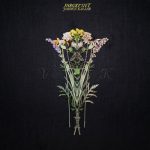
I am pleased with it and along with Abandoned Dancehall Dreams (and Jarrod Gosling’s evocative artwork) I hope it’s gone some way to establishing a distinct solo identity for my music.
Compared to Abandoned Dancehall Dreams, my own feeling is that Stupid Things That Mean The World is more accessible and more experimental, more acoustic and more electronic, softer and harder etc. They’re coming from a similar place, but I’d like to think that Stupid Things might have a little more depth and diversity.
(((o))): Abandoned Dancehall Dreams and Stupid Things That Mean The World seem like very personal records, how far are they auto-biographical?
Tim: If it makes sense, I think autobiographical elements are in lots of the songs, though none of the songs are strictly autobiographical. I’m not Smiler (the character in two songs on Abandoned Dancehall Dreams) and my life is very different from hers, for example. However, some of Smiler’s fears I share and in some ways the character was a composite of people I knew. Another example would be in ‘Know That You Were Loved’. I’m not that dying man (yet!), but some of the images and feelings are sort of autobiographical. I really did see ‘Cupcakes Of Love’ in a shop window!
(((o))): Some artists take an age between records, did you feel you had more to say following the Abandoned Dancehall Dreams sessions?
Tim: There’s definitely something in that.
The starting point for Stupid Things That Mean The World was the album’s title track. I wrote it in my home studio a few weeks after Abandoned Dancehall Dreams had been released. Abandoned Dancehall Dreams had generated some of the best responses I’d ever received for an album and I was really keen to develop my solo work further. ‘Press Reset’ emerged in the same week as the title track.
Over the following months, I wrote (and co-wrote) more material and listened through my archive of unreleased songs to see if anything resonated with what I was coming up with. Eventually I had 15 songs that I was considering for the new album, so it was a productive time.
All the recording and writing for Abandoned Dancehall Dreams had been completed by December 2013. By the time of the album’s release in June 2014, Abandoned Dancehall Dreams already felt like an old album to me. I started Stupid Things That Mean The World in July 2014 and, for various reasons, I had seven months where I couldn’t make any music. As a result, it actually did feel like an age of inactivity to me.
(((o))): Stupid Things That Mean The World has a very English feel to it – a sort of euphoric melancholia – if that’s not too awkward a contrast – is this a key to understanding it?
Tim: Perhaps.
It may seem strange, but in terms of singing and writing, I don’t think much about what I do or how I sound. My singing and playing is very instinctive and emotionally driven. What comes out comes out.
That said, the post-production process (arrangement, mixing, track selection, lyric writing, album sequencing etc) is sometimes very detailed and can take a long time until it feels right to me.
(((o))): ‘Press Reset’ is one of the darker moments on the record, with its pressing need to escape modern life, is the need for escape, or perhaps reinvent oneself a concept that resonates strongly with you?
Tim: Yes, I think it is.
I’m prone to want to retreat and that isn’t easy with a family and with work and an increasingly net connected society. Left to my own devices, I’d happily live with no stimulus at all for a week or two a year just to refresh my senses.
The weird thing with ‘Press Reset’ is that it did focus on a subject that’s interested me for a long time – people opting to escape from their own lives and the pressures of the modern world – but it was only after I’d written the song that I realised that it had happened in my own family.
A great great grandfather abandoned his life running a farm in Cheshire and ran off to Canada (never to be heard of again), and more recently my stepbrother disappeared (leaving his job, wife and children behind). Private detectives were hired, but nothing was heard about him until his death was reported 15 years after his disappearance. He’d secretly created a new life in another country (new job, new family and so on). What drives seemingly balanced people to extreme solutions is something I find fascinating.
(((o))): ‘Know That You Were Loved’ is my favourite song on the record, I think it speaks directly to the heart of the listener. Do you have a track that’s your favourite?
Tim: ‘Know That You Were Loved’ and ‘Press Reset’ are my two favourites.
They were both pieces that took me by surprise (a good thing). When I picked up the guitar and started writing ‘Know That You Were Loved’, I had no idea where it was going to end up or what it was going to be about. Ditto ‘Press Reset’, though I started that using loops, samples and programming.
‘Know That You Were Loved’ is probably the most emotional piece on Stupid Things and was the last song written for the album. To an extent, it deals with deathbed reminiscences and has roots in the work I used to do with the elderly at old people’s homes in the 1980s.
Lyrically, ‘At The End Of The Holiday’ might be my favourite as it’s something of a short story – entirely unrelated to me – set to song.
(((o))): The album is incredibly collaborative and you managed to assemble an impressive roster of musical talent drawn from the last 40-years of rock music, is it easy to coral all those different musicians?
Tim: Relatively.
The core band on this was my live band and they appear on most tracks. We did some recording in real time in the studio. Elsewhere, files were sent around to the musicians I wanted on certain tracks, such as Anna Phoebe and Andrew Keeling.
With Peter Hammill, I recorded one on one with him in his home studio. I taught him a song, he played it the way I wanted plus added some other ideas. He was great to work with and very supportive. I subsequently took the files from him and they were sent to Andrew Keeling, the orchestrator, and other musicians. In the end, in terms of arrangement, the song bore only a slight resemblance to how it sounded at the beginning of the process.
Colin Edwin was a big contributor and was keen to try out as many basses (and styles) as he could. He’s a very versatile player.
(((o))): How far do you let everyone contribute ideas? Do you have, for example, a road map of where you’d like the album to end up? Are there interesting diversions?
Tim: I always have an idea of what I want and ultimately I choose what’s used.
Generally, I suggest ideas and then ask the musician to interpret the piece however they’d like. Ultimately, I use a combination of both of the approaches. As I always say, it’s a combination of accident and intention.
(((o))): You seem to have had a record out nearly every year these last few years – either with other bands or your own solo work – what sonic irons are there currently in the fire?
Tim: The closest album album to completion is the follow up to California, Norfolk that I’ve been making with Peter Chilvers. It’s taken us 13 years, but we’re nearly there! It’s incredibly intimate and, I hope, a real progression from California, Norfolk. The lyrics are perhaps even sadder than anything I’ve previously written, while Peter’s work really shows how he’s developed since he’s been working with Brian Eno and Karl Hyde.
Outside of that, there’s a lot of Henry Fool material unreleased, the infamous No-Man ‘disco epic’, several shelved projects and a song that didn’t make Stupid Things that I’d love to get right.
(((o))): Regal Worm’s Jarrod Gosling has provided artwork for your latest records – you worked alongside him in Henry Fool – have you any plans to work with him again, musically?
Tim: Time permitting, I’d like to. He’s a lovely guy and very enthusiastic as well as creative. His Regal Worm work is great and I really like his unexpected harmonic detours.
(((o))): Are you going to return the favour and provide artwork for the next Regal Worm album?
Tim: I wish I had the ability!
I take artwork seriously and have a hand in all the artwork for projects I’m involved in. I know what I want and what I like, but I’ve no artistic capability to achieve it.
(((o))): You’ve got a short tour coming up later in the year, are there any plans to tour the album more extensively in UK/Europe?
Tim: It depends on interest really. I’m in a weird situation where I do still sell reasonable quantities of CDs and vinyl, but live is something of an unknown area. There are pockets of audiences all around the world, but I’ve no idea if that translates into ticket sales. Plus, I’m intrinsically shy, so playing live is sometimes a little like torture for me!
That said, there have been discussions about doing more dates with the band.
(((o))): Finally, what are the stupid things that currently mean the world to Tim Bowness?
Tim: In terms of creative things, David Crosby’s Croz, Troyka’s Ornithophobia, Keaton Henson’s Romantic Works, Sanguine Hum’s Now We Have Light, True Detective, Grace And Frankie, Clive James’s Sentenced To Life, Emily St John Mandel’s Station Eleven, Kent Haruf’s Our Souls At Night and lots more I’ve forgotten.