I Have Fought Against It But I Can't Any Longer by The Body
Release date: May 11, 2018Label: Thrill Jockey Records
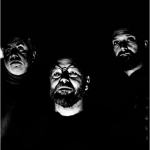
There’s no shortage of extreme metal/ hardcore/industrial/noise bands blending styles and exploring darker subject matter, yet The Body have decisively staked out their own withered patch of the forest in both sound and mind. They bring forth a singular bleak and hopeless vision that admits only the dimmest glow of grey light. While they still recognisably combine all those elements, it hardly makes sense to call them a metal band any more, they’re more like a hip hop production duo. Working with multiple guest vocalists and collaborators but always able to keep a continuity to their crushing sound. Their name has often seemed odd to me because their music deals not in our physicality but in mental anguish and emotional torment. The unceasing existential horror of life. The Body conjure something truly apocalyptic and heart sick where lesser lights indulge in scary devil pantomime, somehow achieving a greater resonance and sincerity despite the sometimes almost comedic levels of bleakness. I Have Fought Against It, But I Can’t Any Longer is their sixth album and expands on the developments of their last, No One Deserves Happiness. This time out building the record on their own samples. The exact technicalities of this are unclear but largely unimportant, it still sounds like The Body.
In a now familiar move the album opens on a low drone and female voice, violin saws softly in and out of the drone. The voice is Chrissy Wolpert of the Assembly of Light Choir who played this role way back on the opener of 2010’s All The Waters Of The Earth Shall Turn To Blood. The drone pushes forward and tips us directly into ‘Can Carry No Weight’. A dull pulse beneath an ethereal choir and the arrival of Chip King’s horrified howl. All three appear to be happening in separate parts of the distance, away behind a veil of distorting interference while Wolpert sings up close. It may be their sixth album, but there’s at least as much again in collaborations (with Thou, Full of Hell and others), it seems increasingly that they use these to purge more straightforwardly metal instincts saving the structural studio tinkering for their own albums. If it can seem their innovations are largely working within a set of established outlines I’m pretty sure the reggae sample that comes towards the end of ‘The West Has Failed’ is a first for them at least. From Eek-A-Mouse’s ‘Noah’s Ark’ and concerning the parable of the wise man building his house upon the rock it also seems to be the only biblical reference on the album and, in combination with the title, returns to their more apocalyptic streak. Biblical and religious imagery recurs throughout their career in a particular form, neither as faith nor as well worn rock ‘n’ roll blasphemy but as a kind of emotional system that gives shape to abjection.
Promotion for the album has led on ‘Nothing Stirs’ a moody slab of crashing goth pop which features Lingua Ignota’s Kristin Hayter and sees The Body arrive at Witch House ten years after the fact. And that’s okay, I quite liked some Witch House at the time, people are a lot more sneery about it than they ought to be and they get some good results out of it here. ‘Off Script’ is all broken beats and screeching, ‘An Urn’ buries a weirdly funky synth line beneath all the filth and screams. It’s the use of heavily processed, chopped and screwed beats that do it, they lack the satisfying lead boot stomp and forward motion familiar to heavy music, even to Godflesh’s programmed beats. This is just how it should be because The Body never go anywhere, they circle like a tethered animal, gaze blankly into the abyss or stand rooted to the spot screaming in terror. Sometimes it seems we can see into the distance but mostly it’s like they can barely lift up their head. The one real exception to this paralysis is ‘Partly Alive’ which rolls on thundering layers of drums and has an epic swinging drama to it.
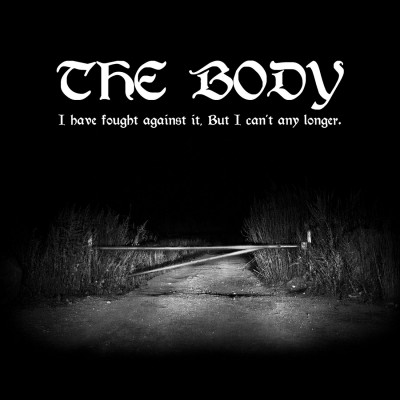
The last three tracks are a glorious trudge through the things they do best, ‘Blessed Alone’ is an industrial drone folk with Wolpert once again singing mournfully before the screaming comes in. ‘Sickly Heart Of Sand’ starts out ominously, dark ambient ghosts chased away by a crashing repeated chord, a looped twang and chopped percussion blows. It stumbles forward before collapsing in a raging black whirl of noise. Hayter screams “I Have Fought Against It, But I Can’t Any Longer” into the storm as the intensity of the whole album reaches a peak. The final track ‘Ten Times A Day, Every Day, A Stranger’ begins in rising hiss and drone, once more a violin scrapes and a voice wails. It grows into a formless cry and is abruptly ended by a cymbal crash giving way to a broken voiced reading of Czech author Bohumil Hrabal. He claims “I have reached the peak of emptiness, and everything hurts” and considers throwing himself from his fifth floor apartment. This he eventually did, falling from the fifth floor of a hospital while ostensibly feeding pigeons. His doctor had no doubt it was suicide. Hrabal called his pain a “loud solitude”, and a better two word summary of the work of The Body it’s hard to imagine. Anyone who listens to extreme music, or even Leonard Cohen, will be familiar with family or friends dismissing it as ‘horrible noise’ or ‘suicide music’. Is The Body suicide music? It certainly looks like it, the title I Have Fought Against It, But I Can’t Any Longer paraphrases Virgina Wolfe’s suicide note. Still, their sonic curiosity seems at odds with the despair and hopelessness in the music. The cover is a night time photograph of a gate across a dirt track, lit only by headlights. It’s like a still from David Lynch. Beyond the gate is only darkness. Sometimes it’s about facing the dark, acknowledging it, and not going through the gate.