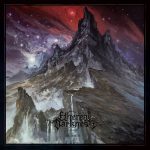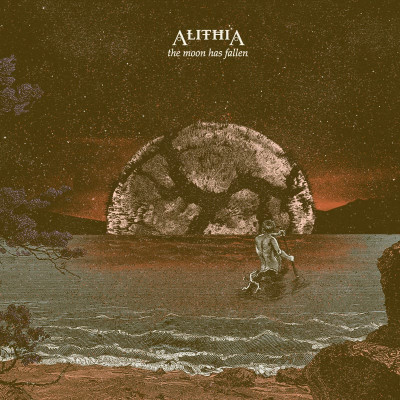
I first encountered Alithia when they supported Leprous and Agent Fresco in London, where the Australians delivered the sort of live set so unexpectedly brilliant, that you just stand there for a moment after they finish, jaw agape, not really sure how to process the power they possess on a stage. Since that show, the ‘astral space core’ band have recorded their second full-length album, The Moon Has Fallen, four years on from their release To The Edge Of Time, and are about to embark on another European tour in support of a progressive Norwegian group (albeit a very different sounding one to the last one they toured with). This was also pretty much my first foray into listening to the band on record, so it with some excitement that I hit play.
I’ll be honest, I didn’t even make it to the end of the album the first two times I tried to listen to it. Who were this band with the synth driven chilled out sound? Starting the album with three minutes of moody, pretty stationary, atmospherics isn’t always the best way to grab the attention of new listeners, and a lot of the musical elements come across as pretentious. I was going to consign the album to the scrapheap, and hope it at least would work live, but chanced to give it one more listen. Evidently enough had stood out – the vocal talents of John Rousvanis and consistently excellent bass work throughout from Tibor Gede were high points from those ill-fated early listens – and by the third listen it started to click.
‘The Sun’, clocking in at nearly 11 minutes, as much as I dislike the first three minutes, manages to pretty quickly stuff in a couple of massive drum-based crescendos, and some of the most emotive vocal lines across the album. ‘Empress’ is one of the stand out tracks on the album, Rousvanis showing off great vocal diversity, building through lyrical repetition (“Feel you’re the only one that’s real”; “No-one surrenders now…”) to a rawer heaviness at the track’s finale, overlain with tribal percussion elements. ‘Diamonds’ contains the best chorus on the record, a rough “Let it hurt you”, that screams cathartic live anthem, despite being pretty far from conventional in song structure terms, despite its mere three minute length.
‘Blood Moon’ mixes it up with some blues-tinged guitar leads, building up to a pleading, repetitive, vocal driven climax, that makes for one of the most memorable songs on the album. ‘Three Eyes’ takes no prisoners, going very early into a fast paced vocal driven build up, in counterpoint to the mid-paced keys anchoring the song, before switching the paces round, fast jangly piano over slower vocals, for a surprise twist to close out the track. For all the beautiful vocals spread across ‘The Knife’, it doesn’t really seem to stand for much alone, but as a mid-album song, it works as a change of pace.
The vocal excellence continues into ‘Breathe’, sounded every bit the tender piano ballad, before suddenly kicking into a rockier gear. It shows off the full diversity in their sound – guitar melodies that God Is An Astronaut would be proud of, shades of the tribal drumming, all the way through to a crescendo that draws out over a minute or two of vocals into heart-tugging territory. They even reprise the piano-vocal combo from the start of the song. Personally, this is the stand out song on the album, and the album could, and perhaps should, have stopped there. Following ‘Breathe’, ‘Faces In The Leaves’ seems disappointing. It’s not that there’s anything particularly wrong with the track, it just doesn’t seem as natural a closer as the finale of ‘Breathe’ would have been. In fact, on every listen through of the full album, it always seems like it finishes too soon, like something hasn’t fully been said.
Overall, it’s not a particularly easy album to listen to: it requires full focus, and multiple listens to explore to the depths it deserves, but give it that effort, and the reward is a largely brilliant album, able to blend post-rock and prog. Rousvanis’ vocals are the highlight throughout, able to add edge or fragility where appropriate, utilised to their full strength, and this allows The Moon Has Fallen to sit at a similar level to the excellent previous album To The Edge Of Time. There will always be days where this will too much of a slow burner – to borrow film terminology, it’s much more arthouse than blockbuster – but give it your time, and this album will reward you greatly.