I first became aware of John Howard’s music nearly 20 years ago after I had graduated from Westbury High School when my Mom and I went to Corpus Christi for a three-day vacation during the summer of that year in 2004. I remember her getting me issue 85 of UNCUT Magazine which covered Pink Floyd’s last album with Roger Waters, The Final Cut. And we all what was going on behind the scenes during the making of that album between him and Gilmour.
But that’s off-topic. UNCUT always had these CD compilations which covered the best recent music. Some were good (Acid Daze and Fill Your Head with Prog!), but this caught my eye. There were two artists that caught my eye; Laura Veirs’ ‘Icebound Stream’ and an unknown artist named John Howard.
The song from Howard was ‘Goodbye Suzie’. When I heard the seventh track on the UNCUT compilation, I was caught off-guard. There was something beautiful, sad, and tragic behind that song. I was 19 years old at the time hearing that track, and couldn’t stop listening to it. Howard’s song had this suicidal farewell of saying goodbye to his loved one, the reflection of time and loss, the bars and streets will be filled with decay, and life moving forward until tomorrow.
Born as Howard Michael Jones in Bury, Lancashire in North West England on April 9th, 1953, he played the piano when he was four years and then took classical training at the age of seven. From attending St. Gabriel’s Roman Catholic School to enrolling at the Accrington College of Art in 1969, Howard also had a love of music.
The following year, Howard started to use the name “John Howard” playing at folk clubs, universities and at the Octagon Theatre in Greater Manchester, often becoming a support artist, opening for British prog-folk group Spirogyra.
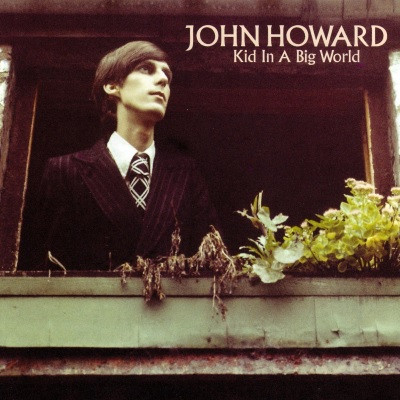
When John moved to London in August of 1973, he was playing at the Troubadour Folk Club until he was approached by “Hurricane” Norman Smith’s manager Stuart Reid, who at the time was the head of pop from Chappell Music. Howard signed with the CBS label at the end of that year. Then two years later, John released his debut album in 1975 entitled Kid in a Big World.
It’s hard to describe why Howard’s debut album holds a strong and emotional breach from each of the tracks that isn’t just your typical glam-pop orientation. There’s pure enjoyment, classical boundaries, musical halls, baroque atmospheres, soft piano ballads, and it would’ve made Barry Manilow piss his pants a whole lot. Howard’s the unsung hero that would have given the ‘70s singer-songwriting genre, a real massive kick in the gut.
From the vaudeville salad days of an off-Broadway approach on ‘Maybe Someday in Miami’ to the joyful operatic sung-through calypso routine on the day in the life of a ‘Family Man’ who goes through being a husband, father, loving his family, but dancing through the 1940s with some Fred Astaire momentum which is later brought back with ‘Spellbound’ while going into a nod to David Bowie’s Hunky Dory-era, followed by some mellotron swirls to be ‘Gone Away’.
Howard is very much a storyteller, traveling through various passages of time in different universes, giving us details on what it’s like to be different from others. ‘Guess Who’s Coming to Dinner’ features a spooky moog synthesiser, continuing where ‘Goodbye Suzie’ had left-off, detailing the dates between the Marvel and DC characters with romantic relationships they had during the evening.
Then it’s back to the West End sound with a joyful horn section and romantic piano section, snapping fingers, and harmonising vocals that captures the Slade in Flame-era for the ‘Deadly Nightshade’ to occur before closing up shop by getting audience to stand up and show how much the outsider has been through a lot with the closing title-track.
Nearly 49 years later, Kid in a Big World still sounds fresh. Not to mention a little help from The Zombies’ keyboardist and drummer, Rod Argent and Bob Henrit. When the album was released, the label promoted Howard’s debut with major advertising campaigns, cardboard life-sized cutout of him at Record Stores, and launched a performance at the Purcell Room in Central London’s Southbank Centre.
However, BBC Radio 1 refused to play ‘Goodbye Suzie’ and ‘Family Man’. The reason they didn’t play those two songs because they thought it was “too depressing” and the second track as “anti-woman”. My guess is that he was so far ahead of his time and they just weren’t ready for those incredible songs he was putting out.
And as I’ve mentioned before, Kid in a Big World is one of Howard’s incredible debut albums you need to check out. Yes, it is a hidden treasure, but one of the most unsung debuts that’ll be talked about in the years to come.