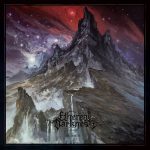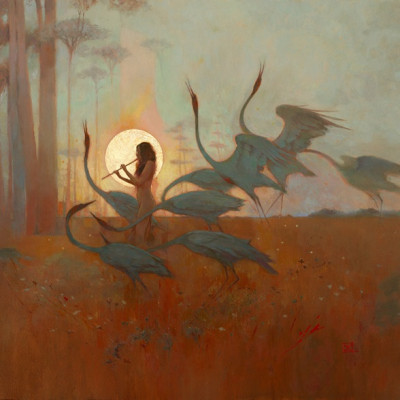
Pioneers of fusing melody with the savage attack of black metal, French blackgaze band Alcest are back with their seventh album, entitled Les Chants de l’Aurore. The duo of Neige (vocals, guitars, bass and synths) and drummer Winterhalter aimed for an ambitious recording by setting up studio in a big house. The drums were laid down in the expansive attic, and they utilised a real piano and real choirs for a more organic sound. Inspired from Neige’s spiritual childhood experiences the music is intentionally euphoric and uplifting to distract from the darkness this modern world brings.
We kick off with ‘Komorebi’, a triumphant and uplifting song with earworm melodies ever present. The dynamics of the track push and pull with delicate passages rising and falling between taut blast beats and distorted guitars. Intermittent strings and sprightly piano are used sparingly to create a joyous piece of music. With a slower pace the stately ‘L’Envol’ has a darker hue with a melody that drips pure melancholy. (It’s also the first time I have ever heard a guitar sound like a distressed seagull). The chorus picks up the tempo with some dextrous percussion and it’s a lovely wee ray of sunshine. Once that mid-section wraps itself round you it’s a spectacular moment as the track takes on a proggy element with some great instrumentation and twists and turns. Neige really turns on the emotion with the glorious bridge where the vocal melody absolutely soars. There’s a brief pause for breath before the track erupts into one of the few black metal passages as Neige switches to a throat shredding howl.
‘Améthyste’ starts off as a mid-paced track that has a busy undercurrent of swirling guitars and haunting synths. Before long the gears crank up and it’s a powerful collision of blast beats, scorching guitars, searing synths and the occasional shriek threw in for good measure. Dynamically this track veers off into more tangential parts eschewing a standard song structure. It’s the final moments that act as the hook with a very memorable melody over some hefty beats from Winterhalter. In ‘Flamme Jumelle’ Neige sings a tender melody over some lovely liquid guitars. When the chorus is announced with a mighty howl it’s a glorious rush. There’s a wonderful gallic feel to the bridge as Neige lets the melody shift and sway. There’s a few lines sang in the black metal style near the end to keep that side of the fanbase placated. ‘Réminiscence’ is a brief interlude of cello and piano that divides the album with an oasis of calm.
Then ‘L’Enfant de la Lune’ is one of the most muscular tracks with the guitars switched up and charging hard over an everlasting supply of blast beats. With my gateway to black metal jarred open by the likes of Deafheaven and Alcest, my tolerance for heaviness has increased so this track sounds quite light and airy to me now, whereas a few years ago it would have been less palatable. There’s a sizeable wave of synths released onto the track as it builds to an epic finale and its effective and welcome. Final track ‘L’Adieu’ is a stripped back affair with just guitars and Neige’s voice creating a downbeat and melancholic ballad. Layers of strings and synths swell like a rising tide. You expect an inevitable eruption of volume, but it doesn’t materialise, ending the album on something of a downbeat and sorrowful note.
The last Deafheaven album Infinite Granite showed how to retain a heavy sound yet introduce a sizeable pull to those people who might never have considered black metal under any guise. Some fans might have felt a little wanting with their (almost) abandonment of anything approaching a blackened screech. I loved that album, and still hold it dear. But the downside is that I hold Infinite Granite up as the gold standard and now compare other albums to this great opus. I’ve recently been exposed to the Glassing and Thou albums and their intense levels of brutal sounds. The heaviness of those albums makes the Alcest album sound overtly underweight by comparison. Neige’s vision of creating a light and euphoric album has certainly been fulfilled and the stellar production provides a glossy sheen. Overall, Les Chants de l’Aurore finds Alcest still masters of creating highly melodic metal and is a worthy addition to their impressive back catalogue.