Interview: Die Kreuzen
After all of this time people are still listening to these records and getting something out of them. That means more to me than record sales or packed stadiums.
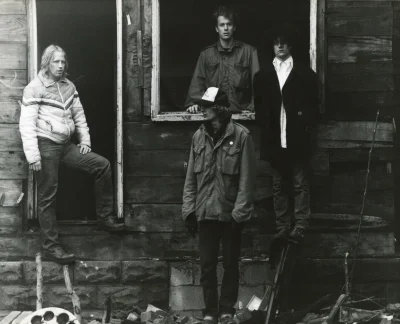
Die Kreuzen blazed a trail in the 1980s into the 90s with their fiery hardcore punk morphing into a more alternative rock sound, all the while never losing their brilliantly abrasive edge. On a string of seminal releases, from their first EP Cows And Beer and self titled debut album all the way to their final album Cement, Die Kreuzen were a band who did things on their own terms, influencing a ton of bands along the way.
Now, all these years later, the band are ready to tell their story in their own words with the release of a new book Don’t Say Please, The Oral History Of Die Kreuzen by Sahan Jayasuriya.
To celebrate the release of the book and the legacy of Die Kreuzen, Gavin Brown had the pleasure of catching up with the band’s bass player Keith Brammer to get the lowdown on the Die Kreuzen story and to celebrate one of America’s greatest and most influential punk/alternative bands.
E&D: The new book, Don’t Say Please, The Oral History Of Die Kreuzen is coming out very soon. Are you excited to tell the real story about the history of the band?
Keith: It’s interesting, more than anything. We did plenty of interviews when the band was together, but it’s a whole different thing to see it all laid out together.
E&D: How did it feel looking back at that history for the book and did it bring back so many memories, both good and bad?
Keith: In terms of memories, surprisingly (considering it’s been over forty years) there wasn’t too much I had forgotten. It helps that I still have people who contact me to ask questions, and I love to tell stories.
E&D: Has the telling of the Die Kreuzen story been in the offing for a while now and how did the idea to tell your story come about?
Keith: The book was all Sahan’s idea, and he’s been working on it for the past 10 years. We’re incredibly indebted to him for all of the work he put into it.
E&D: Do you feel that it is important to tell your story exactly the way things happened and for nothing to get embellished?
Keith: That was never a big concern, at least to me. As long as it isn’t totally untrue, print it!
E&D: Do you feel that the music of Die Kreuzen is still relevant today in terms of the kind of subjects you were singing about?
Keith: As Sahan pointed out, Dan’s style of singing about personal, rather than political or topical issues, really ensured that the songs themselves didn’t date like so many other bands’ material.
E&D: How does it feel to still be seen as an influence on so many bands?
Keith: Immensely flattering, especially since many of these bands (and members thereof) are people I respect and admire. To think that something we did would make such an impression on someone is very gratifying.
E&D: There was tribute album to the band, Lean Into It – A Tribute to Die Kreuzen, with Napalm Death, Voivod, Season To Risk, Mike Watt, Thurston Moore and more. How proud did that make you?
Keith: It was cool, especially hearing how everyone chose to interpret each song. The more out there, the better, in my opinion.
E&D: What was Milwaukee like as a city when the band first started and was it an exciting time to be in band?
Keith: It was perhaps more blue-collar than it has become, something I kind of miss. People put their heads down and worked, whether it was doing their job or making music. It was certainly exciting for us; we were young and excitable, and “business” hadn’t become a part of music yet. The underground scene was very diverse, and included visual arts and theater as well as music. Very, very creative people.
E&D: Do you look back on the bands early days and the early days of American hardcore with fondness?
Keith: The band, sure. We were kids having the time of our lives. We were working hard at it, but at that point you had to. No one was going to just walk up and give you anything. As far as “hardcore” goes, I lost interest in that pretty quickly, as I say in the book. Past the first blush of the Germs album, and the earliest Circle Jerks and Black Flag, it rapidly became a set of rules and tenets that I had no interest in. There were bands we really liked, such as the Offenders from Austin, and DOA, but as a general rule it just became a cliche.
E&D: Even today, the music of Die Kreuzen still sounds both abrasive and exciting. How does it feel for your music to stand the test of time and still stand up so many years later?
Keith: Amazing, actually. As I’ve always said, the fact that we weren’t taking direct influences from anyone helped a lot in that regard.
E&D: As the bands music evolved, it got more eclectic and forward thinking, did you revived any backlash as your music expanded?
Keith: Oh yeah. Sahan deals with that a lot in the book. Basically, a lot of people don’t like change. They want to know what they’re getting. Luckily, we had a lot of people listening to us that weren’t like that at all. They were able to either see what we were doing, or at least give it a try. We’ll always be grateful for individuals like that.
E&D: How as the experience of working with Butch Vig on the later Die Kreuzen releases?
Keith: Excellent. Full stop. Butch is a wizard, and helped us immensely. A good man with a lot of talent. Between Butch and Corey Rusk, I think we all learned a lot about being better people.
E&D: You also worked extensively with Corey Rusk on your early work, how was that experience for the band? What are your favourite memories of Touch & Go and being in the label?
Keith: This is basically the same question, as we worked with Corey exclusively (pretty much) for our entire career. He’s the most honest, straightforward person I have ever met, and a big part of why we were able to do as much as we did. A dear friend as much if not more than a business associate. Anyone would be lucky to work with him.
E&D: How did it feel to reunite to play more live shows back in 2012?
Keith: Interesting.
E&D: Will Die Kreuzen ever play live again?
Keith: I’ve learned to never say never, as the saying goes. The logistics are the biggest challenge.
E&D: What are some of your all time favourite live shows that you have played with Die Kreuzen?
Keith: Wow. Far too many to list.
E&D: What do you want the legacy of Die Kreuzen to be?
Keith: For myself, exactly what this book explains: the fact that after all of this time people are still listening to these records (and videos, and whatever) and getting something out of them. That means more to me than record sales or packed stadiums.