Interview: Beneath A Steel Sky
We’ve been keen to keep this quite organic and not rely on samples, playing to a click and all that kind of stuff. We want it to feel like it’s alive when you play to a crowd and that it feeds off the room energy.
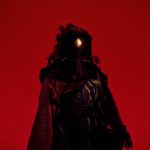
Emerging from the artistically fertile lockdown period of yore, Scottish post-metal six-piece Beneath A Steel Sky have spent the time since then meticulously crafting one of this year’s standout debut albums in Cleave. As crushing as the Mariana trench yet blessed with a flair for intricate melody and melancholy beauty, it’s a showcase for what post-metal is capable of when it dares to move away from cliché and embrace its full sonic range. David Bowes caught up with vocalist Greg Armstrong and guitarists Ian McCall and Sandy Watson to discuss the band’s past, present and future.
E&D: Going back to the start of the band, you were originally an instrumental lockdown project. How did that change to become what it currently is?
Sandy: During lockdown, it was just myself and Ian bouncing song ideas back and forward. It was kind of just for something to do but also an excuse to use guitars for something because at that point I was just sitting about the house, mostly. It started to sound good and while the two of us can program drums to a certain extent, if you don’t have a drummer’s head you’re only going to get so far with that. That was when we decided we should get other people involved. We went through a couple of different iterations of the band but given that it was during, and just coming out of, lockdown it never really felt like it was going to be anything more than that. Then we got Greg involved and that unlocked it. It changed it completely and suddenly we thought that this could be a lot more than we had anticipated beforehand. At that point, we started thinking about who were the best guys to get involved and that’s when it became what it is.
Ian: In the beginning we had a real intention on keeping it instrumental. I’ve always been a singer in all the bands that I’ve played in so not even having to think about that, and using guitars to do those kinds of melodies for that in the first place was interesting and fun for lockdown. Then when we had a bunch of songs together, we thought we could do a lot more with this. Because we had already started using the guitars to layer these melodies up, it meant that the vocals when you start to add them in become more of a supporting role, becoming additional layers rather than the melodic voice, so when we did that I thought that we had something interesting. Like Sandy said, after that it was a matter of getting the right people in place to bring it all to life. I think we waited about a year to get the right heavy voice for it, and then we got Greg. That was it.
E&D: Greg, what was your first take on hearing the material? I take it that it was something you were excited to work with?
Greg: Oh, absolutely. Our mutual friend Dan from Frontierer had sent me a message saying that he had some pals looking for a vocalist and it might be interesting. I thought, “Aye, see what happens” and they fired some stuff across. The guys sent me demos across that they had put together and I was instantly really impressed. I was really into it. I thought that there was a lot of depth and layering already there but there’s also still space for vocals to do something as well and sit in quite nicely. Sometimes once whole demos are written without vocals in mind you kind of struggle to get something that sits properly. It just feels like you’ve dumped vocals on top of an existing song. I was listening to it and didn’t think it was going to feel like that. I thought, “Let me just spin out a couple of rough demos and see what we come across with.” I did that, cracked the mic out and sent some demos across with a couple of rough ideas, the guys liked it so we got in the room.
E&D: How long did the writing and recording take in the end?
Ian: Some of the songs that are on this album have actually been from 2020. They’ve changed form a lot over the couple of years. Some of those things are what Sandy and I started bouncing about in the early days of that. Now, everybody else is starting to add their character to it a lot more so everything that’s newer, you can get that feeling of everyone adding more, but a lot of these were from right back. Actually, when we recorded it the last thing we did was the drums. We were able to record all the guitars, vocals and bass at home but although we had some drum tracks programmed for the demos we wanted that big live room drum sound. We did that last which is the opposite of what people normally do.
E&D: Maybe a cheesy question, regarding the name Beneath A Steel Sky, are you big fans of the game or does it tie in lyrically or thematically?
Sandy: It does. Maybe not so much lyrically but in terms of atmosphere, definitely. We try and create a whole atmosphere through music and artwork that has that same nostalgic sci-fi, slightly noir-y edginess to it. I don’t know if that’s successful or not. We started off with the name and we tried changing it but it didn’t feel right and we ended up changing back to it.
Ian: We’ve probably got Greg to thank for that. When it was just the instrumental lockdown project we stuck a couple of tunes out quietly on our own, and then when we decided that we were going to do something more with it we brought it all back again. At that point we thought about changing the name because it was something fresh because it was different guys involved. We went with Quetzlcoatlus, one of the songs.
Sandy: A bit bummed out that not everybody likes dinosaurs as much as me.
Ian: Greg came in and said, “Can we change the name, please? Everyone I say it to, they can’t understand what it is.”
Greg: Having to spell it over and over to people and I’m going to have to yell this out over people in a loud room in between sets, and to people at the merch desk. It’s not going to work.
Ian: So we went back to Beneath A Steel Sky and it’s probably the best thing we ever did, to be fair.
Sandy: I think so too.
E&D: It probably works better with merch too. Trying to stretch Quetzlcoatlus across a t-shirt would be a nightmare. You have a tour coming up next year. How are you feeling about that?
Ian: Good. We were set back this year because our bassist and his missus were due a baby in April so it was right around the time we’d have like to have been out supporting the album so it was unfortunate timing for us, but obviously fortunate timing for them. That meant it’s been a bit of a slower year but we’ve done enough to keep it going and keep things interesting. This will be our first foray down south so we’re glad to get some decent dates in the books. We’re absolutely chuffed with the lineups we’ve ended up with on these shows. I’ve been listening to that band IAN’s album a lot since it came out so I’m looking forward to playing with those guys and then The Grey, who are absolutely excellent.
E&D: How did you come to end up working with Charlene and Ripcord Records?
Ian: I think it was through Gary Davidson. Gary had been bigging us up. We were planning to put the album out ourselves and all the wheels were in motion. We had the date finalised, everything set and she dropped us an email asking if she was too late to get involved. We just went from there. It’s helped us give a little bit of legitimacy to the release. She’s had so many good bands on the label over the past couple of years so it was perfect for us.
E&D: You played Core. Festival earlier in the year and though pushing local bands has always been a big thing for the Core. guys, it really felt apparent this year. Do you think that having something like Core. has changed things for the heavy scene in Glasgow, or in Scotland as a whole?
Ian: Absolutely, I think it’s a great addition. The closest relatable festivals in the UK are ArcTanGent and Damnation, and we did have Portals as well. Having something up here has been amazing. When was the last time you had bands like Torche and Cave In in Glasgow at the one time? It’s amazing. It’s great that bands like us get the opportunity to play on the same bill as some of our favourite bands.
Greg: They said they were moving venue next year so it’ll be interesting to see how it moves on. It’s been a few years and some really cool lineups under their belt so I’m hoping it’ll be continuing to move on to bigger and better things and continuing to bring cool bands to Scotland, especially in this weirder or more alternative side of music. It’s not always the easiest thing to put on a festival catering to that sort of thing up here so it’s nice to see that the work they’re putting in is paying off and that people are enjoying it.
E&D: How did you end up on the bill for Core.?
Ian: We’d been told a while ago that they were expecting to give us a slot and it didn’t materialise for some reason. Then when Poor Creature pulled out Core. gave us first refusal on the slot. It was a bit short notice but a good wee surprise. We were well rehearsed because we were playing with Earthtone9 the next week anyway.
E&D: How would you compare those two shows?
Ian: Different crowds, I think. The Earthtone9 crowd, I think we actually fit in quite well with that gig because it’s older heads for the most part. I don’t think there was anybodys under 30 in that place but that worked in our favour and we seemed to go down really well with them. That was reflected at the merch table as well as we got a lot coming up to talk to us, and in t-shirt sales as well. I think it was that older crowd had have a bit more patience for us.
Sandy: I think the Core. one was a bit more relaxed as we hadn’t really been expecting the gig and then when it came around we figured that no one would have massively known that we were going to be on the bill so we’ll treat it as gig practice for the next one and see how it goes. We were quite surprised to get a decent turnout so it felt a bit more relaxed because of that. We’d known Earthtone9 was in the cards and, for me, that was a big deal as that album was massive when I was a bit younger.
Ian: I definitely think that we went into it on the basis that we didn’t have any expectations of pulling a crowd because we were so short notice but that worked in our favour.
E&D: How do you feel about Scotland’s heavy scene right now? The past few years have felt like the strongest it’s been in quite some time.
Greg: There’s a lot of good bands kicking around. When I was 16, 17, 18 there wasn’t a huge amount going on. There were some good bands but there was hardly ever shows and there certainly wasn’t anything in the way of really good support slots for bands. There wasn’t anybody coming up that were going to take on a local band as support and fill out a 250, 300, 400 people in a room for a local band. You’ve got wee bands in school, or college or uni, playing to 30 of their pals, that kind of thing. There’s been a few promoters over the last ten years that have really put the work in and dragged bands up here that otherwise wouldn’t normally have bothered on their UK tours. It’s been massive. Duncan from Red Crust is one of those guys that’s been absolutely tireless in dragging bands up; you’ve got the Core guys now as well. It’s been nice to see opportunities for bands and for there to be a scene to play in, for you to bother getting good, getting the practice hours in and making sure that your album is as good as it can be because there’s a reason to. You’ve got shows coming up, festivals like Portal, Radar and Arctangent, Core.; there’s a reason to bother putting the effort in to be a good band rather than just jamming with your pals.
E&D: Who was it that did the artwork for the album?
Ian & Greg: That was Sandy.
E&D: What was your direction as far as that was concerned?
Sandy: It was just around creating this visual scape that, in our minds, somehow mapped or reflected what was going on with the feel of the songs. I realise that’s quite subjective so it may or may not be successful depending on what people think of it. I felt it formed a visual accompaniment to what we were trying to create with the music. Obvious references were sci-fi and noir film culture but to put a slight edge on it that felt unnerving in some way. It wasn’t explicit in what it was supposed to be or say but when you look at it you get a story in your head about what’s happening; whether the music maps to that remains to be seen but that was the intention.
E&D: Greg, what was your approach with the lyrics? Did you consciously try to follow that same direction?
Greg: Yeah, absolutely. Before I started writing album lyrics, we’d discussed vibe and everything like that and tried to get a general feel down from there. I just went hard concept on it and wrote a story as much as anything else. If I knew how to write a novel it could have been that. It has characters, and events, and it has a throughline through the whole album that was informed by that weird clash between bleakness and maybe a wee bit of hope peeking through, and that futuristic vibe that the guys mentioned when they were writing the songs, and also the artwork that Sandy was coming up with. It was all very much informed by each other.
E&D: Do you have any ideas in mind for a music video, then? Or are there any songs that you feel would benefit from that?
Sandy: I think in an ideal world we could come up with some stuff that would be really cool. Whether or not we would have the budget to do something…
Ian: It’s not something we’ve really considered in any strong way or put anything together for.
Sandy: We did have some conversations about loose narratives that would work. Some of the instrumental parts are quite soundscapey, quite scorey, so we did have a chat about some stuff that could potentially work with that but that’s more of a long-term thing. I don’t know if it’s something we’d be able to bring to fruition sooner rather than later but we’d certainly like to work towards it becoming some sort of all-encompassing media scenario but there are a lot of constraints involved in getting that right, making sure it doesn’t end up as something half-arsed.
Greg: We’re a bit of a band full of perfectionists so we don’t want to go into something without knowing that we can do it justice. At this point there are other priorities before putting that amount of time, money and effort in.
E&D: Do you know what comes next?
Ian: We have a bunch of songs that are in various states of completion. There’s only a couple that we’ve started to work together on in the room whereas the rest are still in that ‘record a bit and send it over to someone else’ stage. We’re just progressing that stuff when we can and the intention is that that will form the basis of a second album when we can pull it all together.
Greg: It gets harder and harder as you get older. Lives and kids and holidays and plans…
Sandy: Especially with six of you in the band.
Greg: That’s exactly it! You can’t set timelines a year and a half in advance, you have to squeeze it in when you can.
E&D: How did you originally settle on a three-guitar approach? It’s not uncommon with this style of music but it tends to be used for blunt force, whereas you guys are able to build up so many layers and so much intricacy.
Ian: We’ve got three guitars by necessity. When we started trying to jam this stuff in the early days we had guitars set up and were trying to loop things, play over them and it was just like, “We need another guy”.
Sandy: It became so intricate that just trying to pull it off was an absolute nightmare.
Ian: I think it was also the right things to do because we’ve been keen to keep this quite organic and not rely on samples, playing to a click and all that kind of stuff. We want it to feel like it’s alive when you play to a crowd and that it feeds off the room energy. With that in mind, the only way to approach it was to have that additional guitarist and then also the synths to pad out the additional layers, make sure that we could perform everything live.
Greg: Maybe part of that came from originally being a recording project rather than a plan for playing live and touring. The guys maybe got a bit carried away with adding another layer, and another, and then it was, “Oh shit, we actually have to play this live now.”
E&D: You have Ripcord Festival coming up next year, and it’s a hell of a lineup. How are you feeling about that one?
Ian: That’ll be great, but Greg’s the one that’s got a hard day.
Greg: Double duty. I’ve made some bad decisions in my life.
Ian: That’ll be the second time he’s done that.
Greg: And it won’t be the last. It’s a problem when there’s only three post-metal bands in Scotland and you’re in two of them!
Ian: It’ll be a really good day. There’s some class bands on it and it’s a really good thing to be a part of. It’ll be great having Hundred Year-Old Man but the lineup is pretty stacked from top to bottom.
E&D: You’re putting the album out on vinyl next year. Who is that being released with?
Ian: It’s just self-released.
E&D: That must have been…
Ian: Expensive.
Greg: It’s partly why we’re doing it pre-order as well. It gives us some idea of what the taste is for it and it lets us have the extra bit of funding to do a nice gatefold with all of Sandy’s artwork; so we’re not having to cut corners and make it as cheap as possible. We can make sure it’s a really nice thing to have. The pre-order stuff has been going well, lots of people picked it up on day one so thanks very much to anyone who’s done that. It really does make a massive difference to a band our size. This stuff is expensive to do and having people willing to put money forward and wait three, four months before they actually get it in their hands makes a massive difference.
E&D: Touring isn’t exactly cheap either and you have your first tour coming up. How much preparation has gone into that so far?
Greg: Nicky from Road To Masochist has helped us out with all of the England dates. She’s been brilliant and that’s made a massive difference. With it being our first tour, even though we’ve still got some contacts here and there from our other bands, having someone who knows the scene and can get in touch with the right venues, who knows what the scene sizes are like in different towns, takes a massive weight off from us. Daniel at Core. has kindly agreed to help us out on the Glasgow date as well so we’ve actually been pretty lucky because we’ve had some contacts from previous lives, that we’ve had people willing to help us out makes that thing a whole lot easier. I’ve booked full tours before without that help and it’s an absolute fucking nightmare. It’s much nicer now that we have pals that are willing to jump in and help us out.