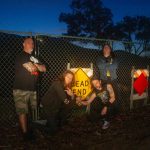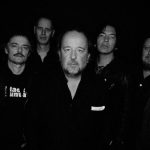
Melbourne progressive instrumental band The Nest Itself released their splendid debut album last year, and after reviewing the record and catching them live a couple of times, Gilbert Potts put some questions to the five-piece.
(((o))): Can you start by telling us who's in the band and a bit of your history. What roles do you have in the band, musical and otherwise?
Jason Hutchison (Hutch)- guitar
Jason Peacock (Peaks)- drums
Jon Pittas - keys
Tim Rouse - guitar
Tom Vero – bass
We all met in highschool and played in various shitty school bands together, it wasn't until 2010, 5 years after school, that we got together and started seriously making music. We try to share the roles and responsibilities equally throughout the band, working democratically and everyone having an equal input is very important to us.
(((o))): What are your individual musical histories?
John and Tom have solid groundings in musical theory. Hutch and Peaks have been playing their respective instruments for over ten years, learning mostly through practical experience. Tim is a primary school music teacher.
(((o))): What's the most beautiful sound you've ever heard?
Being a music teacher working with young children, I would have to say the silence after a long day of shitty recorder playing is just sublime. I also think a well placed trill can be very beautiful.
(((o))): What sort of music do you listen to?
We all listen to a pretty broad spectrum of music. Radiohead and Pink Floyd are two pretty big influences on us but we all love post-rock (even though we dislike the term), experimental, classical, progressive, instrumental, electronic and anything in between. Aphex Twin is another huge influence on all of us, especially Peaks and John.
(((o))): When you go and see other bands or listen to their records do you tend to focus on whoever plays the same instrument as you? Do you think playing music affects how you listen to it and if so is it a blessing or a curse?
When watching a good band, I always find it hard to not watch the drummer. Being a guitarist, you always have to check the pedal boards and guitars, but it is more of a comparison of sounds rather than intently watching the guitarist. Playing music definitely affects how you listen to it, you become much more critical. New music takes a while to digest as you like to pick apart the songs and hear every little melody. Its a blessing and a curse.
(((o))): What colour is your music? What shape is it?
"Any colour you like" - Pink Floyd, that came very close to being our album title but Tim is a cunt and doesn't like the word 'like', he prefers useless parenthesis.
Due to our immaturity, the shape would probably resemble some sort of dick related object. (Hey Ed, I get to use the 8=====> tag again! GP)
In seriousness, I would describe it as an expansive space because we try to leave it very open for interpretation. We try to set moods with our music but leave the rest of the feeling for the listener to decide. The colour would be white, a blank canvas for "any colour you like" that you feel when you listen to any of our songs.
(((o))): How do you go about composing your tunes? What role does melody play versus texture and rhythm.
Usually someone comes to the group with and idea or melody, we jam on it for a while and piece it together from there, some songs do just evolve out of jamming though. We try to be very conscious of giving each instrument and melody the space it deserves and not overcrowding our compositions. Melody and rhythm usually take the song where it needs to go whilst texture fills out the body of the songs.
(((o))): Do you tend to create songs in their live form, then add layers for the recorded versions, or picture them more in that recorded form? Is your record “(in) constant search” a collection of individual songs or were they composed with an album in mind?
The seeds for most of our songs are definitely sewn in their live form, with minimal studio layering intended, however, some songs are written purely with the studio in mind. The songs on the album were definitely composed individually over a period of about a year, then a great deal of thought was put into which songs would make the album, and how they would be pieced together into one cohesive body of work. Once we chose which songs would be on the album, we also worked on how they would best complement each other through linking them and getting the track list right.
(((o))): You use dynamics more than a lot of post-rock - not just with volume, but with the speed of the songs and their intensity. Is this about creating strong and contrasting emotions or is the emotion simply a consequence of the light and shade?
Creating strong emotion in our music is something we all consciously strive for when composing, dynamics are just useful device that we employ to elicit these emotions. Fucking good question!
(((o))): You cut back on some of the dynamics and contrast in the live show, by not playing 'Unfix' for example, or at least you have the couple of times I've seen you. What's the difference between what you seek to give the listener live, and on the album?
Cohesiveness is important to us when playing a set, we like to try and play as if it is all one piece of music. This presents a challenge as we try to never play the same set twice. We use our quiet songs like 'Unfix' as interludes to allow for tuning breaks and instrument swapping. The line up on the night and the venue play a big part in the composition of our sets, playing more intimate shows usually allows us to play the softer songs, at larger shows people tend to talk through the quieter parts and the dynamics suffer as a result. Its all about trying to hold the attention of respective crowds.
(((o))): What can music without words do that music with words can't? Is instrumental experimental rock self-indulgent wanking?
Instrumental music allows the listener to engage with the sound on a deeper level and interpret their own emotional response. They can feel the music for themselves rather than having someone tell then what they are supposed to feel. Instrumental rock is sometimes self indulgent wanking, but not all the time. Evoking an emotion or creating an image is much more subsequent in music without words.
(((o))): What are the band's high points so far? Low points?
Creating an album with our best mates has definitely been the high point so far. We had such a great time recording the album, but it was a period of realization about how under-prepared we were. There was heated debate within the band over whether it should have been released at all. Reading someone trash the album in our first review was easily our lowest point, but it gave us a lot to reflect upon. We are looking forward to making the next one.
(((o))): What do you wish you'd known before?
Just how deep an understanding you must hold of your own songs before you go into the studio and attempt to record them. In hindsight, we would have liked to spend a lot longer dissecting our compositions to perfect them.
(((o))): If you were an animal, what would you want to be? What would you actually be?
Hutch - would like to be a Clydesdale , but would actually be a pony
Peaks - would like to be a hybrid of a kebab and a dog called a babdog, but would actually just be a kebab.
Jon - would like to be a household domestic cat, but would actually be a horse for undisclosed reasons.
Tim - would like to be a firetruck, but would actually be a sloth.
Tom - do pokemon count? Tom wants to be slowpoke, would actually be magikarp.