Interview: Human Impact
What we do, both sonically and lyrically, is, I feel somewhat dystopian, and I think that that's a reflection of the world that we're living in.
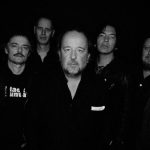
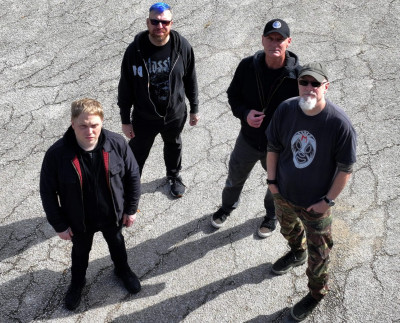
Human Impact have just brought out their new album Gone Dark, the follow up to the bands self titled 2020 debut, and it sees their immense dystopian noise go into even rawer territory resulting in another colossal listening experience. Gavin Brown caught up with Human Impact electronics expert Jim Coleman to hear all about Gone Dark and how it came together, the band’s new lineup (with the rhythm section of drummer Jon Syverson and bassist Eric Cooper joining Coleman and vocalist / guitarist Chris Spencer) and how the dystopian nature of the band is as relevant as ever.
E&D: The new Human Impact album Gone Dark has just been released. Did you want to go for an even raw sound than you have before with this album?
Jim: It’s a little raw and rougher. I feel like partly that’s due to the rhythm section that we’re working with, Jon and Coop, they have the energy of Unsane and they brought that energy into this album, which I think is awesome. It’s pure in that way, if that makes sense. So it was partly by design and intent, and partly a result of the rhythm section, who were playing with Unsane.
E&D: What led up to getting the new rhythm section in for the new album?
Jim: With Chris Pravdika and Phil Puleo, Swans is their home, or their number one priority and things of evolved to a point where it was like difficult to keep those two co-existing. Chris was doing an early cuts tour with Unsane, and he teamed up with Coop and Jon to do that. We had some discussions about, should we differentiate that with a different rhythm section? But it just seemed like they were working so well together that it made sense just to roll it into Human Impact.
E&D: How was working with this new lineup?
Jim: Nice. I mean, they obviously were strong, so there was definitely an advantage to having a lot of unspoken communication. They knew how to work together really well. I was, in a way, coming into a world that they had created and inhabited a little bit. But, Chris and I spent a lot of time just remotely kicking back and forth ideas, a lot of which had started with the three of them, and then we started really refining them and expanding them and making them Human Impact material. So there was a lot of back and forth there, but by the time we got into the rehearsal studio, it was strong.
E&D: You and Chris produced the album with Andrew Snyder. How was that experience?
Jim: Yeah, Andrew is awesome. We rehearsed and recorded it down in Texas, and then we mixed it up in Andrew’s place in upstate New York. He came in and brought this understanding and focus and that was important. We really helped to find the sound of it. We worked with him intentionally. Chris has worked with him on Unsane releases, the album, Visqueen, we were like, That’s the sound that we want, that fullness and definition that Andrew had gotten on that. So that was a kind of a reference. One of the ways in which that album is recorded was on 24 track tape, and that was our intent. We actually tracked down a studio where we could do that. But the equipment, after three days of fucking around with it, we had give up on that idea and just record. So some of the tracks got recorded on 24 track, but eventually we got to the point of just recording, regardless.
E&D: Is the title of the album a reflection on the darkness that is prevalent across the world at the moment?
Jim: There’s a couple different ways to interpret it, what we do, both sonically and lyrically, is, I feel somewhat dystopian, and I think that that’s a reflection of the world that we’re living in, the political, social, ecological climate that we’re living in. So there’s that on a surface level, but it’s also getting caught up in news cycles, that can be addictive and despairing. There’s a hidden hope in there. It’s like the idea of going dark and just checking out of that, and making our own reality. I think that’s what we do creatively, when we work on music and record and mix and make videos, It’s a way of negating the negativity of the world and making our own reality, which is a very positive thing.
E&D: Did you feel any pressure in following your debut album with Gone Dark?
Jim: Not so much. Maybe a little bit, but look, it’s a sophomore record and there’s been a couple years. So it’s like we have to get back on into people’s minds or awarenesses. None of that comes into play in terms of making the music and recording the music. The thing I like about being creative, is it roots me into the present and I’m not worried about how this going to be received or what are we going to do as a band. Those are later concerns, and I feel really fortunate that we’re able to work with Ipecac and our tour bookers and we have a small, solid team that’s helping get us out in the world in whatever way that can, so that’s that’s a huge gift.
E&D: That first album came out just as the very first lockdown was coming into force. Looking back, does it seem apt that the music was dystopian and it still is and that the album came out just as the world changed forever?
Jim: It’s interesting, It wasn’t our first show, but first live show for that album was on March 13, 2020, at St Vitus, a great club in Brooklyn, which just closed, and they shut down right after our show. In fact, we had two other bands that we were going to play with, and they all cancelled, so they actually livestreamed the show, but it was really like everything was literally shutting down in real time during that show. It was kind of crazy. I remember walking outside, and it was just like the streets were empty. This goth couple came up, kind of BDSM. They were trying to get into some event that was happening at the club after our show, and it was like, sorry, it’s just all shut down. So it did feel appropriate somehow. Our first EP, that we put out, one of the songs that we had actually recorded as part of the recordings for the first album. That was ‘Contact’ which was really about a pandemic. That came about from Chris being on a plane, and there was somebody, just like, wildly sick near him, and he came up with this idea for the lyrics there. It came to be, that was kind of preemptively pushing out this truth. It was weird because that song is so much about that, but predated it. Then we made a video for that song and put it out, and we put a call out for video footage for people in the world, asking what’s your life like in the pandemic? So people just started sending us videos to support that. That was interesting because the pandemic was so, so isolating at first. This was a way to creatively form connections.
E&D: Are you looking forward to having more freedom, with the realer of this album when it comes to touring?
Jim: Yeah, I certainly hope so! I mean, we’ve toured a little bit but we had a lot of tours that got cancelled because of Covid. We did some touring in the States right as Omicron was coming in, and so that was similar, bands were cancelling, but we did some European stuff, two summers ago, and I actually got Covid, at Hellfest. So we had to cancel the end of the tour. It’s a different world now. It seems, like you said, it’s freer. I totally look forward to getting out in the world and playing, and I think we’re going to be over in and doing some stuff in Europe in April, early May. So looking forward so looking forward to that.
E&D: Are you looking forward to playing the new material live?
Jim: Yeah, we’re totally looking forward to it as it’s more raw and we can’t wait to test it out.
E&D: Can you tell us about the song ‘Corrupted’ and the striking video you made for it?
Jim: ‘Corrupted’, had a a wider meaning and intention, as far as Chris’s vocals, but we ended up taking a lot of footage from old public service announcements like, don’t do drugs, and our intention was to avoid that overt messaging, or connection, but it ended up feeling kind of relevant, and we put it under a microscope, the whole social imperative to do well at that time, so all these public service announcements were coming out in the 80s, this whole campaign of just say no and and demonising drugs, and making it look like it was a character flaw. Addiction is considered a disease but it’s treated criminally as massive money making potential potentialities there the opioid epidemic was created. It was by a corporation that was maximising profits, and the solution to it is coming from the same companies when they’re rolling out suboxone treatment and stuff like that. It’s also feeding the privatisation workforce in prisons, it’s just so mind boggling, right? The video ended up putting it under that microscope where, I think Chris’s lyrics were probably a little more far reaching, but it ended up like the video, just because we ended up ingesting so much of this footage.
E&D: How is life on Ipecac records?
Jim: We love it. We have a good relationship with them, they’re very much like, Hey, we love what you do. Just keep doing it. We’re here for you and beyond that, they’re supportive. They have a following just being Ipecac from what they do. Of any label that I would want us to be on, they’re it.
E&D: With yourselves and The Jesus Lizard bringing out vital new albums, does it feel like there’s a still a big and a new audience for abrasive, noisy and cathartic music?
Jim: It seems like it, right? I just listened to their album in full, and I felt like, I’m gonna reach out to them, because I felt like a sixteen year old. It brought all these kind of energies, They’re not just locked in on what you might think of their definition as a band, they’re exploring and reaching, and it’s a beautiful thing. I do think that there’s a lot of, I don’t know if it’s renewed interest, but currently there’s a lot of interest in this kind of, noisy, more aggressive music, which is great and I think it’s also related to where we are socially and politically. There’s a rebellious nature to it which is appropriate.
E&D: Have you had any thoughts about new music and are you constantly working on ideas. You mentioned that you had twenty seven songs left over from the first album, are you thinking about the next thing already?
Jim: I mean, Chris and I, we catch our breath here and there, but we’re always working on new stuff. We’ve talked about working on some stuff, so I think, coming November, we’re gonna start kicking some ideas back and forth and seeing where that leads. Even apart from Human Impact, I’m always doing a bunch of different music stuff. I just came back from Berlin, where my wife and I, Beth B, we had this remarkable exhibition that was very rooted in sound and music and audio as well. But there’s a bunch of different installations and live performances and films and all that. So, yeah, constantly creative. I think maybe there’s a bit of an addictive component to it, but that’s where I find my happy place, that’s where I can close the blinds on the world around me, and kind of make my own reality.
E&D: With Unsane doing new stuff and revisiting older material, have you ever thought about doing the same sort of thing with Cop Shoot Cop?
Jim: It’s actually like how we started doing Human Impact. A little bit before that, I had gotten really interested in getting back into this kind of music, because I’ve been making music through the years in different ways and, and I really missed this kind of sound. I had actually gotten in touch with Todd and all the guys from Cop but we’ll never get together in the way that we were. It’s not going to happen. I’ve always been in touch with Phil though, and I’ve continued to make music through time, but I did some recording with him and Chris Pravdika and that was kind of what put me together with those guys as a rhythm section, and Chris and I always wanted to make music together before, like 1989 on but we kind of hadn’t been in touch for a while, and I approached him at another same show, also at St Vitus. This was when he was with Vinnie and Dave, and we got back in touch, and just started talking about doing some stuff together, and that led into Human Impact.
E&D: Do you have good memories of playing the Reading festival with Cop Shoot Cop in the 90s?
Jim: We played that twice. We played on the smaller stage, then we played on the big stage. They were really good shows. Love that there’s a really decent quality video on YouTube of us playing ‘Two At A Time’ at Reading.
E&D: What have been some of the biggest highlights of being in Human Impact so far?
Jim: I mean, first and foremost, I think the way that Chris and I work together is really special. We just love making music together. Our vision is shared, and now, working with Coop and Jon, it’s like there’s an added fierceness to it that’s really a bonus.We haven’t had that much of a chance to really get out and tour as much because of Covid, but we’ve had some great shows. I enjoyed Hellfest immensely. That was a great show and very focused. Just creating the music, recording, even doing the videos. I’ve been having a lot of fun doing the videos, and I feel like what we’re doing with the videos, feels like it’s this evolution of a visual language that supports the band.