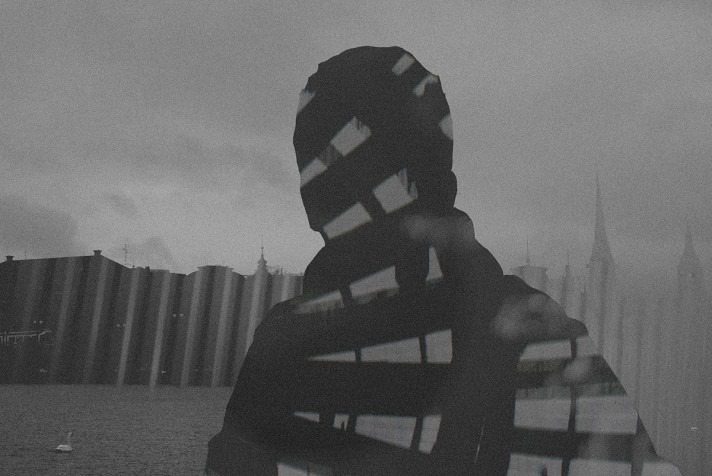
By Charlie Floyd
Benjamin Bland (Features Ed): Under the name Postdrome, Charlie Floyd has created two of my favourite ambient/drone records of recent years. First came 'Never Without', in 2011, and earlier this year he released 'Where the King Will Land', which is equally joyous a listen. You can find both his records available for streaming and pay what you want download at his Bandcamp page. Prompting a new direction in the Music vs Noise column, Charlie has written a piece on how he goes about his work and what inspires him to create his fascinating music. So, without further ado...
Postdromewas a small project I started back in late 2010, since then I've released two solo albums and a joint album with Costa Rican musician EUSand French band Saåad. When I began this project I had no knowledge of musical creation whatsoever; I had absolutely no idea how to approach it. The only thing I did have was a vast library of music to influence me and a strong desire to make an album. I've been hugely into music for years and wanted to finally start making something myself.
I had no idea at that point what the first album would be, so honestly the sound of it was dictated mostly by cost. Rather than settle on a genre and work from there it became a challenge of what noises could I make with no money or instruments whatsoever. Because of this I started using samples, something I could play around with for free (so long as there were no rights issues). I'd pull apart songs that I loved and grab second long snippets to repeat, slow down or affect in any way I could until I had reached a sound similar to the one that I was after. The only prescript of this method was that the original sample had to be destroyed beyond recognition so that there were no copyright issues (something I really didn't want to have to face if it came to it). On top of these samples I added layers of distorted vocals, piano playing, field recordings, and anything else I could get my hands on for free.
A lot of the sourced samples came from old cassettes; I picked out unlabelled tapes purposefully and added a load of digital filters to them live before listening to anything (more recently a lot of the tapes are run through guitar pedals and other analogue effectors), and I still have no idea what a lot of the samples used are actually from. This method made a lot of the creation process down to chance, something I felt was an interesting way of working and one that was full of surprises. Unsurprisingly though the results were often unusable; the occasional time I did stumble across something that worked well easily made up for this. Hitting upon that random altered sample that sounds great instantly is so exciting and a sudden discovery like that can sound better than something you spend weeks perfecting.
I used these random samples as a starting point a lot of the time. Getting that beginning idea down is always the hardest part of creation and leaving it to chance seemed like a good way of cheating this problem. From that point building on top of these loops or clips became much easier. Most of my ideas come out in the development rather than having rigid plan for each track, and while a lot of songs do have some sort of initial plan to them, they're likely to change completely over the course of the creation process.
The other thing that obviously influenced the sound heavily was the music I was listening to at the time. My musical influences for Postdrome are pretty varied, but they all play a huge role in the development of the sound (I'll try to avoid just writing a six page list of musicians I love and was influenced by). Of course some of the nspiration comes from slightly similar drone/noise/ambient artists like Lustmord, Wolf Eyes, Jefre Cantu-Ledesma, Oneohtrix Point Never, and Natural Snow Buildingsbut also from more popular artists such as Swans,Sonic Youth, and This Heat. While many different aspects of each of these artists music influenced me in different ways, their ability to build atmospheres and their use of texture plays a huge part in my music and is probably the thing that ties most of these influences together. A lot of other influences came from contemporary jazz and also the ideas of repetition found in minimalism. For me a large part of creating music is the research into sounds, and listening to music is always key to the creation process.
After finishing the first album I was contacted by Romain Barbot from the band Saåad and we starting working on a collaboration, working with EUS and Saåad was such a completely different experience. I couldn't spend months slowly building up tracks as I was doing before, but instead I had to have something fairly final created much faster. We would then e-mail these tracks around and each edit/layer the others work before sending it back in an entirely new form. Sending unfinished tracks between each other brought out a lot of new ideas and was a great way of doing things. Being able to just e-mail some track you've created and are happy with and have it return improved and added to in ways you would never have thought of was such a satisfying way of working.
Since the collaboration I've been trying out lots of new techniques and styles. Using Max (a visual programming language) has allowed me to create things I'd never considered before, and I recently worked on a program that takes a 1-3 second sample from a cassette every few seconds and then overlays them all in interesting ways instantly and almost automatically. These new methods have allowed me to explore further into music creation, and I've been using them along with granular synthesis and distorted guitar playing to further build textures. I think I've managed to pick up a fair amount over the last 3 years of working on music and I just going to keep blindly exploring until I hit something new, how the sound will develop or where it'll end up is a complete unknown.