Interview: Star Carr
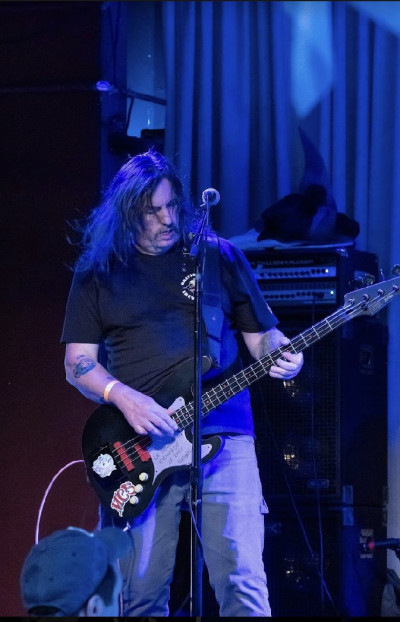
Star Carr, which I'll be honest, I feel, is the best band I've ever been in. I'm playing bass in it, which I'm really enjoying.
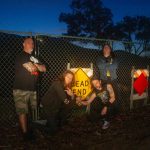
Collide-O-Scope, the brilliant new album from psychedelic punk band Star Carr came out last year and it shows off the bands talents to the full, with their music being as brilliantly chromatic and defiant as the title of the album suggests. Gavin Brown had the pleasure of catching up with Sab Grey, who is the bassist and vocalist of Star Carr, to talk about the band and Collide-O-Scope, what this year holds for Star Carr, the importance of unions, tales from Iron Cross, Sab’s previous band and his early days as part of US hardcore and skinhead culture in both Baltimore and Washington, DC and his time living in the UK in a fascinating interview.
E&D:The new Star Carr album Collide-O-Scope came out at the end of last year. Have you been pleased with how the album has been received so far?
Sab: I have, absolutely. We’re just a little band and we’re putting the record out now and then the next thing you know, people like yourself are wanting to know about it! I mean, we don’t have a record label, it’s just three guys doing this thing and people seem to be like it, which is good.
E&D: How did the band get together?
Sab: Well, it started with me and our drummer. We decided to do something, so we went down to rehearsal space, we didn’t have a guitar player yet, so we just started working on these songs. Then COVID hit, so we were dead in the water, there was no way you could even rehearse in the studio, What we wound up doing is we got a little mixing board, and he has an electric drum set in his house. So I used to go around and sit outside on his porch, and we put headphones on, I bring my little bass and run it through the mixing board with headphones, so at least we can hear each other. That’s how we started, and then we got a couple people, and now it’s settled with Donald and the guitar player, and then, we decided to do the album.
E&D: Who are the biggest influences on the sound of Star Carr?
Sab: Hawkwind are my favourite band of all time so, but we’re all punk rockers. We are a punk band first, but we take our influences quite a lot outside of punk, the drummer loves Rush. I hate Rush, but he loves them. Our guitar players really into the Sonics and that mid 60s sound. I like stuff like Mountain, Ten Years After, and the British blues stuff, but not Eric Clapton, anybody but him! Humble Pie and Steve Marriott, when they were playing blues, but they got huge amps and just turned them up all the way! That’s what it is.
E&D: Did you want to have a big psychedelic vibe in there as well?
Sab: Yeah, we’re basically a punk band, but we’ve got wah wah pedals, like early Pink Fairies, that’s where we’re at. You can have a little rip on the guitar, but you still got to have some oomph behind it.
E&D: You released the song ‘Join A Fucking Union’ ahead of the albums release. Was it important to bring that song out first with the message it contains?
Sab: Well, it’s funny because I actually don’t like using swear words in songs as a personal thing but we were working on some writing for the song, we had the riff and everything, and I was like, it’s got to be ‘Join A Fucking Union’! I’m in the electricians union and as we move forwards or backwards with the politics of the day, it’s becoming increasingly clear that the political parties are not there to help you or be there for you. They are there for themselves. They’re there for their donors. They’re there for the rich. They’re not there for working people, and the only thing that will help working people is working class solidarity. working class solidarity is exemplified in the union, and unions have fallen asleep for quite a few years, but now they’re coming back. My union, we’ve got a new leader, and then all of a sudden, they updated the computer because they’ve been basically asleep since Reagan and now it’s moving forward. I honestly believe in working class solidarity and working people getting a quality of life and stuff like that. I just turned 62 and I grew up in the United States but I was born in Britain when Britain had a Labour government that took care of people. Britain had a national health service. It was just done. It was normal. There was a safety net to protect working people from the pitfalls of life. Even the United States, when I grew up, it didn’t have a national health but it had a regulated insurance, it wasn’t as good as the National Health Service, but it still helped, it wasn’t where amputees are being told that a new limb is not medically necessary for them, so their insurance is denied, or you can’t have surgery that’s going to save your mom, because the fucking CEO decided that he wants a new yacht. Basically it’s, can we have what we had before? Can we treat people decently, with respect, and if you were working, you were entitled to support your family, pay your rent, have a good life, and have enough time off to enjoy your life. We’re not slaves to a job and to some prick, who takes a lot of money, there’s plenty of money to go around.
E&D: Have you had good feedback from that song and it’s its message?
Sab: Yes, everybody who has heard it has said it’s great. When we play it live, quite often I’ll say, hey, stick up for each other, join a union. I’ve lived a life and joined the Union a few years ago, and all of a sudden, all these things have opened up, like, the possibility, I can retire, because I had just assumed in the back of my head that I was going to work until I died. That was just how it was but it occurred to me that I could now retire. I have a seven year old daughter, so if I retire in three years, that’s more time with her. The songs been doing well. We’ve got a video my mate did. He’s a filmmaker, so he made it and it’s been doing quite well.
E&D: How have you recent live shows been going?
Sab: Very well. The last one was heaps of fun. My daughter came up on stage for a minute, and then she got a bit scared up there.
E&D: Have you got plans for more this year, and would you making it over to the UK and Europe a possibility?
Sab: I’d love to, we just need somebody to bring us. We all have passports. We’re all ready to use them. The band is here, but we’re all working guys so we can’t go living in a van for six weeks at a time, but we do what we can. We’ve got some gigs lined up. We’re got a nice one coming up in in April in West Virginia, where my wife’s from, in there’s a punk festival out there, and it’s always good to play up there.
E&D: Have you had any thoughts about new music as well?
San: We are being very prolific behind the scenes here. We have our guitar player going through a bit of a creative streak, and five or six songs. half written out, sketched out. So, yeah, there will be more stuff and we.may do a live album, because one of the joys of the band is there is room to stretch, change and morph with the song structures, as we play them live. Let me say this carefully, we can slide into jam band territory without being a jam band, but there is a way to sort of stretch a little bit. We don’t want to be a jam band and we’re not a jam band, so nobody needs to worry. But there are things you can take things from that.
E&D: Going back a bit, do you look at your time with Iron Cross with fondness, and will the band ever do anything again like a live show?
Sab: I’ve mentioned this before. As it stands now, the band will will never do anything again, unless you give me a large amount of cash. It was what it was the first time, and it was a lot of fun, and then it wasn’t fun anymore, so we stopped doing that, and then I moved back to England. When I moved back, we did it again for a while, and it was a lot of fun, and we got to go to a lot of places, and we met a lot of people, had a great time, then it wasn’t fun anymore again, so we stopped doing it, and that’s where that’s gonna lie. I’ll be honest. I wish we had a better name, but we were kids, didn’t know any better, and because we were kids, that’s what you do, you dig your heels in and get stubborn. I’m certainly not ashamed of it, and it was a lot of fun and, and you see films of these other bands playing the songs that you’ve written, and people are going batshit crazy and enjoying it, and it’s quite something.
E&D: How does it feel having Agnostic Front cover ‘Crucified’ and still playing it to this day as well as having bands like The Business doing that Iron Cross song too?
Sab: Brilliant! A friend in England, he said to me. I never liked American punk because I never got it. I’m British, I didn’t relate to it. he said, but that song, I did. I mean, doesn’t pay you rent, but who cares? If you can go to any pub or bar in the world that a punk band is playing, they’re probably going to know at least one of the songs that I’ve written, that’s a great result!
E&D: How did you get into to punk and then the whole skinhead thing in the first place?
Sab: I read an article when I was a kid. I was really into music, but, it’s funny because I remember looking at my record collection, and it was all five to ten years out of date. This is the sort of mid 70s, and there was nothing going on. We just moved to the United States, which I’ll never quite forgive my parents for. We moved to the States in 1976, to Baltimore, where I’m living again anyway. Around that time, there were bubblings, and I had been lucky that I had found a group of friends in my school who were into more music than you were getting on the radio. I remember when we landed here because in Britain at that time, Top of the Pops was David Bowie. It was Slade, all the good stuff. Glam rock was probably my first love, and then we moved here, and it was all the fucking Eagles, Eric Clapton, fucking Lynyrd Skynrd, but then also, you’re searching around, and people are turning you on to good stuff, so the work was being laid and then I read an article with The Clash in some alternative magazine, and it was like, holy fuck, they’re saying how I’m feeling. This is it! I had to go find the album. So I went to a record shop, and there was a used copy. The first album wasn’t released in the United States yet, so it was an import, but it was used. With trembling hands, I took it to the counter, and got a sneer from the sales clerk, who, of course, was older and more sophisticated but I took the record home, and that was it. It was like, holy shit. Then, I found out that there was a punk scene here in Baltimore.
E&D: What was Baltimore like in the in those days in the punk scene?
Sab: As a town, it was like Sheffield or Hull or something, because it’s the town that nobody wanted to go to, and had nothing that would make you want to come here, but it had a punk scene. I wandered into it at 15/16, and everybody was a little older than me, but everybody was really nice and very welcoming. It had some really good bands. There was a band called DeMoronics.There was a band called Trixy & The Testones. There was Judie’s Fixation from down the road in Annapolis. And then through that you had the Bad Brains in DC. DC is only like thirty miles down the road. So we started going to gigs down there, and then after I left school, I moved down to DC.
E&D: What were those days like in the DC scene and living in the Dischord house as well and are you still in touch with a lot of those guys?
Sab: Yeah, we’re still friends. We still chat to this day, especially now social media makes it easier. It started, because I had met Ian and all those guys, they played a gig in Baltimore, and I went, and the main difference was, I remember walking into that hall, and there were a bunch of punk rockers that had trestle tables set out, and the punk rockers sitting at the table were my age, the other guys were all in their early 20s, which when you’re 15/16, is a huge age difference. They were all really nice and welcoming, but they weren’t me, whereas all of a sudden there’s Ian and Henry and Alec and all those guys sitting at the table, and it’s like, hey guys, we were all teenagers, and that’s how that started then we started going down to shows. The connection was made, we traded numbers. Started calling, Hey, man, we’re playing, and then I moved down there. We got the house, and then the Dischord house, I moved in there. I lived there for a couple years.
E&D: What were some of the best shows that Iron Cross were playing around those times, in the early days of the band?
Sab: Well, we got to play with everybody. We played with Bad Brains. They were renting halls and the clubs were small, there might be 100 people there, tops, they were small gigs. They weren’t like now, where you can get 3,000 people or something. They were amateur in the sense that, there was the 9:30 club that was a club, but the rest of it was a lot of times it was halls, or you would find a club that would let you play, and then they would pull the plug halfway through, like what, what the fuck Is this punk?! So it was mix and match, a lot of fun. great in your early years.
E&D: After Iron Cross broke up initially, you moved back to the UK, can you tell us about that and were you still involved in music then?
Sab: I mean, none of them you would have heard of, but I was playing in bands, and then I did a lot of solo acoustic stuff, half rockabilly, half country, what would be called Americana now. I did that for a long time, that sort of singer/songwriter type stuff, which I still do occasionally, and still enjoy it. Then I had family over there, the kids are all grown up over there in their 30s now. And then I moved back here. So, yeah, the same thing. More bands. I did a record with the Royal Americans, which was an Americana type band. Nobody listened to it, which is fine. Actually, it’s on social media now, and I actually listened to it. It’s like, that’s pretty fucking good, man. It was years ago I did it, but that’s a good record. Yeah. And then, like I said, the Iron Cross thing was going for a long time, and that was fun. We got to go to Europe, we got to go to Mexico, we went to Canada. So, you know, no complaints. And then, Star Carr, which I’ll be honest, I feel, is the best band I’ve ever been in. I’m playing bass in it, which I’m really enjoying. I feel like, that’s my instrument, even though I play other instruments. But that’s the one.
E&D: Did you play bass growing up?
Sab: I wanted to be. bass player actually. I had a bass and then the very first band I ever played in which, I think, had one gig, maybe two, I played bass badly. With Iron Cross, it was like, I’m a bass player, and they’re like, well, we need a singer. It’s like, I’m a singer and that’s how that started. Now I’m doing both. I’m totally happy.
E&D: It’s come full circle!
Sab: It has!
E&D: During your time back in the UK, you worked for HMV, I believe there’s a great story about how you ended up leaving and as someone who worked for the company for fifteen years, it is something I’d love to hear about!
Sab: I was working at the one of the megastores, Oxford Circus, and I was in the jazz and blues department, running the blues section, because I fucking love the blues. It was kind of a mixed bag, in the sense that there were great people working there, and then the management was shit. I will say this, because this come in a minute when we get to the climax of my time, our floor manager, he was fucking good. I’ll give him credit, because he did right by me, and he was a good guy. But the upper management, they were fucking shit. We did a whole refit and they promised us a big bonus which we didn’t get, they promised 500 quid, which was a big amount in the 90s and we got 50 quid and told them to keep it, but that wasn’t the reason I left. I was sitting on the phone with a customer, and there’s people in front, they got the counter and the phones on the wall. All of a sudden.I hear someone say something like, not like this fucking idiot here, this fucking moron, to me! I’m like, Excuse me. And he says, Yeah, you, you fucking moron. So I hopped over the counter. I have tattoos, so I had to wear a long sleeve shirt. So I pulled my HMV shirt off and said, and I asked him if he wanted to repeat that outside. And I may or may not have pushed him on the chest! So that was the end of that job. So I left, and the floor manager wasn’t there that day. The next day, I came into work because I felt like I owed him. He walked by, and he was like, alright, we’re gonna have a chat. I said, Well, I didn’t want to just leave, I owed you a face to face, he was a good bloke, so I went downstairs, and he was like, this is what’s gonna happen. He says, you can either resign from the good of the company and you’ll get your back pay or you’ll be fired and I’ll call security and you’ll be escorted off. So I resigned for the good of the company! It was just funny. The floor manager asked if I had seen him before, and I said no and he said he’s one of our worst regulars, so that was the end of my time at HMV!