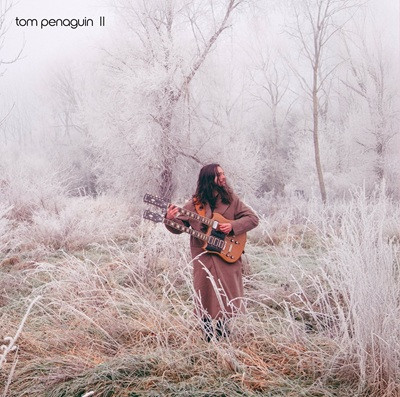
When I think of the Canterbury scene, I immediately think of bands such as Hatfield and the North, Caravan, Soft Machine, National Health, Egg, and Matching Mole. Mind you, I’m no Canterbury expert, but something completely caught me by surprise and led me to a newfound appreciation for this French multi-instrumentalist, Tom Penaguin. Following up his 2024 debut release, Tom expands his exploration of the genre, giving it the energy and confidence it needs to become a truly unique and in-your-face album.
Tom Penaguin II, released on the áMARXE label, isn’t just a fine album, it’s a complete work of art. Much like Homunculus Res, Syd Arthur, and Zopp, Tom carries the Canterbury torch with pride. However, he does so with enough twists and turns to make you want to dig out those old records that have been sitting in milk crates for years.
With winds howling, fuzztone organ, keyboards, and the dawning of a new day on ‘Didier Dandelion in the Year of the Great Winds’, Tom pours his heart into every instrument, creating a free-for-all concerto that blends his expressive guitar work, psychedelic organ passages, The Polite Force era of Egg, and touches of Hatfield and the North. The result is a thrilling keyboard chase that recalls the manic energy of a Tom and Jerry cartoon, something that would have surely left Mike Ratledge in awe of this French composer.
The midsection is where Tom ventures into a Wonderland-esque atmosphere, creating a lush yet surreal beauty that honours the original spirit of Lewis Carroll’s stories, not Disney’s interpretations, but the strange and imaginative world Carroll envisioned so many years ago. Then, during the final three minutes, Tom returns to reality, reflecting on that fantastical journey with a Steve Hillage-inspired guitar passage that feels warm, comforting, and perfectly suited to enjoying a nice cup of jasmine tea.
‘Mandatory Intermission’ gives Tom the breathing room he needs, offering a refreshing moment of cool air with Gershwin-inspired touches that continue where ‘Rhapsody in Blue’ left off, while adding a stronger jazz foundation and a distinctly John McLaughlin-like approach. To me, Tom clearly understands his source material, building upon it with richer harmonies and cleaner chord progressions as he walks us down the yellow brick road toward the album’s final chapter.
The four-part ‘Ornamental Hermit Suite’ sounds like something Egg or Hatfield and the North could have created during their classic 1970s period. At the same time, it’s Tom’s heartfelt way of thanking those bands for inspiring him to keep their legacy alive. During the opening movement, it’s easy to imagine a young Robert Wyatt contributing one of his signature melodic vocalisations to the beginning of the piece.
The clicking effects, droning organ, and swirling synthesisers take the listener on an unforgettable journey through cosmic textures, recalling the Stargate sequence from Kubrick’s 2001: A Space Odyssey. As soon as Maureen Piercy’s vocals enter, she lends Tom a helping hand, paying tribute to Wyatt’s vocal style and the Northettes while blending everything together into a delicious strawberry-blueberry smoothie that’s simply irresistible.
The second movement dives even deeper, almost feeling like a sequel to ‘Seven Is a Jolly Good Time’. Organ, drums, and bass fill every corner with excitement before Tom revs up his guitar, channeling not only Steve Hillage and John McLaughlin but also a touch of Robert Fripp jamming alongside Jimi Hendrix. He lets loose completely, playing with infectious joy while constantly leaving you wondering where he’ll take the music next.
The third movement finds Tom imagining his organ parts echoing through a Gothic cathedral, surrounded by haunting black columns and unsettling imagery that create an unmistakably Goyaesque atmosphere. If you think this album is all peace, love, and flower-power psychedelia, think again. Tom doesn’t hold back. He shifts into a Thelonious Monk-esque arrangement, using his bass to walk a musical tightrope, carefully maintaining his balance without ever looking down.
Then everything suddenly shifts into a high-speed race between bass, drums, and organ as they barrel down the highways of the French countryside, giving the Tour de France cyclists a run for their money. How proggy can you get? Very, very proggy!
The fourth and final movement brings Tom back to his own world one last time, delivering a final sermon inside the church as if giving the Sunday congregation a much-needed wake-up call. He follows it with beautifully clean jazz guitar textures that radiate like sunshine, filling the day with wonder and delight. It’s a spectacular finale, with every instrument colliding in a breathtaking extravaganza that will leave your jaw on the floor.
Twists and turns abound, but Penaguin never backs down without a fight. I was completely blown away by what I was hearing. It took me back to the summer of 2011, when I first heard William D. Drake’s ‘The Mastodon’ from The Rising of the Lights after Sid Smith played the track on Podcasts from the Yellow Room, prompting me to buy the album immediately. That same sense of discovery came rushing back while listening to Tom Penaguin II. It’s the kind of album that reminds you why progressive rock continues to evolve, paying homage to the past while refusing to become trapped by it.
Tom doesn’t simply recreate the Canterbury sound; he re-imagines it through his own creative lens, balancing technical brilliance with genuine heart and imagination. Every composition feels carefully crafted, yet spontaneous enough to keep the listener guessing from beginning to end. It’s an album that rewards repeated listens, revealing new textures, melodies, and little surprises each time you return to it.