By Mat Davies
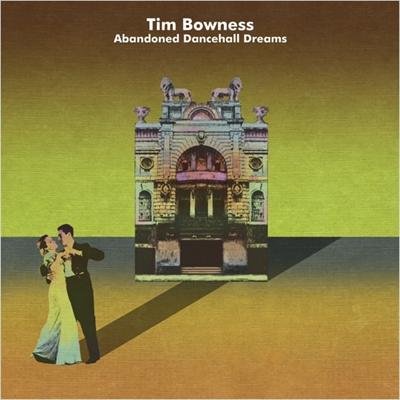
It was the Danish philosopher Soren Kierkegaard who said that “Life can only be understood backwards; but it must be lived forwards”. The themes of reflection, memories and the occasional sense of loss and melancholy from decisions taken (and their respective consequences) are leitmotifs that Tim Bowness returns to time and again on his second solo album, the ambitious and idiosyncratic Abandoned Dancehall Dreams.
It has now been some 21 years since the release of the first No-Man album and a decade or so since his debut album, My Hotel Year, saw the light of day and in that time he has had much to think and reflect upon. My, how that time has served him well. Abandoned Dancehall Dreams is an album of pleasing ambition, creative richness and mature insight. Solo albums are often tricky affairs, for both artist and listener, especially where the artist in question has a deep relationship with his audience for being one of music’s natural collaborators. Personal expression can often turn into exercises in hubris; luckily for us, this is not one of those occasions.
Loosely inspired by the metropolitan dancehalls of the album’s title: their characters, stories and personal histories, Bowness uses this panjandrum of memories as a springboard for an eight song album that reaffirms a belief in the power of the album narrative whilst embracing a wide range of musical expression. In other, lesser hands, this would doubtless feel arch and wilful; on Abandoned Dancehall Dreams it feels like the most natural thing in the world.
An album that moves eloquently between soaring rock expressionism (a la Porcupine Tree ) on ‘Smiler at 50’ to the more pastoral, singer- songwriter vibe that underscores ‘Waterfoot’, this is the sound of an artist who seems to have found his voice and art in considerable fettle. There is a 1980’s sensibility to some of the album- the use of fretless bass and synthesiser invoked memories of Talk Talk and mid-period Tears for Fears in this listener and the 1970s echo of Nick Drake will not be lost on anyone- all of these things are, as you will have guessed by now, very good things indeed.
The song writing across the album is very strong: as examples, ‘The Warm Up Man Forever’ and ‘Songs of Distant Summers’ are notable in their emotional power and lyrical elegance. Whilst much of the themes of melancholy and lost opportunity suggest an autobiographical slant, the lyrics are more often than not, written in the third person and, to these ears anyway, these themes are more universal than personal.
As you might expect from the supportive progressive rock community, there are guest appearances aplenty. Pat Mastelotto (King Crimson), Colin Edwin (Porcupine Tree), Anna Phoebe (Trans-Siberian Orchestra) and members of the No-Man live band Stephen Bennett, Michael Bearpark, Pete Morgan, Steven Wilson, Andrew Booker and Steve Bingham all pop along to add their respective contributions but, be assured, this is a singular solo album, where Bowness is centre stage throughout.
When you were a kid, one of the things that you wanted most was to be a grown up: the ability to play in that strange often alien world inhabited by your mum and dad. The great revelation, once you got there, was that it often wasn’t quite what you’d hoped for and, sometimes, much less so. Bowness, like all of us, knows this. His achievement, through Abandoned Dancehall Dreams, is to take that melancholy and imbue it with a sense of optimism and confidence; as Kierkegaard would probably have it- here’s his life, brilliantly moving forward.