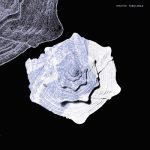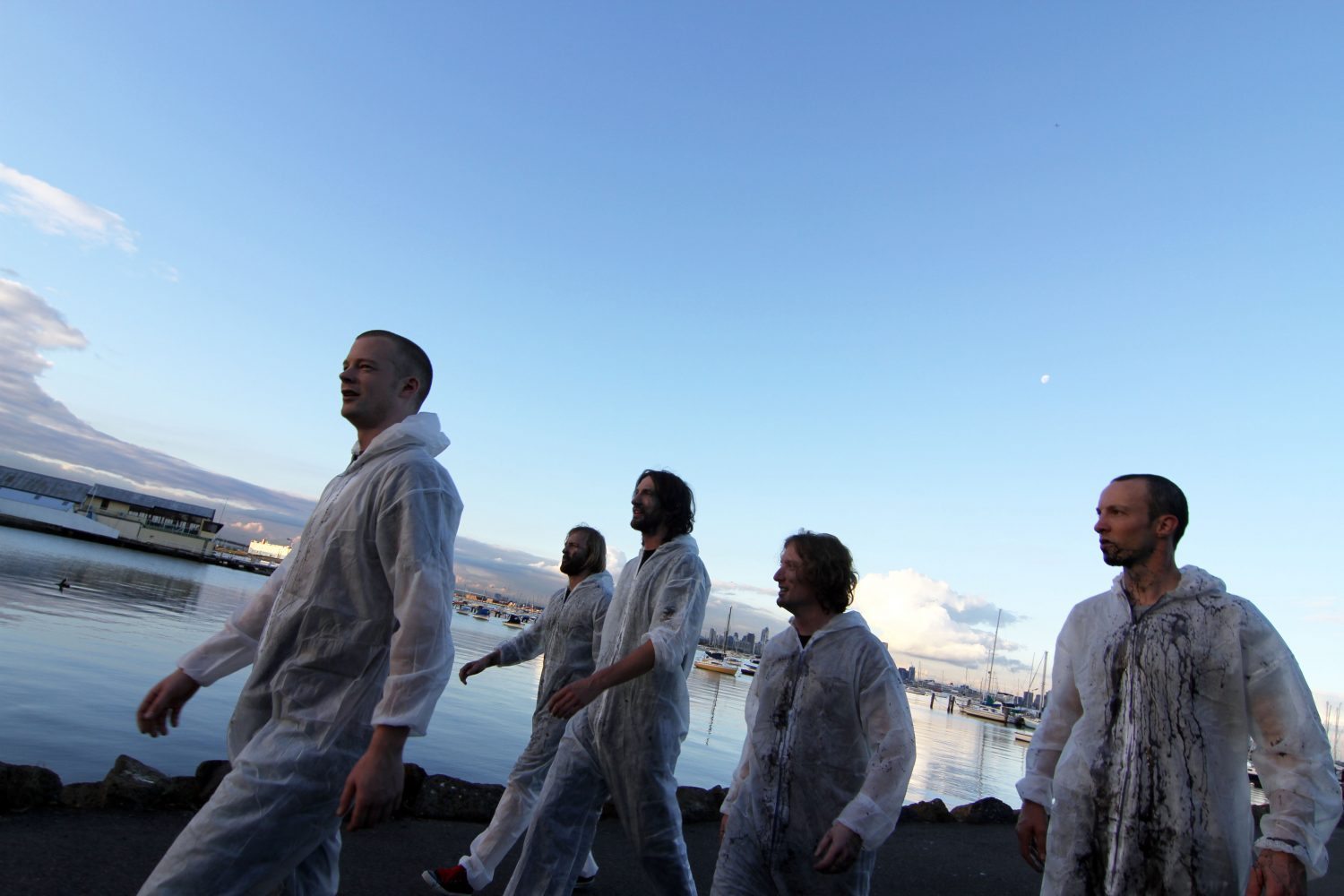
In the wake of the release of Jarek‘s second album, the wonderful ‘Tree Of The Seas’, Gilbert Potts spoke to their lead man Jared about the creative processes involved in making the record.
(((o))): Leafless trees are the predominant feature in your band’s imagery. What is the connection with your name and how else do the trees relate to your music?
The tree has been somewhat of a logo for Jarek since the beginning. Art is a big part of what we do and the tree is a very symbolic image that we think encapsulates a lot of the music we create. It represents life, death, change, growth, and nature. We consider our music to be earthy and draws from darker elements of life, hence the leafless tree. The birds and moon also feature frequently in our art and I think this reflects our more optimistic elements.
(((o))): How long has Jarek been around?
Jarek started off as a solo original recording project in 2005 whilst I was studying. It didn’t develop into a live project until 2008 where I would play acoustic guitar, kick and tambourine accompanied with samples, one or two extra guitars, or maybe some keys. Progressively after jamming and inviting a number of different instrumentalists to join me on stage, it wasn’t until 12 months later that we had settled as a 6 piece band to record our debut album, Space in Noise in Jan 2010
(((o))): How many of you make up Jarek and what instruments do you play?
Jarek is now a 5 piece line-up. We play acoustic guitar, bass, kick and monkey stick, samples, clarinet, melodeon, keys, piano accordion, glock and have 2 electric guitars.
(((o))): You use a blend of electronic and acoustic instruments including clarinet, which is not a rock band staple. That broad range and unusual mix is not used once or twice for effect, but is integral to your sound. Did that come about because that was the range of instruments you play, or was it to fulfill a dream of a particular sound?
Between all the guys in the band we play a collection of instruments. I think the thing we enjoy most about playing instrumental music is the freedom and space to experiment with our line-up and include instruments like the clarinet without stepping on the toes of the vocalist. Throughout our short career we have experimented with a number of unusual instruments like tablas, trumpets, baglama saz, didge, singing bowls and accordion. Not your run of the mill prog rock instrumentation but we all try and keep an open mind when it comes to composition.
I think you have to respect everyone’s ideas and influences when writing as a group and it’s fortunate in our situation that we draw inspiration from a wide variety of artists, genres and playing backgrounds. Nothing we do is ever that intentional. If it was we would probably sound like Mogwai, or Tool which would be cool too but I think we get much more satisfaction from creating music that is challenging and possibly confusing for our audience but still has enough passion and familiarity to keep people engaged.
(((o))): How do you hope listeners will respond to your music? What are you striving to offer them when you record, and is it different from when you perform?
Well first up it would be great if people genuinely enjoyed our music. It’s quite intricate and there is a lot to be heard, it’s the kind of music that you will continue to notice more and more interplay between the instruments. Lots of simultaneous melodic lines mean on one listen you might be tuning into the guitar melody, but on a second listen you will notice a completely independent clarinet line.
Ultimately we are trying to make great music that is interesting, unusual, challenging, but most importantly excites and challenges us as composers. I don’t think people will ever engage with any artist unless they truly believe in the music they make. We have received some pretty amazing feedback from people at live shows. Not everyone gets what we do or appreciates it and that is fine, each to their own. It does seem though that the people that do connect with our music are incredibly passionate about it and pick-up on our passion as musicians and writers.
Whether we are writing, recording, or performing, all we are striving to offer people is music that excites us and that we believe in. Ultimately we write for ourselves but it is a great feeling when other people feel as strongly about our music as we do.
(((o))): What was the process of writing your new record, Tree of the Seas? What were your influences?
Over the past 15 months since the first release we have consistently been working on new material. There has been no formula for writing songs for ‘Tree of the Seas’.
Some songs have happened very quickly for example ‘Roose Liverspoon’ and ‘Pasito Races’ were basically written in a couple of hours whilst doing some writing down at our beach house retreat at St Leonards. Other songs songs like ‘PBC’ and ‘A Dilapidated Existence Unknown’ were much more though out and arranged over months of jamming.
‘Swine Song’ was completely arranged before I took it to the guys so it was just a matter of learning the parts and the rest of the songs were written based around a chord progression that we jammed until everyone had composed their own lines.
We like to keep things interesting and different, this helps with maintaining diversity in our sound. We all have a lot of ideas and opinions when it comes to writing so I think it works best when everyone gets the opportunity to express their own ideas.
Our influences for the album were alpacas, coffee, Massive Attack, Milo Kerrigan, influenza, Mogwai, good blokes, live shows, storms, Antonio Banderas, gigs, laughter, relationships, family, music, Portisehead, rain, the beach, St Leonards, and to speak more broadly…life
(((o))): What about the recording and production – how did it differ from when you made Space in Noise two years earlier?
Initially we set out to record the album ourselves, at various locations, to produce and engineer ourselves and release in a mere 12 months after the first album release in 2010. Not so realistic but better to be ambitious hey?
‘Space in Noise’ was recorded in one day and produced for a total of $1200 including manufacturing. Home studio recording, mixing and mastering was done pro-bono and it was a really quick turnaround. We have taken much more time with ‘Tree of the Seas’, spent more money on studio time, engineers, mixing, and mastering. We released the ‘Massive Portise’ single in June 2011 which was recorded at my place, in my bedroom and mixed and mastered in my shed with a very basic studio set-up. The B side on the single ‘Pasito Races’ was recorded in our shed too.
It actually came up really well but when attempting to record and mix some of the other tracks it was proving too time consuming and I was unable to produce a crisp enough sound to justify the songs. It was at this point that I decided to go into Sing Sing South with a good friend of mine Davin Pidoto. I had worked with Davin on another project and knew he would be perfect. We spent 2 days in the studio and recorded the remaining 7 songs on the album. Everything was recorded as a live band with a couple of overdubs of acoustic, electric guitar and some piano. We used a bunch of different room mics and tried to keep everything nice and raw with as much space in the mix as possible and recorded to tape.
Davin spent the next 2months mixing and the final result is one we are all incredibly proud of. The whole process of recording this album has been incredibly rewarding already. We can’t wait to get it out to the world!!
(((o))): You made the decision to release Tree of Seas only in physical form, although people can stream it on Bandcamp. What are your motives?
Basically we are so pleased with the album art created by Steph Mulder that we would like everyone to have a physical copy of the album to fully appreciate the amazing artwork. Sadly the current convenience of downloading an album means that the packaging and artwork are lost. Again we hold a high regard for the art to accompany the music, it’s the whole package.
(((o))): When people see instrumental rock bands for the first time they often seem astonished that you can create as much energy as a band with vocals, if not more.
I think a lot of people really crave something different. Instrumental bands require a whole new way of listening to and appreciating music. It’s generally very evocative and triggers lots of thoughts and emotions. Our whole live performance incorporates lots of ambient lighting, smoke machines, and is accompanied with surreal video projections.
Our music relies on dynamics and energy, without the front of a vocalist or story teller you really have to make sure the music can speak to an audience. It’s all about manipulation of chord progressions, dynamics, form and melodies. Taking an idea and messing around with it in a way that catches the listener’s attention.
Repeating it enough times so that it starts to become uncomfortable before resolving it with some luscious and tranquil melodies. That’s what can make it such emotive and impressionable music. Without having a vocalist it allows the listener to make up their own story or attach whatever visuals they want to it. It’s generally very intricate and has such a wide dynamic scope, much like classical music.
(((o))): What are some of the reactions you’ve had from punters?
What part do your rusted on fans and supporters play in the life of a band playing non-mainstream music?
We’ve had some pretty amazing reactions and have seemed to really move a lot of people. Again I think our unusual collection of instruments and influences takes people by surprise. Our music is pretty evocative and people have often approached us afterwards with very enthusiastic and passionate comments.
At a recent show at the Annandale in Sydney we had a punter tell us that we were “better than Sigur Rós”!! Initially I thought she was joking and burst out laughing when Bev told me. She was serious though and was honestly really moved by our music and performance.
At another show at the Espy a couple of years ago we had some guy yell out after our first song, “You guys are weird”…thanks mate. We generally have a positive reaction from the crowd providing we are playing at the right gigs and venues. We did a show recently in Wollongong to 3 screaming fans, one of which tried to pick a fight with our mate in a TAB type venue. Unfortunately we were unable to decipher whether the screams were positive or negative remarks.
In terms of our friends and fans it is crucial to have their support. Without it we wouldn’t be invited back to venues. They buy our albums, tell their friends about us, and come to our shows and we are all eternally grateful. We have made some great friendships through music and the social aspect that comes with playing regular gigs, and we look forward to many more.
(((o))): What’s one thing you’d like the world to know about Jarek?
We have music available to buy from jarek.bandcamp.com that we would love all of you to have. We also play live shows that we would love to see you at. Sorry we can’t count.