Australian instrumental rock band Dumbsaint have recently released their debut album. It is full of intriguing, intelligent music so we sent our man down under, Gilbert Potts, to talk to bass player James and find out a bit more about them. The results, we think you’ll agree, were fascinating…
(((o))): Can you tell us a bit about who’s in the band, what instruments you play and what other roles you have?
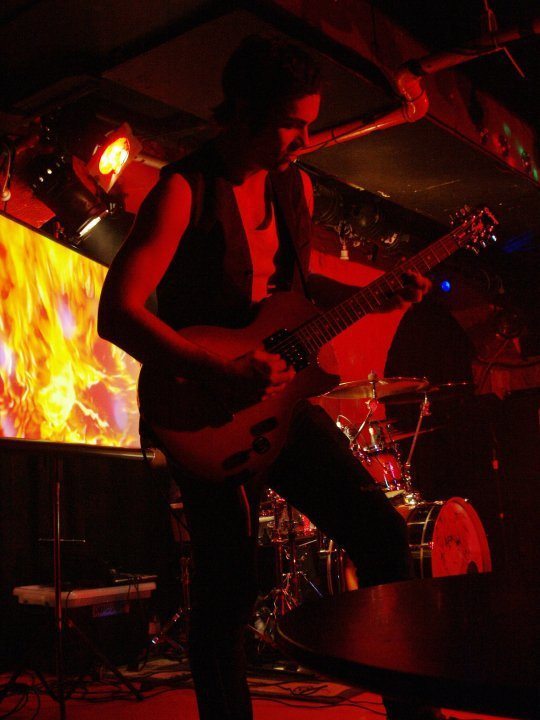
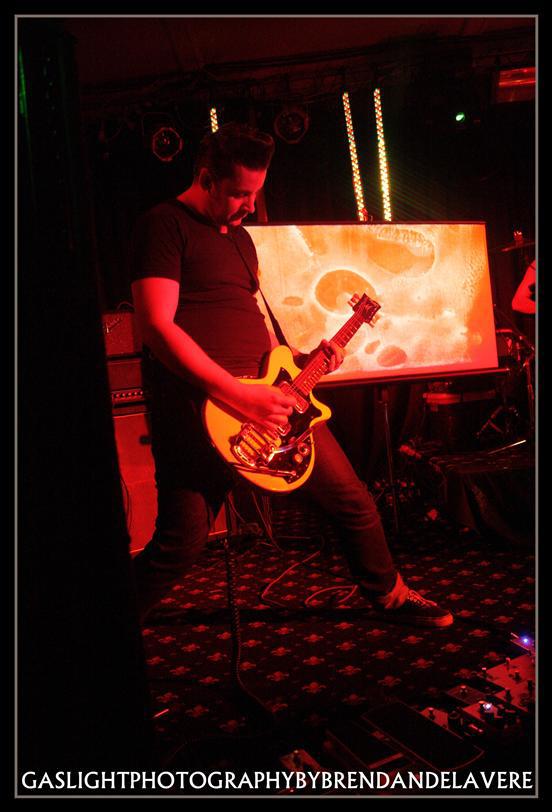
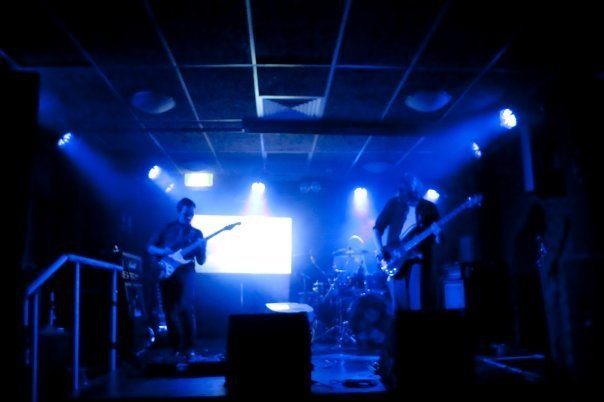
Nick plays the drums, Ron plays guitar and I play bass (as well as a few guitar parts on the album). We all work together on the videos, with Nick usually taking on the role of director. We also have some great friends who help us out on occasion by taking various crew roles, in particular the very talented editor and colourist Matt Fezz, who has done some visual effects for us.
(((o))): You haven’t always been a three piece instrumental band. What should we know about the history of Dumbsaint?
Nick and I have known one another for about twelve years now and we have played music together for most of that time. After a few failed high school bands, we started ‘A Stranger’ (after the A Perfect Circle song) with our schoolmate Brendan. We must have spent a good three or four years just jamming and writing in our bedrooms and garages before we somehow met Michael from the Sydney band The Geminus Loco, and convinced him to come sing for us in 2007. After another eighteen months spent reworking our material and finally playing to people – and just when things were starting to get really interesting – Michael decided he wanted out. And then there were three. Again.
Instead of going through that onerous process of finding and adapting to another singer all over again, we decided to make a go of it as an instrumental band. This would have been at the end of 2008. Nick had the great idea of putting our music to films, which was something that had come up before but just hadn’t seemed viable until this point. It all clicked, and we decided to go for it. It was important to us that if we were going to incorporate visuals into what we did, that they should not just act as window dressing. We aspired to reinvent Dumbsaint as a truly filmic band – our ambition was for every song to be a short film.
After we came back out as Dumbsaint, we spent another year and a half playing shows before Brendan decided it was time for him to move on. Luckily, Ron found us not long after that and we started jamming together in late 2010. Once we felt that things were sounding right, we started working on recording an album. We’d had all of this material hanging around for so long now, and I think Nick and I were especially anxious to finally find a home for it. Ron was game, so we went into Studios 301 with Tim Carr and made the thing. As I write this, we’ve just come back from a short tour (our first), which took us up and down the coast playing and promoting it.
 (((o))): And the obligatory; where did you get your name from?
‘Dumbsaint’ is, as far as I know, a made-up word that was first coined by the American writer Jack Kerouac. I discovered it in a piece of his writing called Belief and Technique for Modern Prose, which is a list of thirty short points, most of them very cryptic. Supposedly he was encouraged by some writer friends to describe his unique ‘spontaneous prose’ method, and so he came out with these great, abstract tips like ‘Believe in the holy contour of life’ and ‘No time for poetry but exactly what is’, which I love. Number six on the list is ‘Be crazy dumbsaint of the mind’, and that word just stood out to me. I pitched it to the band and it stuck.
We can’t be sure what dumbsaint actually means, but I suspect it might be a twist on the term ‘holy fool’, which was a name that was given to those religious devotees who often acted out against accepted social norms in the name of Christ. I suppose, to be a crazy holy fool of the mind would be to behave in all of these seemingly wild and unconventional ways, but out of self-belief – out of a certain moral commitment to your own creative ideas. I’d say that is pretty relevant to the three of us in this band (as it should be to all creative artists, no doubt).
(((o))): Where do you find inspiration?
What I find most inspiring in the band room are those moments when I hear something I haven’t heard before. For me, the joy of being a musician comes from just getting in a room and jamming, discovering sounds and how they work together. Sometimes writing a song is the hardest thing in the world, but then there will be nights when we suddenly hit upon something really strikingly different and interesting and affecting. That’s what I’m always searching for in the music I listen to.
Nick recently put me on to Marriages, the Red Sparowes side project, and there’s something in the songs and in her guitar sound which I’m finding really exciting. I’m also being very creeped out by The Mount Fuji Doomjazz Corporation. Visually I am constantly being inspired by the films of Michelangelo Antonioni, Chris Marker and Richard Linklater, for the way they look and feel as well as for how those filmmakers focus in on really small ideas about life and film as well as some really big ones.
I think, at one time or another, Dumbsaint has taken inspiration from bands such as ISIS, Jakob, toe, Battles, Cog, Decoder Ring and Tool. In our short films, David Lynch has obviously been a big influence. As well as Hideaki Anno’s work, particularly Neon Genesis.
(((o))): As you’ve alluded to, there is another dimension to Dumbsaint that’s not in your recorded music, and that’s the films and the projections you use during performances. Although not unique, the detail and the depth of the connection between your music and the visuals is certainly uncommon. How does Dumbsaint create its songs and how does that process interact with the process of creating the film?
We start off by getting in a room together and jamming. Before we give a thought to what we want to see on screen, we need to have a musical mood to hang it on. So we’ll piece the track together from jams and write and rewrite it over many weeks. We find a comfortable tempo for each section of the track during rehearsals, and that tempo then becomes our guide when editing the video. Once it’s taking shape, we’ll start talking about images and stories. Everyone in the band has a hand in designing the video, but usually it’s Nick who storyboards and breaks it down into shots. Everything is scripted to the music, so we never start on a video before the song is finished.
The filmmaking process is often a very quick one, as we invariably find ourselves rushing to make deadlines (shows). So this aspect of the band is quite different from that careful, gradual way of working that we enjoy in the jam room, and that is sometimes a shame. Organising and carrying out a shoot is hard work, and practical compromises always need to be made (and made quickly). Sometimes we end up with more of a disconnect between the music and the images than we would like – and that might be thematically, or structurally. Sometimes the damn thing just doesn’t look as good as we’d thought it would. But this is something we hope to improve on as we move forward. Our last two shorts are easily our best, as far as I’m concerned. And I’m looking forward to experimenting with a much more integrated way of writing – one in which we’re developing the music and the visuals concurrently in the jamming room. Maybe eventually we could even try letting the music emerge out of an engagement with some visuals. There are a lot of really interesting ways to go with it, but the ambition is definitely to make the process much more interactive in the future.
(((o))): Do you think your visuals give people something to focus on in lieu of a singer?
I think that’s the beginning of it: we’re a band with a projector screen instead of a singer. But I don’t think that’s necessarily as far as it could go.
One of our tracks, ‘She Was His’, is the first thing we’ve done that completely works as a self-contained narrative, that doesn’t need to be driven by the music. Shut the three of us up and you’ll still have a short that makes sense and tells a story. It’s a silent film. But synched with our music it becomes a very different piece of work. The instruments match the rise and fall of the story; the big riffs punctuate the action going on within the scenes. But it’s something more – the music infuses the film almost with a sense of personality, for lack of a more appropriate word. Something happens in that live moment which doesn’t occur in either one of those two halves when taken on its own.
I like that at a certain point, the song becomes indistinguishable from the film and vice versa. Where the movie once backed us, we are now supporting, scoring, helping it to tell the story. We’ve always been inspired by the idea of the band on stage becoming a filmic installation; something we can use to do more than just play a gig or just screen a short film. So I’m sure that’s something we will explore more as we work on new things.
(((o))): Many punters come across instrumental rock bands by accident rather than design. They seem genuinely surprised at not only the energy and noise that instruments can create when not turned down for a singer, but the range of emotions that dynamics and long flowing structures can deliver. Can you describe the buzz you get from playing to instrumental rock virgins?
Every show is different, because our audiences always seem to be so mixed. We’ve played to full rooms and very empty ones. Some people are totally unimpressed by us. I remember walking out of a room after playing a set one night, and overhearing a guy telling his friend that he thought we were overrated. I just thought that was so funny. I can’t help but think of us as a little band still finding our feet; still finding our sound – I didn’t think anyone was even rating us, let alone overrating us! And this guy had us pegged. I was proudly telling people that the band was overrated for days after that.
One thing I think instrumental rock bands can struggle with is the ‘post’ preconception. Punters often arrive with the assumption that instrumental bands are just pretentious wankers who are in love with their effects pedals and their obnoxiously long track titles. Which is sometimes true. But I think most of the time you’ll find these are musicians who really care about the music they play and are working hard to try and make something really great, because it’s these types of bands that are often paying the most obsessive attention to the musical details. The tracks might go on a little too long sometimes, but there’s so much going on in them; so much hard work. And the good instrumental bands are really striving to create something different and special. That’s how I feel about Dumbsaint, and about a lot of our contemporaries in Sydney and in the rest of the country.
For me, the joy has always come from finding something in the jam room that really inspires me, and eventually taking that out and playing it for people. And when people come up after a show and tell us they enjoyed something we did, I imagine they must have felt something similar to what I did when I first discovered that sound. We must have that in common. So when that happens, it’s a great feeling.
(((o))): If you imagine a word cloud for instrumental rock that shows sounds instead of sub-genres, you would see some bigger words like noodling, tremolo, crescendo, wall of sound, jazz and samples. There would be some slightly smaller ones like Ebow, chugging, time shifts, five-string bass, keys, strings, and some really small ones like buzzsaw, slide guitar and clarinet. Dumbsaint seems to avoid a few of the big ones, instead looking for a road less travelled. That can be harder with a three piece. How do you balance the placement and the size of the Dumbsaint footprint so you tread your own path but don’t just fall over trying to be too many things?
We keep things pretty basic in Dumbsaint – we’ve never felt any need to dive into electronics, orchestral strings or horn sections. I think for us that would have felt really false. But there are instrumental bands that do incorporate some of those kinds of sounds into what they do and it completely works for them. The fantastic Sydney three-piece Solkyri have lots of moments where the keyboard and the xylophone work together with and often will lead the bass, drums and guitar. And Adam Mostek has this really rich guitar sound that complements that so perfectly. When I hear it all together, I just instantly know I’m listening to Solkyri.
I’m not sure if we have really locked down our own sound yet; some listeners would probably say we have and others would disagree. I do feel though, that if there is any one thing that makes us sound like us, it would probably be that we have always written and played as an ensemble. We all share the job of carrying the song, and it has always been important to us that we don’t restrict ourselves to conventional musical roles within the band. The guitar is typically the lead instrument in a Dumbsaint track, but it would be pretty ineffective without bass and drums to not only support it but work around it; fill the gaps, give it its colour. And the same goes for every instrument – it’s a unified sound, dependant on many interwoven parts.
And it’s always very busy under the surface. You can’t ever tell Nick to play a simple beat. Not without getting a look. And any time we get in a room to jam I will always, always go straight for the very highest frets of the highest strings on my bass. I think if we have developed our own sound at all it probably has something to do with the fact that we don’t like to play our instruments the way they were designed to be played. Either that or we just aren’t very good at it.
 (((o))): What do you think post-metal is a reaction or response to?
It seems to me like post-metal is a name for what happens any time a bunch of musicians decide to take the bits they really love from the various denominations of metal – the dark heaviness, the dramatic instrumental passages – and discard the bits that they don’t find interesting. It’s a helpful label in that it gives the listener an idea of what kind of mood or feel to expect from a piece of music, but it’s still very vague. For me, those terms post-rock and post-metal are a bit annoying because people keep using them to describe such different kinds of bands. Pretty much anything without prominent vocals, or that runs over six minutes is instantly branded ‘post’.
What annoys me though are those bands that really wear the label on their sleeves, and play up to all the tropes and the clichés of the post-rock thing. In my mind, bands should never, ever simply aim to adhere to a set of conventions and churn out something generic – unless they are being paid big by a record label and don’t give two shits about their art. We should at least want to come out with something vital and new and different. Even if we don’t always succeed. Surely that’s how post-rock and post-metal came about in the first place?
(((o))): Home-recording has never been as easy to do as it is today, but it’s still not easy to get right. Why did you decide to go for a professional recording for your new album “Something That You Will Feel Will Find Its Own Form”, and the production wisdom of Tim Carr? What did you learn out of that process?
After investing so much of our musical lives in this material, Nick and I never had any second thoughts about giving these eight tracks the full treatment. Ron spoke very highly of Tim Carr, and even just the idea of recording an album at Studios 301 was so thrilling. So we decided to go all out. We had always hoped to pull a huge, powerful sound out of our heavy material while still maintaining the interplay between each of the instruments, which is sometimes quite subtle, and I think Tim helped us to do that really well. He was also very patient with us when things got tedious – and they really did. Sitting down in a room in front of a computer and trying to smash out a perfect rendition of a piece of music you have been writing and revising and practicing for several years is just so stressful. The whole process feels very forced and unnatural. And when you’re working with the time constraints that we had, you don’t even have the opportunity to go outside and have a cup of tea for ten minutes and come back in and try again when you’ve calmed down. It’s kind of a painful thing.
As ever, we were working to strict, self-imposed deadlines – in this instance, for financial reasons – and I feel like that both helped and hurt the album in the end. We got much more done in a short amount of time than I ever thought we would, most of it very good, but there are always those little details that get lost or moments that don’t quite come together. For me, recording at 301 was a matter of negotiating between the perfect album in my head and the reality of working on a budget (and in collaboration with three other people). Unfortunately we didn’t, and probably never will, have the money to lock ourselves away in a world class studio and re-record sections and tweak mixes to our hearts’ content. I could have very easily spent a few more weeks poring over all the stuff with Tim and the others before we finally put it away, but we simply couldn’t afford to be that pedantic. And I honestly don’t know if the band would have survived much more time shut up in a room with our egos, our expectations and those same eight tracks. I don’t think many bands could.
(((o))): What gear do you use and what do you love the most?
This is a better question for Ron – he’s the real gearhead in the band. I’m really pretty ignorant when it comes to gear; I have my favourite bits and pieces and I stick with them. I have been using Boss pedals for years, but I would like to branch out. I have always played with a DOD grunge pedal which, because it’s not specifically designed to be used with the bass guitar, does kill a lot of my low end, but it gives me this ratty distortion that I love. For the album we double-tracked the DOD with an old RAT pedal, and then mixed in some of my clean bass signal for good measure. We got this heavy-as-all-hell tone that I’m so crazy about. I think it’s probably my favourite thing on the album. It pops up in most of the tracks during some key heavy moments. As for my guitar, I am very fond of Music Man basses and I have a little Sterling SB-14 which I think sounds great. I would like to graduate to the Stingray one day.
(((o))): We are all experts on what’s wrong with the music industry, but what is going to save it? What part does a band like Dumbsaint play in that? What part does an entity like Bird’s Robe Collective play?
I can’t really claim to know a whole lot about how the business works, but from what I do know, I don’t think there is any way back for the big record companies. It would be nice if the porous nature of new digital modes of distribution and reception (music blogs and online newsletters, legitimate download sites as well as illegal torrents) lead to the big guys spreading their nets wider and picking up on a larger variety of musical artists – as we know, there’s such an embarrassment of riches out there to be found, if you know where to look. But I really hope that artists will be able to continue to take the power back for themselves. A lot of the new bands I’m listening to now have done really well for themselves by taking the independent route – and as we know, it’s really only through the internet that that has become possible. It might spell the end for the traditional rock star, just as digital downloads may eventually kill the album once and for all, but I think that if you’re looking at the big picture, it’s undeniably going to be a good thing for artists. I think too that if we want to help small artists we need to be prepared to share music around. Share what you like, when you find it. Because now that there is so much around, all of the time, the hardest thing is knowing where to start.
Bird’s Robe has done a great job of creatively adapting to the new playing field. They’ve taken all of that on board and are doing really interesting things in order to reach more people. One of the great things about what Bird’s Robe is doing is that as they adopt more bands and continue to draw people together, it feels less like a business and much more like a growing family, which is nice to be a part of. We’ve met so many people who really care about the music we’re making, and who are excited to support us – and who, in turn, have exposed us to so much great stuff we never even knew existed. And Mike is a great dad! He’s opened so many doors for us and guided us through so much of this album release and tour process. He’s been fantastic and so generous with his time.
 (((o))): What are some of the best gigs you’ve been to, as performers and punters?
Late last year I had the pleasure of attending (and performing during!) Serious Beak’s album launch show at the Lansdowne Hotel in Sydney. It was easily the greatest local gig I have ever seen. As a live unit, I think Beak is probably peerless in this country. The four of them are absolute masters of their instruments and put on such an unbelievable show, that those guys are not better known in Australia really surprises me. Maybe they need to play live more often…
Watching Jakob play to a near empty Enmore Theatre (with house lights still on) in 2008 was pretty special for me. I’m sure I would have been pretty annoyed if I were them – it was a very early support spot when they really deserved to be headlining, and the house guy only thought to bring the lights down a few tracks into the set – but being a part of that small crowd was amazing. It was really exciting to see one of my favourite bands playing a (great) show in such an intimate setting.
ISIS at the Manning Bar in early 2010 was another special show. This was perhaps a month or so before they announced that they were splitting, so it was one I was so glad to have gotten along to. It was a set that mostly showcased that last album, which was pretty great, but when they played ‘Carry’ – the place just went ape shit.
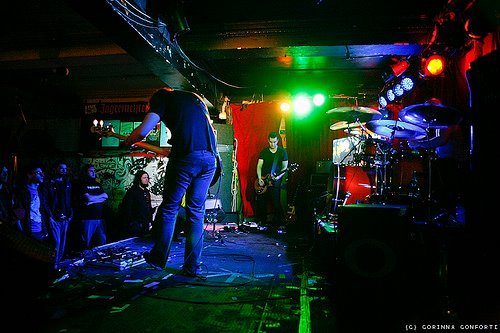
As for Dumbsaint performances, I think this tour we’ve just finished probably takes the cake. We stayed away from big pubs and clubs like the ones we often play in Sydney and instead played at great little venues like The Old Bar in Melbourne and Yours & Owls in Wollongong. And we also made a quick stop-off at Tym Guitars in Brisbane, for Tym’s brilliant Record Store Day party. Not only was it fun to try doing things a little differently, but the people we met along the way were so great to us! We encountered some pretty patchy crowds during the tour (especially in Wollongong, where we played to less than twenty people) but the vibe of those places, the nice people running them and the locals who came along and gave us a chance (many of whom bought a CD and stuck around for a chat) really made it worth the effort. To be able to show up in a new town and walk into a tiny bar or record store where the music is great and the room feels so friendly – it really makes us want to do this every day.
(((o))): What’s something everyone needs to know about Dumbsaint?
We have just released our first album. It’s called ‘Something that you feel will find its own form’. You can listen to it for free over at https://birdsrobe.bandcamp.com/album/something-that-you-feel-will-find-its-own-form.
Also, any and all info on upcoming shows, tours, merch and the various goings-on of the band can be found on our Facebook page.