YOB | website | facebook |
By: Sander van den Driesche
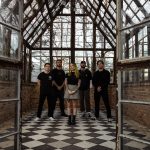
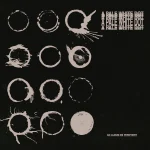
A couple of weeks ago I had the pleasure of chatting to Mike Scheidt, frontman of the legendary doom band YOB, when they played in Glasgow on their latest extensive European tour. Upon entering the tour bus I noticed some buds of the green stuff and YOB bassist Aaron Rieseberg offered me some of the chocolate he was eating, which I kindly declined after which Mike and I sat down for a long chat about the new album Clearing The Path To Ascend, Neurot Recordings, Vöhl and the current state of the music industry among other things.
(((o))): Firstly, congratulations with Clearing The Path To Ascend. It’s a great album and I’ve only seen very positive reviews so far. I take it you’re very pleased with the album and its reception?
Mike: You never know how well a new album is going to be received. You just focus on the art and let the rest of it going to be what it’s going to be. The music that you set out in the world has a life of its own and we just hang back and in some instances it’s been received extraordinarily well and we’re surprised and pleased, definitely.
(((o))): This is your first album on Neurot Recordings, how did that deal come along?
Mike: There’s a certain flavour to Neurot. It has to do with the flavour really of what Neurosis is and what they stand for and how they want themselves represented as an artistically intact tribe and community. And we got the opportunity to partake in that and have their confidence, which is incredible. Moving on from Profound Lore Records was never meant to be a slide to Chris Bruni. We as a band just like to keep our creative energies constantly moving and shifting and part of that is to have change. So, we do things for a while and then we change and we move on, whether it is gear or labels, it keeps us energised.
The deal with Neurot has been coming along for a long time actually. The first time I ever talked to Scott Kelly was when he was interviewing me for Combat Music Radio for our Catharsis record. So, that was back in 2003 or 2004 and that’s when we first met and talked. Of course it was a huge deal because I’ve been a fan of Neurosis since day 1, since Pain of Mind. As we got to know each other slowly over the years, we then played with Neurosis when we toured The Great Cessation and that was when Steve von Till first got introduced to us. And he and Scott both came up to us at that time saying that if we ever wanted to work with Neurot they’d be very much into doing it. At the time we were still with Profound Lore and happy to be there, and we already talked to Chris about doing another record for Profound Lore, and we had to honour that agreement and we saw that through. In the meantime Scott and I hung out a lot, we’d done solo tours together and become good friends and then it came up again. We were writing a new record and we’d toss around all the labels that we wanted to deal with and we were talking with some significantly bigger labels too. And the right moment came together, where Scott and I had a meeting of minds and Steve came in on it, and all of YOB, and we all talked about it and aesthetically, artistically, heart-wise it was just like yeah we’re going to do a record on Neurot.
They have been wonderful and in fact it’s astoundingly so. Their label, their band, their family, it’s all the one thing, there’s no separation. Their music comes out of just that need to continually birth what’s going on in their hearts and in their souls and spiritually and so their music just never fails to be pure. And that’s how they run their label. They run it as they want it to be for themselves. And we got to benefit from that. And it’s been a really good experience. They’ve never pushed us in any way that just didn’t feel like right. They’re interested in our artistic integrity. So it has been fantastic. They’re huge fans of the music and it’s a heart to heart connection and we’re very privileged.
(((o))): Can you say something about your lyrical inspiration?
Mike: I find a lot of inspiration in Buddhism and Eastern mysticism in general. I tend to gravitate towards strands of thought that were born out of religion, but that understand that religion is kind of a finger pointing, but don’t get hung up on the finger, look at the thing that it’s pointing towards. Things that are not dogmatic. Those are the things that I lean towards, Ramana Maharshi, Sri Nisargadatta, Zen master Shunryu Suzukil, Alan Watts for example. There’s a lot really. On the mystic end of it meaning that there are ideas that subtract rather than add. Having definitions so we can talk about them. For example, we can talk about bananas, like I say bananas and you know what I mean, but we don’t know what a banana is, really. It’s the thing first and we act about it later. The miracle already happened and the miracle happens faster than we can think about it.
I’ve suffered from manic depression really bad my whole life, I’m just born with it and it’s just part of my life, but those philosophies have really opened my mind and helped me to give spacer to those things and it has really made me a much happier person and without having to have any kind of hard view to be argued, you know, there’s no argument in it at all. I can just be. I don’t have to define anything. I don’t have to be defined. So that’s fantastic.
(((o))): For a lot of people who suffer from depression music is very important. We have a couple of people on our Ech(((o)))es and Dust team who suffer from depression and for them either playing, listening or writing about music helps them dealing with this. It’s like the power of music. We recently started a Musical Therapy series and it’s been an eye opener to me personally to read about this power of music when people write about what music means to them.
Mike: It is undeniably so. When we started writing our new record, I started out at a really bad spot, one of the worst places I’ve been in and by the end of it, really, if you follow the album’s vibe trajectory towards where it ends up with ‘Marrow’, that’s where I ended up. That album was the medicine. To some degree the songs I write literally translate the mood I’m in. Everyone does it differently, and there’s some unknown number of ways to do it right. You know it’s really up to the writer and whatever it is that’s the most true for them. For me, the way I can make our music really authentic is if it’s really close to home. Then it has something in it that can never be taken away, because it’s based on something real.
(((o))): When you write your music, how much if it is proper directed written stuff and how much of it is the result of you guys having huge jam outs in the rehearsal studios?
Mike: We have jam outs sometimes, but whenever we’re jamming out we just basically dorking around, like starting finger tapping and for sure, yeah we fuck around and have a blast, but when it comes to actually writing the music, it’s not like humourless business, but we’re serious about it and serious about where we’re coming from at it and that it’s something that we feel completely representative and satisfied by on every level that we can manage and so that requires definitely putting on our thinking caps and inner magnifying glasses. The music that hits me the hardest is stuff like that. You know when you see like Neurosis on stage and they’re channelling something from another world.
(((o))): You’re also singing in Vöhl. I’m a big fan of the first self-titled album that was released last year and Ryan who reviewed the Vöhl album for us compared it to a high-speed car chase. Is the high tempo stuff on Vöhl, which is quite different than YOB, just something you always wanted to do?
Mike: When Ludicra disbanded, I was at a show where we were playing with Agalloch and Aesop Dekker (ex-Ludicra, Agalloch) came up to me and he said “you know John (Cobbett, ex-Ludicra) and I have been talking and if you don’t wanna do it it’s ok…” and I cut him off right there and I said “I do it”. Because I’m a big fan of those guys and Ludicra and John articulated that he wanted to do something as he wasn’t done with Ludicra. Ludicra was done, however, he felt pissed off and he had a punk attitude about him that he wanted to infuse into the music as well. And John is a mastermind, a real wizard. He writes really all that music, it’s not that he writes out every drum lick or every bass lick, but he is the guy. I have a little bit of distance from that band in the sense that they’re all in San Francisco and I live 600 miles away. So, they’ll be working on things and they sent me these demos that just blew my mind and I was like OMG!
(((o))): Will there be a second album?
Mike: Oh yeah. As soon as I get home from this tour I have about 3 weeks and I’ll be going down to do my vocals for the next record.
(((o))): What about the Vöhl gigs? How have you experienced these and is it quite different for you to not have a guitar in your hands, but only a microphone?
Mike: The gigs have been received quite well. Because of the nature of the music and what we do it always takes a couple of gigs to feel it as we don’t get to practice all the time, because of our distance. But it’s gotten better and better and we had some fantastic shows.
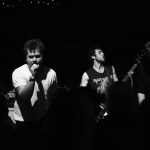
Regarding me not playing guitar and just sing, every gig is different really. I don’t know what I’m going to do. Sometimes it might be quite silly, unintentionally, sometimes I’m just really intense on the microphone. I grew up with a lot of crossover and hardcore punk and so the way those vocalists moved on the stage is kind of what I relate to. If I’m thinking about it too much then I just jump or do something to get my mind out of it and my body back into it. It’s odd but it’s also a challenge and it’s also a bit scary and I gravitate towards both of those things.
(((o))): On the Catharsis re-issue that got released through Relapse Records recently, you mention you weren’t always comfortable being a vocalist. Is this a confidence thing or more something that you had to learn to be a good vocalist?
Mike: All of the above. For a long time I always had a certain ability to be a good clean singer and a good hardcore vocalist and do death roars. Early on I kind of figured out that I couldn’t just hang my head on one of those things. They all had a certain uniqueness to them for certain parts of how I was writing. When YOB stopped being a pure doom stoner band and started incorporating a lot of different things it had its effects on me as well. What would happen is we go on tour and have two or three really great nights where I’d sing too hard, blow my voice out and struggle for the next 6 gigs, then have an insanely good gig for some reason, and I just didn’t understand. So, eventually I did some research and went to a guy up in Portland named Wolf Carr and he is a professional voice teacher. He’s a young guy. He’s classically trained but he also understands what modern vocalists are doing to themselves with death roars and screams. So, when I started to take lessons from him I got really good warm-ups and techniques and better ways to breathe, and my voice got better. So, we started to consistently have better shows. And as a result my range has been able to grow also. I’ve been doing YOB for 16 years and it’s only been in the last like year or so that I’ve felt more and more confident in doing it. But I love singing, but it’s just a difficult animal. If I hung my head on one those things it would have been much easier. I got to just build my clean vocals, or just build my death roars, just be stronger and stronger and stronger, but sometimes all the styles are at odds with each other in my body.
(((o))): It really seems that the doom scene, especially in the UK, has exploded recently. Bands like Conan, Slomatics etc really keep on raising the bars for a lot of other bands. Do you follow what’s going on over here in the UK and Europe?
Mike: The doom genre really only got big very recently. And I follow it quite a bit yes. I’m definitely familiar with Slomatics. Our bass player Aaron is a big fan of them and I’m very much into Conan. You know a lot of my favourite bands are from the UK. Old school, modern bands. Like I’m a giant fan of DOOM, Bri was at our show last night as he’s a big fan of us, so I couldn’t be happier with that. Spiderkitten is also great, and Sigiriya and Hark.
(((o))): What do you make of the different types of doom? Like doom with clean, melodic vocals, or heavy grunting doom. YOB really has a combination of those styles, which, to me, makes it a very attractive blend of music.
Mike: I always think of us as doom for ADD [attention deficit disorder]. Because even if we’re writing the same riff for a while there are lots of things that will change within it, whether it’s colouring a chord different or hitting the vocal a number of different ways over the course of a measure or what not. I just always want things to be dynamic, and I don’t want anyone to ever feel like anything was lagging too long. Obviously if someone’s just a pure death metal freak we’re going to be too much for them anyways. It’s not like we’re trying to cater to anybody it’s just what I want to hear myself.
(((o))): What do you think of the whole popularity of vinyl? I’m a big record collector and I think it’s a good thing that vinyl has been making a huge comeback, but it does result in huge waiting times for labels, especially small labels, in pressing their releases. And what’s your take on people downloading music illegally?
Mike: To me it means that nowadays, besides vinyl being a great listening medium, people see a value in collecting and owning and buying music, which support labels, and supports bands. It gives them their best listening experience as well. It’s starting to bring back that kind of circle of community. It’s not to say that people who do illegal downloads don’t support bands, because they do come to shows and they do buy t-shirts. I’ve come to accept the current music climate as it is. In some ways it made it much more difficult, but that’s the world we live in and it’s not like we’re going to stop playing music. You do it within the reality that’s there. Certainly we’re never going to make anyone feel bad about it. We’re going to thank them for coming to the gig and give them a big hug. I’m glad there’s a discussion about it all, because I think the discussion is in earnest. I don’t think it’s a war. I think people are trying to come to ways that, you know, how do we honour art? What’s art worth? What is the band’s worth? What is it worth as consumers? And it’s a good discussion.
Of course we’re disappointed when an album leaks online before the actual release date, but whatever feelings I can have about it, which could maybe go up and down, ultimately it is nothing we could have control over. And so I’m not going to give it too much of my energy, we’re still going to come out and tour. This tour we brought a lot of merch and we sell a lot of merch every night, and we’ve been selling a lot of the records and the people that do the download or whatever, they’re still coming and supporting us. The old world model has just really changed and that’s just how it is. But I think it is a work in progress. I think it is still changing. And it’s going to be interesting to see how it evolves.
(((o))): I think it’s interesting to see the really big major labels jumping on the vinyl bandwagon too. They’re realising that if they want to keep their label and perhaps the industry going then that’s the way forward, that’s the way they can create an income from record sales.
Mike: Oh sure, they have to when they want to be around. There’s a lot of talk about the big bad labels and there has certainly been lots of instances when bands got screwed, no doubt about that, but no band ever got screwed by a deal they didn’t sign. And they didn’t get screwed by a deal that they didn’t have a really good lawyer scrutinising every little detail. There has been a period of time when people could become true rockstars and the temptation of going with capital or whatever which is too great to turn it down. But then as a result if you got used and you didn’t scrutinise your contract and you got hit on all these things and you didn’t make any money, didn’t own anything, etc etc. In this day and age that hardly even exists anymore. It’s just a different environment and in some ways that’s very good.
But on the other hand albums like Dark Side of the Moon, who’s ever going to able to afford to do something like that ever again? Where you just can be in the studio and just be in the studio and just be this group of artists that people love and then you have the support to just take as long as it takes, just make the masterpiece. That’s going to be harder and harder and harder to do. You know, that era could be gone and it is what it is. I’m not trying to say what’s right or wrong and it’s almost like saying too much, because I don’t mean to have any connotation one direction or the other, it’s just observations. But we’re content with what we’re doing and we’re content with the people that support us. Illegal downloads are a fact, we don’t put any emphasis on that. Anyone who loves our music, we’re grateful for it. If we had the choice to sell a record or have our music be heard, of course we want out music to be heard, so that’s it you know.
I would like to thank Mike for the great chat and the opportunity to meet him, which wouldn’t have happened without the help of Lauren at Rarely Unable. Oh and don’t download YOB’s music, or any music really. Go out and buy the records! Sniff some wax!