Interview: Borknagar
Genuinely good music should be beyond words and definition. Part of the beauty of music is that we don’t always need to talk about it. Sometimes music can just live as this floating thing that binds us together, empowers and unifies us. We can just be quiet and listen to it, be sociable and listen to it in a room together. Music is such an awesome thing that, in my world, it’s beyond words.
After 30 years, it wouldn’t be unfair to say that Borknagar are a metal institution. The Norwegian crew have stretched the boundaries of black, folk and progressive metal to carve a niche that fits them, and them only, and though figures from heavyweights like Ulver, Solefald, Arcturus and Gorgoroth have all helped steer them along their path at some point, it’s guitarist Øystein Garnes Brun that could best be described as the captain at the helm. With the release of Fall, their 12th full-length and maybe their most diverse offering to date, looming on the horizon, David Bowes spoke to Brun to dissect an extraordinary career.
E&D: Thanks for giving me your time, I know that you’re incredibly busy right now.
Øystein: It’s okay, it’s a good busy. It’s fun busy.
E&D: What else is going on? Just gearing up for the release and live shows?
Øystein: Yeah, it’s a lot of things going on these days. Rehearsals in Oslo, we have a festival in Denmark early next month and there is a lot of promotional work. We have recorded two videos, there will be one more video released on the day the album is out. We’re doing a bunch of interviews this time around and I also have my own studio here, so I’m doing mastering and mixing. I’m trying to deliver a master today so I have to work a little bit after this interview. It’s intense! <laughs> And I have a family, I have a kid too. That’s life in general. As long as it feels good, though, it’s fun stuff and it’s okay.
E&D: There has been a five-year gap since True North and you’re working with that same lineup so did you feel more prepared going into the making of Fall than you ever have?
Øystein: I would say so. The five-year gap, some of the reason for that was the pandemic and we weren’t able to do much then. I always write music. The process of writing songs is kind of an ever-flowing stream but we had this feeling that we wanted to finish True North before we started to plan the new album. We wanted to get out there. Before everything shut down we set out to do a world tour – the US, Europe, we were supposed to do a bunch of festivals in Europe, Japan, Australia – but in the blink of an eye, that’s it! I was kind of shell-shocked in the first days.
After the pandemic, we did that US tour with Rotting Christ, and a European tour with Moonspell and Insomnium, plus a bunch of festivals. Once we finished that European tour we decided that it was time to start planning the next album. We already had quite a lot of material but we weren’t able to sit down in the studio, set up appointments and a work schedule. We did that after the last tour and then it was headfirst into the process of making a new album. That worked out really good for us.
Since we did quite a lot of touring and had the timespan that we had, we learned a lot about the new guys Bjørn (Rønnow, drums) and Jostein (Thomassen, guitar) – they’re really not new anymore, so it’s wrong saying that! We got to know them as musicians and as friends, and being able to involve them more in a deeper way this time around. As an example, I sent all of my sketches of songs to Jostein before everyone else as I wanted him to be part of, not necessarily the writing, but the construction of the guitar elements on this album; rather than just getting him into the studio to add something to my stuff, something that was finished already. They got a little more involved in the process and a had much bigger footstep on the album compared to True North, definitely.
E&D: Are you someone who typically takes on board a lot of pressure when writing? Did that make this a slightly more relaxed experience for you?
Øystein: I have to be honest but there are different phases to making an album. The actual writing of the songs that I did on this album, that is something I do alone with my guitar in my studio here. I kind of lock out everything else. The record company know by now, “Don’t bother Øystein when he’s in writing mode. He’s just grumpy anyway.” When I do my sketches of my songs, it’s almost like an egocentric trip, somehow. That’s how it works for me. When I have my sketches we spend a shitload of time, even more so on this process, than actually writing the songs to produce and test out different ideas, different vocalising of lines, different guitar tones, stuff like that. Because I’ve done it so many times, writing the songs takes, if I compressed everything into one session, something like two weeks. To actually produce the album, that takes three or four months. That’s also the reason why I have all this studio and high-end equipment now. It’s because I want to make proper demos and I want to be able to sit around in my studio working on ideas, not only riffs but how also how to approach a song, how the guitar sound should be and things like that.
Back to your main point, as I’ve gotten more mature I kind of have a more peace and quiet around me. I don’t stress things as much as I did in the early days. When I was younger and working on the earlier albums, I could get a kind of fixation. I could stress a lot about things that don’t really matter at the end of the day. Nowadays, more I’m relaxed, I know what I’m doing. That part of it isn’t stressful at all anymore. I don’t feel pressure from the audience, or the label or anything like that. In my case, those things have blown away by now. Of course, there’s a lot of work and sacrifice. I have to spend hours and hours in this studio. When people are out having some beers on a Friday evening, I’m here doing my music. It’s a sacrifice and a lot of work. That part is a challenge but it’s a life commitment so it doesn’t bother me.
E&D: You’ve been going for thirty years now. Did you know from the outset that you wanted this to be a career, this all-consuming thing?
Øystein: No, absolutely not. In that regard, I was maybe a little un-traditional. When I was a kid, say 15 or 16 years old and I had just gotten my first guitar, I was never into this idea of, “I want to be on stage, I want to be a rock star.” I know and totally respect that a lot of young people have that but I never had it, to be quite honest. I never really looked at myself and wanted to be an entertainer but I had a very strong drive for the music. For me, it’s all about the music. I’ve told my guys many times, and anyone who asks me, that this starts with the music and it ends with the music. It is not anything else that’s going to interfere with that.
Since the very beginning of the band, it was important for me to feel this musical freedom and independence. I want to do the music that I want to do. I don’t want to be depending on music so that I have food on the table for the next year. I try to make my musical work independent from commercial interests. As a composer, producer and lyricist, it’s important for me to have this notion of musical freedom. I can stop doing music tomorrow and just quit, and nobody can jail me for it. The next album, I can do some jazz music and nobody can nail me to the wall for that either. We have musical tradition behind us but the band name doesn’t mean anything. This virtue of musical freedom, of autonomy, has become such an important virtue for me so that I never compromise on those things at all. I’m not going to do a jazz album next time around, definitely not, but the idea that I can do it is very important to me.
E&D: Outside of metal, what is your relationship like with more traditional Norwegian music? Norway has a great tradition of folk music, which you can find elements of in your work, but also excellent classical composers.
Øystein: I’ve always been very eclectic, music-wise. Back to when I was 17-year-old, everything in life was about Kreator and thrash metal. At another point, Slayer was the big thing and I got into the very obscure death metal thing in the early ‘90s like Incantation, all that grisly death metal. I’ve been around but still, I always had this very open mind to music. A lot of that comes from my father. He was an old hippie back in the day. As far back as I can remember, to when I was a toddler, I grew up around this huge record collection. He was importing vinyl from the UK as he wasn’t able to get hold of everything in Norway at that time. He recorded the LPs onto this big tape machine that he had and then he resold the LPs in order to be able to fund new LPs from the UK. I grew up in almost this underground movement. When I started in ’89, I got to know one guy that ran an underground magazine in Norway called Sadistic Noise. Then I got into this underground metal scene and all of a sudden a door opened. Within a few months I had friends all over the planet, I was getting mail from Malaysia and Morocco, all over the place. It was crazy how this underground scene was back then. That’s where I come from, in a sense, and before that my father was kind of in this underground vinyl trading scene. That’s my starting ground.
E&D: It was mentioned on the press release that part of the inspiration for Fall was the idea that nature does not give a shit, and that we are subject to its whims. At what point did you come to that understanding and how does it play into the record?
Øystein: For me, it’s a lifelong curiosity about nature. I’m not from a religious family at all, rather the opposite I would say, but every Sunday as a kid there was a David Attenborough family on the telly that we would watch as a family. Since then, I’ve always been curious about this. I spent my childhood in the forest, basically. I didn’t go to kindergarten, so for me this whole thing came very naturally. That’s an important element – honesty. I write about my life experience. Not directly, but infused are parts of my life, my upbringing and who I am. I still live in the countryside, I still find peace in the woods behind the studio here.
On the lyrical side, I’ve always been very fascinated by this duality of nature, its complexity. The duality is that we are part of nature but at the same time we are also subject to being killed by nature. We know through biology that when we are born the heart beats very fast, and it’s going slower and slower. During a lifespan, nature will do everything it can to get us back in the ground, through bacteria or illness or whatever. Luckily, we live in a modern society that helps us keep going. Age is increasing, but it was only a couple of generations ago here in this area that people barely lived until they were 40 years old, thanks to the harsh conditions here in Norway. This duality, the beauty and beast that nature represents, is something that gets me going in a philosophical direction but also towards what’s going on in the world – the climate crisis, the war in Ukraine, and whatnot. We are living in strange times and I think this influences me, somehow, even though I believe that music should be above all this human construction. Music should be universal, or at least my music should be that. It should be open for everyone who wants to dig into the music that we do.
We don’t want to profess any special meaning or how to behave, any specific moral value but of course, we have a standing in all of this. For example, ‘Nordic Anthem’ is a song that is quite basically, for me, a freedom song. It’s about loosening your chains, it’s about finding your best potential, finding your own path in life rather than following conventions and laws, religious rules or whatever. That’s limited to the human brain and to human existence, in my opinion. I deal a lot with those sometimes paradoxical things. Dualities of life.
My basic idea when I started to write this album, I have this fascination for all this… how do I say it? All these things, beings, animals, places, that kind of exist at the outskirts of existence, but we don’t really see them, or even bother about it. We don’t necessarily learn about it in school but it’s still so important for us to maintain our relatively safe societies. There are so many things going on at the outskirts of this world. For example we all know that if the glacier at the north pole melts we have a huge problem in the whole world. The sea levels will increase heavily and a lot of places will be impossible to live. All these parameters at the outskirts of life is something I have always found very interesting. I think some of that came from my father. He was very into this deep ecology philosophy back in the day. It was a Norwegian ecologist, Arne Næss, that wrote a lot of books about that. Deep ecology is the idea that everything is connected. We all depend upon each other; we even depend on the bacteria in the ground that we walk on. If those things change we may have a huge problem. We all know about the problems facing bees, so let’s take the scenario that the number of bees reduces heavily or even ceases to exist, we must have a huge fucking problem! All those things we take for granted but it’s so important for us. I would like to give a nod to all of those things, in a sense, through this album. That’s a lot in one go and it’s kind of complicated but so is the world, so are human beings and so is the music of our band. It’s quite complex and it kind of resembles a human life, in all its facets, and ups and downs.
E&D: You stated that another aim of this album was to try to showcase the skill and musicianship of everyone involved. Does this make writing something of a juggling act for you? You’re trying to convey a message, to progress your band’s sound, to showcase everyone… how difficult is it to strike that balance?
Øystein: I’ll tell you, it’s really complicated sometimes. You have to have a lot of skills in order to be able to keep on going with this. Keeping a band running is complicated, because there are different ideas and motivations, different goals even. We are all unique people that are supposed to fit together. It’s not easy but that’s also some of the passion of it, the fuel – those dynamics, the arguments that we have sometimes. Me and Lars (Nedland, vocals) can have huge arguments, really heavy stuff going on at times, but we always end up as friends. We’ve known each other for years and we can talk, we can be rough with each other and push each other if something is not good enough. Maybe I’m old school but I truly believe that true art don’t come easy. You have to fight for it. Real passionate art that is worth something, and that lingers on forever. If you look at old drawings, great paintings from artists here in Norway like Munch, those guys had to struggle. They had to fight for what they were doing. I really believe that in some way there has to be passion in art, and one way of going about it is through the complexity of being a band. All those arguments, all the discussions and friction, I think that’s part of the magic. To be honest, it’s tiring. Sometimes I feel like I’m done and that I’ve had enough – “I’ve been doing this for 30 years, let’s do something else,” but I sleep on it and the next day I’m full throttle again. It’s the way of the world.
E&D: Speaking of art, you worked with Costin Chioreanu again on the video for ‘Moon’. How is it that your interactions typically go? Do you have much input or does Costin have free rein?
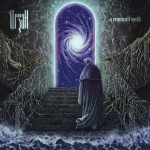
Øystein: Same as with Eliran Kantor, who did the cover art, those are true artists, I would say. We don’t need to talk too much about it. With Costin, he got the song and as it’s Simen’s (Hestnæs, vocals) song, he talked with Costin a little about some ideas behind the lyrics, but apart from that we gave him complete artistic freedom. That is some of the beauty. He listens to the songs, dives into them, and makes his own visual expression that he feels is the right thing. We trust him, and the same with Eliran. I told him that the only thing that was important for me was that I wanted it to show or reflect the wild, untamed forces of nature. Very organic, nothing fake, no Dungeons and Dragons stuff, just real Scandinavian brutal nature. The second thing was that I wanted something on this cover to remind or associate towards a human being. I don’t want a face or a human body or a hand, just something that reminds us of humanity, and that’s what he did. For me, that is the beauty of working with true artists. There is something creative going on and you can trust them.
E&D: You’ve said that you have a visual relationship with music, and that you see it as colours, shapes, patterns. Maybe an odd question but what does Fall look like to you?
Øystein: You know, I sometimes regret that I ever said anything about that kind of stuff to people. Even my niece or someone like that, if a song comes on the radio she’ll ask what colour that song is. I’m sorry but it doesn’t work exactly like that. I don’t really know how to explain this but it’s a weird thing. As I’m growing older I’m realising that maybe I’m a bit different but this is an actual diagnosis, a condition. Once I read about it I was like, “Wow, what the fuck? This is me.” I’ve tried not to make a big deal of it but. It’s always like in the moment when I listen to music, or sometimes with lyrics. I remember back in the day, people would ask about such and such lyrics, and ask “What does it mean?” and I don’t exactly remember what that isolated line meant, because that was part of a chain of thoughts that I had back when I wrote the lyrics. I don’t remember exactly what I was thinking. Of course, it has an overall feel or attitude. It’s the same with music.
I remember back when I was a kid I always had a very visual relationship with music. Not in terms of concerts, or watching a guy playing guitar, but more that I get so much going on in my head on the visual side of things. Sometimes it might be completely abstract, only shapes or colours, and that can change between the times I listen to a song. A Pink Floyd song, for example, who are my favourite band in the world, who are my mothership in terms of music, sometimes when I listen to ‘Shine On You Crazy Diamond’ it might have this this shape or that colour, but the next day it might have a different nuance to it. It’s not a static thing, it’s very ‘in the moment’ and that’s very much in relation to my standing that day, my mentality, if I’m down or happy; it depends on so many things. I also have this tendency when I write songs. Like, I want this song to have this and that shape, this and that colour, but it’s very hard for me to answer point-blank, like “This song is a red song” because it doesn’t really work like that. A song might be red, or reddish, but it consists of a bunch of blue-ish riffs, and so on.
My final point in all this is that, for me, genuinely good music should be beyond words and definition. Part of the beauty of music is that we don’t always need to talk about it. Sometimes music can just live as this floating thing that binds us together, empowers and unifies us. We can just be quiet and listen to it, be sociable and listen to it in a room together. Music is such an awesome thing that, in my world, it’s beyond words. All these human constructions, these rules and politics, wars and religions and whatnot, it’s something that is above and beyond, in my opinion. Sometimes the lovely thing about music is that no words are needed.