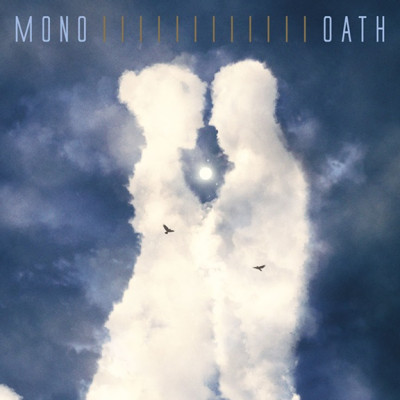
Since 1999, Japan’s Mono have been creating astonishing soundscapes using base instrumentation, with occasional orchestral embellishment. If you’re lucky enough to have witnessed the band play live, you’ll know how much their music means to them. Their performances are reverential and mesmerising as they collectively create stunning textures and when it’s necessary, incredible volume. In order to capture these atmospherics on record, they cite the late Steve Albini as a friend and collaborator. Not just a producer or recording engineer. The untimely passing of Steve Albini makes Oath a more difficult listen because as ever, Mono reach deep into their souls to create music that conveys raw emotion, in every note. Mono’s sound has become intertwined with Albini, given their multiple albums with him at the helm. I cannot begin to imagine how the band feel at this huge loss. You can be certain though, that future performances will be imbued with the spirit of their friend.
Opening track ‘Us, Then’ floats along on twinkling synths with a melancholic melody that instantly goes for the heart. Essentially the beginning of ‘Oath’ which brings in some soothing strings and brass that certainly changes the dynamic of the track to something more hopeful. Tamaki Kunishi appears with her trademark bass hum and eventually Dahm Majuri Cipolla drops in with that familiar Albini thud-crack of kick drum and snare respectively. My initial concern that this might be a contemplative minimalist album gets blown away when the twin guitar attack from Takaakira Goto and Hideki Suematsu drops like a hurricane. Albini shows that his recording skills can also do epic. The marriage of Albini/Mono was always perfection. ‘Then, Us’ flows straight off the back of ‘Oath’ forming a placid outro of sorts, the brass sighing final tones as they fade to black.
‘Run On’ begins with some wheezing synth tones allowing Takaakira and Hideki to pick off a sequence of melancholic notes. Whilst Mono tracks bear a familiar atmospheric, I never tire of their beauty. Electro drums shuffle into the mix before a shimmering guitar melody plays on the emotions. Only Godspeed You! Black Emperor combines strings and guitars to such stunning levels, but Mono always appear more graceful in execution. Dahm settles into a steady beat for the finale of the track which naturally elevates in volume and layers. Been a while since Mono have displayed such vitriol as the guitars screech and blaze.
Piano makes its first appearance on the mellow ‘Reflection’, as Dahm takes the less is more approach with some delicate taps. The dynamic of the track shifts eventually with taut kick/snare beats underpinning the wave of hazy guitars forming a dramatic conclusion. Every time Takaakira and Hideki’s guitars begin the haunting underlay of the track you’re irretrievably mesmerised at what lies ahead. The sad loop at the outset of ‘Hear The Wind Sing’ is one such moment and as piano slithers around the loop wriggling strings sneak in and it makes for an intriguing pattern of instrumentation. By the conclusion of the track the gentle winds have wound themselves up to gale force and it’s utterly majestic.
Up until now the album has played out all the classic Mono sounds but it’s the next three pieces of incredible music that elevate this album to the upper echelons of their stunning musical output. The sorrowful tones that immerse you at the start of ‘Hourglass’ really hurt when a lone guitar line appears like a ghost wandering through a forest. It’s hard to find the words to relay to you the sheer depth of emotion that a simple sequence of notes can bring, but those that form the mournful ‘Moonlight Drawing’ hit hard when played with this level of tenderness. Yet somehow the track ends triumphant and glorious.
The untimely death of Steve Albini makes ‘Holy Winter’ an even bigger destroyer than it already had been from the few plays I’d given it. As the main melody line rises up with some beautiful synths, piano and guitars you’ve nowhere to turn such is the sheer weight of emotion that holds you down. Tamaki’s bass is a singular note that transforms the rest of the music into a different realm. When they break free and let loose the chiming guitars become equal parts melancholy and euphoric. You picture Albini sitting in behind the mixing desk helping this band create beautiful art and I defy you not to shed a tear. This may well be the finest Mono track they’ve ever recorded.
Following on from the incredible ‘Holy Winter’ was always going to impact on ‘We All Shine On’ which is a little overshadowed. The searing guitars ably balance the previous emotive response by being muscular and strong. Dahm’s drums are getting pounded again as the distortion ramps up for a flurry of noise. Drawing this ambitious opus to a closure is the comforting guitars of ‘Time Goes By’ which bring some hope as those sweeping strings swirl around you like a loving embrace. Anyone who has experienced loss will always be touched by the music of Mono. Their melodies always play heavily on the emotions and there’s a grandeur with the instrumentation that seems custom built to deal with grief in particular. As I head increasingly closer to the age that loved ones have departed, this music can be overbearing but you cannot repel the beauty of such art. Returning to the twinkling tones that form ‘Us, Then‘, it feels like this album represents birth, life, death and back to birth again.
Out of the tragedy of losing Steve Albini, Oath takes on a higher level of significance. Mono have a trademark sound that fans will know intimately. They’ll be able to pick out the little nuances with this album, because there are many. Every track resonates with emotion, sadness and beauty. The recording sessions will live long in the memory for the band as they’ll never get to work with their friend again. But what memories they must have. Oath is Mono doing what they do, at their very best, and is a wonderful eulogy to one of music’s unassuming legends.