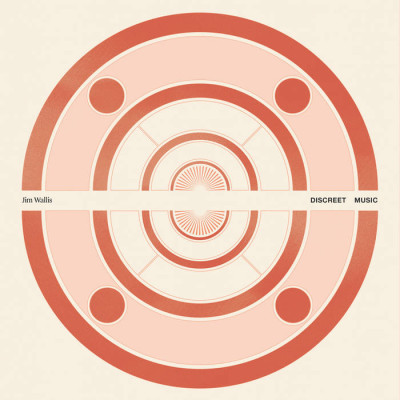
By his fourth solo album Discreet Music back in 1975, Brian Eno was already setting standards for the ambient genre, particularly that side of it that was more inclined towards minimalist modern classical music.
Those standards Eno was setting are in many ways reflected in reinterpretations and re-workings of his music by many artists, often involving turning electronic instruments into acoustic ones and vice versa. Joining these artists now is multi-instrumentalist and Modern Nature member Jim Wallis, who decided to reimagine that seminal Eno album.
The first thing you notice with Wallis’ concept is that he doesn’t simply take one instrumental route – electronic or acoustic. Instead, Wallis decided to combine the two on both pieces, as the Eno original was also split into two sides (the synth and tape delay of the first, and the Gavin Bryars’ interpretation of Pachelbel’s Cannon of the second).
The second thing is Wallis’ idea to keep things as simple as possible, often the hardest thing to do right. He uses just eight short phrases, some of which are a single note, essentially applying a sort of drone concept to the proceedings, making the two pieces even more meditative than the originals.
As he explains – “My version of Discreet Music is split into two sides, on the second of which the pedal steel is played back at half-speed. Eno slowed his original version down by half as part of the recording process, so it felt acceptable to take this one generation further and give the whole thing a slightly woozier feel. Alongside the pedal steel, there is an organ drone, plus the same synth bass and ethereal effects processing that I used on In Huge Gesturing Loops. I also messed around with the delay effects in real time to create the occasional glitching sounds you hear. Adding these extra elements has probably made it slightly less ‘discreet’, but I think that’s OK. My version clocks in a few minutes shorter than Eno’s 31-minute original, a reflection of my own (and perhaps our collective) diminishing attention span”.
Such intriguing concepts as Wallis undertakes here are often great ideas that are hard to execute, but Wallis comes through this process with flying colours.