Interview: Alien Weaponry
I think all those natural progressions just added to this album being a more refined and more polished body of work than we had used in the past.
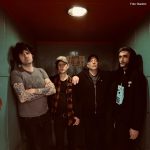
New Zealand metal band Alien Weaponry have recently brought out their latest album Te Rā and it ably demonstrates the growth the band have made their since their last album, 2021s Tangaroa with the band’s heavy grooves and pummelling rhythms sitting right alongside a more mature approach to songwriting. Gavin Brown caught up with Alien Weaponry bassist Tūranga Morgan-Edmonds to talk all about Te Rā, the band’s Māori heritage, metal in New Zealand and how their recent NZ and US tours went.
E&D: Your new album Te Rā has recently come out. How excited are you to be back with this record?
Tūranga: The response so far has been great, we’ve all been super overwhelmed! I think because we were a little nervous, it’s been a long time since the last album, and the last album didn’t quite land where we wanted to. So with this album, we had to take a step back and evaluate where we were and figure out what it was that we wanted to do with this album, where we wanted it to land, and so far, it seems to have landed exactly where we wanted it to, which is great! We were definitely nervous building up to this release, particularly, because there was a lot of changes on this album, first time working with Josh Wilbur, first time recording it outside of the country and not using Henry and Lewis’s dad, who they had used in the past. So there’s a few changes that added to the pre release nerves but we’re really happy to see how it’s been received so far, all positive stuff
E&D: What have been the biggest influences on the sound of the new album?
Tūranga: For this album, the songs that I wrote, because this was the first album where I had been a part of the writing process from the beginning. It was the first album where I could really get stuck into the writing process and show the Alien Weaponry fans what I could bring to the table, but in saying that, it was important for me that whatever I wrote was still identifiable as Alien Weaponry music by the fans. One of the first things that I actually did go before we started writing was listening to the band over and up over again and trying to figure out what it is that makes Lewis’s guitar playing, Lewis’ guitar playing, what makes Henry’s drumming, Henry’s drumming. The lyrical stuff was easy, as someone who can speak Māori as well, the language and cultural stuff was the easy part. So for anything that I wrote at least, the biggest influence was our own music.
E&D: Do you feel that this is your most accomplished album yet?
Tūranga: Yeah, this album for us, whether we did this consciously or subconsciously but a lot of people still associate the band with being teenagers, and obviously we’re not! I’m 25 and Lewis is the youngest at twenty three so we’re still young but we’re not teenagers. The first album came out in 2018 and with that, comes the natural progression as musicians, as people, as we’re more mature and the way we absorb the world is through a more mature lens, which is reflected in our lyrical content. Obviously we’ve been playing our instruments for seven years more than we were when we released the first album. So that means that we’re better at playing, we’re better at singing. I think all those natural progressions just added to this album being a more refined and more polished body of work than we had used in the past, including Josh Wilbur’s influence, which was significant.
E&D: How was the experience of working with Randy Blythe from Lamb of God on the album track Taniwha?
Tūranga: Randy’s inclusion was super awesome. He was a great dude to work with. He was very passionate about that song. He’s passionate about things Māori and historical things. He’s a bit of a history buff, so he was really stoked to get on board and have his way with his verse, and he wrote everything, all those lyrics he sings are his. I think for a lot of people who had read the lyrics, that surprised them, because they seem like they’re written by not just a New Zealander, but by Māori. But he did it all himself. He even already knew the Māori words that he sung, so it was a match made in heaven, so to speak, for Lewis, particularly. He always credits Lamb of God as being his favourite band of all time, and the main influence in getting Alien Weaponry to where it is today. Lamb Of God and Randy, specifically, the way he writes his lyrics and everything, inspired Lewis so heavily. So for Lewis, I think, it’s one of those pinch yourself milestones in his career. We’re super stoked, we could get it to happen.
E&D: Who would you love to feature on an Alien Weaponry album in the future if you could?
Tūranga: There’s a lot in the department cultural stuff that I think would be cool. If we keep it close to home, there’s a band that is from New Zealand that we love and called Shepherds Reign, we just came off tour with them actually. We always say, if you really like Alien Weaponry, you need to listen to Shepherds Reign, because it’s the same thing. But it’s Samoan, so it’s another form of Polynesian heavy metal. Musically, they’re a little different, but the concept of being a Polynesian heavy metal band and singing in a Polynesian language, it’s just for Samoan instead of Māori. So we’ve always loved that band, and maybe we’ll get to do something together in the future as Pacific Islanders. Otherwise, if you’re going outside of the bounds of New Zealand, you’ve got bands like Bloodywood. You’ve got bands like The Hu, who I think would all be quite cool, particularly The Hu, I think would be a pretty sweet collaboration as a cultural mix.
E&D: Was creating the video for the album’s first single, ‘Mau Moko’, a fun experience?
Tūranga: Yeah, it was. It’s always cool to do those Māori videos. I think they’re a little more fun than doing the non Māori videos, because those other videos are more straightforward studio shoot kind of videos. But with the Māori ones, you get to ask all your cousins to come and be a part of the video! We all meet up, this one, it was all shot in Rotorua, at the recreated tourist villages, which all look so perfect. It’s cool to get all these people together to bring this vision to life, you know, this glimpse into history, as they always feel like you’re looking back in time to what it may have looked like 150/200 years ago. They’re always super cool to be a part of, and gives us another opportunity to further the discussions and awareness of of you know what it is that we’re singing about in our songs.
E&D: It must be still so important to salute your Māori roots and traditions with your music and something you will always do?
Tūranga: Yeah, I think it’s a point of difference in a sea of so many musical acts and performers. There’s some great music out there, and it’s very difficult to stand out. For us, it is something that people attach to and go, Wow, this is different. Sometimes it’s hard to explain. We grew up in this country being told that nobody cares about your people, nobody cares about your language, except for you. No one outside of this country cares, and we prove that wrong every time we go on tour. We go to Spain, and 15,000 people at Resurrection festival are singing in Māori to us. We go over to America, and people have the Māori flag in the audience. It allows us to show people who haven’t had the opportunity to experience life outside of New Zealand that the world is a big place, and the world cares a lot more than you think, whether that’s trying to prove the haters wrong or show Māoris here who feel defeated by the constant nobody cares. Us being able to take our culture to the world just shows people back home you’re wrong. People do care, so that’s very important to us.
E&D: You mentioned Shepherds Reign earlier. What’s the extreme music scene like in New Zealand presently, and what other bands would you recommend to check out?
Tūranga: It’s quite good, I think, and it’s growing. I feel like New Zealand has a really cool heavy metal scene. Sometimes for us, we’re too heavy for the mainstream radio, but we’re not quite heavy enough for the actual extreme metal scene here in the country, it can get quite extreme, but Shepherds Reign are one of our favourites. Pull Down The Sun is another favourite of mine. They’re an awesome band. Also Māori inspired and for any fans of Gojira,
E&D: How did you your headline tour with Shepherds Reign go and what were some of the highlights of the tour?
Tūranga: That tour was actually quite surprising for us. I think we weren’t sure where we stood in New Zealand. We spend so much time overseas because that’s where the money is. The New Zealand metal scene is good, but it’s not huge. It’s difficult as a local band to get to that level. It had been five years since we last toured New Zealand, and that tour wasn’t bad, but it wasn’t selling out or anything. So we were very curious to see where we stood, and a lot of the venues on this tour are the same venues that we played five years ago. So it was an interesting opportunity ti see if we did better or worse. To our pleasant surprise, we did better. It was actually a really great tour. We’re seeing a lot more young people showing up to our shows, obviously now they’re old enough to see us. Maybe they did like us when they were teenagers, but they couldn’t come to the show. So now they are old enough five years later, and they’re all showing up to the shows. A lot of youth, a lot of young Māori, a lot of things like that, which is really awesome to see. So it was actually a great tour. We had a lot of fun.
E&D: Did you play a lot of new material and how did it go down?
Tūranga: We did because that tour was prior to the album release. We wanted to surprise our New Zealand fans, our home, by playing some of the new songs that weren’t the singles. I think we played five new songs on that set list, and actually, they were all received really well. You never know how it’s going to go. It’s a good test, because it’s how people respond to something without knowing it. It’s the first time they’ve ever heard it. Are they going to stand there? Are they going to get crazy in the mosh pit? And they all got crazy in the mosh pit. We were playing the Randy Blythe song before that was released as a single, obviously without Randy, but we just put him through samples coming out the speakers. That was cool as well, to see how that worked live, and how we could continue to play that live going forward. We’ll play it with him coming up the speakers, unless we happen to bump shoulders one day and have him around at a festival or something, which would be cool, but it was a cool to see the response and how things worked live. That was also one of the focuses that we had for this album while writing, how would the songs translate live? Because our live show is an important part of how people know us and how we win a lot of hearts.
E&D: You also toured America recently too with Kerry King and Municipal Waste. What were some of the highlights of that run?
Tūranga: What was cool about that one, was that the crowd response on that particular tour was a little more mixed across the board, obviously, Slayer fans in particular can be very dedicated fans but we did play some great shows, particularly Albuquerque and New Mexico, because that’s where a lot of the Navajo are and the Navajo Nation came to that show, and we have a long standing relationship with them and the local indigenous there. Another highlight of that tour was really being able to observe somebody like Kerry because he’s been a professional musician for longer than any of us in Alien Weaponry have been alive! So that’s an impressive feat, to have been in this industry for so long, so when you get the opportunity to share the road with somebody like that, you’d be silly to not try and take a seat with your pen and paper and learn something, whether it’s from him or his band or even his crew, we learned a lot from his crew on that tour, he’s got an amazing crew that some of them have been with him for a long time. Kerry himself was just such a humble, down to earth guy. We didn’t get to spend as much time with him and his band as we would have liked, because we all got really sick on that tour. For three weeks of the tour, we were all deathly sick, so we were all trying to keep our distance. But other than that, it was a great tour and a great opportunity.
E&D: Are you going to be touring for the rest of the year?
Tūranga: Yeah, something like that and we hope to announce more as soon as possible.
E&D: What have been some of the most memorable live shows that you’ve played with Alien Weaponry to date?
Tūranga: There’s three that jump to mind. One is Resurrection fest. We quote that one a lot. That was back in 2022, we were playing ‘Kai Tanaga’, and we had out in ear monitors and had to pop our monitors out, because the crowd was singing all the lyrics in Māori, which is difficult enough for us to get in New Zealand, let alone on the other side of the world, in Spain! So that has always been one of these surreal moments for us. That’s strong memory of ours in terms of a highlight moment, and then the other two are headline shows, one in Denver, Colorado, in 2021 and the other one in Lyon, France last year, just off the rails, one of those shows where you you take a step out on stage and you’ve barely started the first song, and the crowd is like a heaving mass of insanity. The circle pits are going even through the slow songs, and they’ve got the wall of death going while we’re talking to the crowd, The Lyon show was one of our biggest shows we’ve played as a headline, but the Denver show was like 120 people in a 100 cap bar, really small and intimate and just completely off the rails. So shout out Denver, and shout out Lyon for being the best headline shows we’ve ever played.