Interview: Cinder Well
I feel like my past records had more nature themes, and this feels more like we're in a city and dealing with the harsh realities.
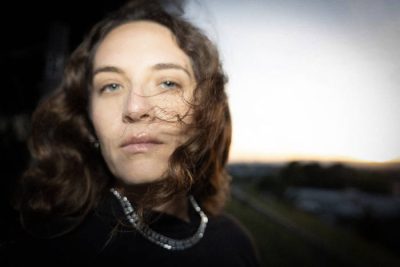
Cinder Well has just brought out her latest album A Blooming Body and it’s an emotional listening experience over eight tracks that showcases her sublime talents as both a singer and a songwriter. Gavin Brown caught up with Amelia Baker aka Cinder Well to hear all about the new record as well as her score for the brilliant TV series Small Prophets and how that came about and her what else she has got planned for the rest of this year.
E&D: Your new album, A Blooming Body, has just come out. Can you tell me a bit about the album and the themes it covers?
Amelia: Yeah, I feel like it covers a range of, personal experiences, but also in this kind of surrealist way. I feel like my past records had more nature themes, and this feels more like we’re in a city and dealing with the harsh realities.
E&D: Have you been pleased with the feedback it’s had so far?
Amelia: Yeah, I mean, I feel like we’re just getting going. I started writing this a long time ago, and I started recording it a long time ago, so I honestly just feel very excited that it’s getting out on a personal level.
E&D: Can you tell us who you worked with on this album?
Amelia: I collaborated very closely with Harlan Steinberger, he’s a producer and engineer in Venice, and we had also worked on Cadence together. I was in his studio for the Small Prophets stuff, and the drummer on it is Philip Rogers. He also played on Cadence. He did the Tiny Desk. He’s a very close friend from home. Greg Cohen plays bass. He is quite a legend. He played with Tom Waits and John Zorn, then there’s some synths on one track from Dylan from Bell Witch, just a lot of collaborators. It’s a real patchwork of sounds.
E&D: What would you say is the biggest influence on the sound of the album?
Amelia: Honestly, the biggest influence just these production ideas that I had. I took a class with Philip Weinrobe. He does Adrianne Lenker records. It was an online class, and it just gave me lots of ideas about mixing in particular, so I feel like my songwriting is always evolving, and it’s just always been this singular practice, but the production techniques I really just went and had a really good time with.
E&D: Is that something you want to explore more in the future?
Amelia: Oh, yeah, absolutely. I think that carried on into the Small Prophets soundtrack as well, and yeah, I’m just constantly thinking about it, especially now with getting into composing. It feels like those really go hand in hand.
E&D: Do you feel it’s your most immersive album to date?
Amelia: Yeah, I would say so. It feels like it has a new level of texture, and fun ear candy stuff.
E&D: Did you feel any pressure following up such a well-received album as Cadence was?
Amelia: I really didn’t. I started this record not even thinking about making a record, I just started going in with Harlan and doing it a song at a time, and it was a very spacious writing time. I really enjoyed the writing process, and only started to feel the real crunch of it when it got more towards this time of releasing it.
E&D: Have you had any ideas about new music and are you constantly working on stuff?
Amelia: Yeah, absolutely. I am writing and I’ve just done kind of a big pivot into soundtracks, composing, so yeah, learning a lot of new techniques for that, and then also writing and thinking about song structures at their core, and how to always try to figure out how to write a good song.
E&D: With Small Prophets, have you been pleased with how the theme and score from it have been received?
Amelia: That was kind of overwhelming, actually, seeing it happen over there. Obviously, it’s more quiet over here in the States, because it hasn’t come out anywhere else other than the UK. But I couldn’t believe how well received the show was., well I could because I just loved it even before I started writing the music for it, but you never know how it’s gonna land with a big audience, and it’s just been incredible to see.
E&D: Has it brought you to the attention of a different audience?
Amelia: Yeah, I’d say so. I think in the last couple years, I’ve been playing more in the heavy experimental kind of metal world, and I think that Small Prophets has reached such an across the board audience, so I’m very curious when I come back over there, who will come out to the shows.
E&D: How did the opportunity for doing the music for Small Prophets come about?
Amelia: I got an email in my inbox from Mackenzie Crook asking if I would consider it, and I was obviously very excited. At that point he was going into production, and we just went from there.
E&D: If there is a second series, will you be working on that?
Amelia: I don’t know if I can say anything about exactly what’s happening, but yeah, fingers crossed, and it’s looking good.
E&D: Were you a fan of the work of Mackenzie Crook beforehand?
Amelia: He did a BBC interview a couple of years ago, where he played one of my songs, he played ‘Two Heads, Gray Mare’, I can’t remember which show it was on, but it brought him to my attention, so then I started looking into what he did, and The Detectorists is just so good. I’ve been watching it recently,
E&D: Has it got a cult following in the US?
Amelia: I think the detectorist people definitely know about it. It’s not super widely known, but obviously it’s like up in conversation. People watch The Detectorists. I think a lot of Americans don’t even know that The Office had the original UK version, but yeah, people definitely recognise Mackenzie when they see a photo of him,
E&D: Going back to the your music, how was the experience of making Plumes with Matt Ball to the end of last year?
Amelia: Yeah, that was really exciting. I think that with Matt, we have such different ways of approaching music, which seemed to complement each other very well in the creative process, and we just did that in one take. When I listen back, it feels so much more composed than it is. So we’re definitely hoping to do more of that.
E&D: Are you looking forward to playing a few shows with Big | Brave and The Body after the record comes out?
Amelia: Yeah, definitely. I had a really busy year last year, and I was constantly coming home for two weeks and getting out on the road again, but this year, it’s been much more quiet, so I’m really starting to get ready to to play some of the new stuff live.
E&D: Does your music take on another life in the live arena at all when you play?
Amelia: Yeah, for the last couple years I’ve really just honed in on performing solo, and really just getting to explore the songs, even stuff from No Summer and Cadence, just through guitar and voice, and sometimes some extra, loops and textures. I really used to be intimidated by holding that space by myself, but I’ve come to enjoy it, and it’s nice to let the songs just be very bare.
E&D: You mentioned earlier about playing a lot with experimental metal bands, has it been a good experience to go out in front of these different crowds with your music?
Amelia: It’s honestly gone very well, and I really enjoy it. I feel like it is surprising how well it seems to gel. I played Amplify a couple of years ago, and I think that was the first kind of bigger show that I played for those kind of music fans, and I just realised that it was resonating well in that world, and yeah, I really enjoy it, and I enjoy that music as well. So it’s fun to go to those festivals and get to see a lot of bands that I like and learn about new ones.
E&D: Would you like to collaborate with artists like The Body and Big | Brave?
Amelia: Yeah, for sure.
E&D: What have been some of your favourite and most memorable live appearances that you’ve done?
Amelia: I really loved Roadburn. I wanted to play that for a long time, and I just enjoyed all of it very much. I got to play End of the Road a couple years ago, that was very fun. Obviously the festivals are top of my mind, but also I’ve just played lovely smaller gigs and churches and houses, and I used to, before having a booking agent, everything was all completely DIY, and all of those are very fond memories,
E&D: What are your live plans after that run with The Body and Big | Brave and will you be making over to the UK at any point this year or into next year?
Amelia: Yeah, we’re working on dates for the fall in the UK. That seems to be coming along, and I’m looking forward to that very much.
E&D: Who are your biggest influences as a vocalist and a musician?
Amelia: Well, Joni Mitchell is a big one for me, her songwriting and voice is obviously beautiful. I grew up with a lot of classic music like that, and in recent times, I feel influenced by the kind of heavier experimental stuff, and in general I’m just a big fan, and really appreciate what Ora Cogan and Emma Ruth Rundle are doing and my friends in that world,
What else have you got planned for the rest of the year, apart from live shows that you can tell us about?
Amelia: I’m working on another smaller film project, and just really trying to continue to expand those skills and my understanding of scoring and working on some stuff with Matt Ball, and then also writing for the next Cinder Well record.
E&D: You’re’ always working on something then?
Amelia: Kind of, yeah, it’s always a strange thing where you write, and then it’s such a long time until the record is actually released, so you’re playing this weird catch up between what’s coming out, and what’s actually like being worked on in the moment,
E&D: As you are working on a film score, is cinema an inspiration on your music?
Amelia: I’m not a huge film buff, but I think that sometimes when I’m asked what the main influences are for music, II can reference sonically things, but film and even novels kind of seep in in a different way, especially for songwriting. How to actually tell a story is different than how to play the song, and there’s been movies over time, where it just it’s really sunken into my psyche, and feels part of the visual world that I’m writing from.
E&D: What are some of your favourite film scores?
Amelia: I really love the Suspiria soundtrack, and I’ve been diving into Mica Levi, who did the Jonathan Glazer films, that’s been quite influential lately.