Interview: Agent Fresco
Life sends you what you need to deal with. So by taking a break from Agent Fresco and the music scene, I went deep into a lot of stuff. But the main goal was always to have as much love as possible for myself, so I could genuinely love other people.
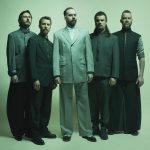
Jody Dunstan sat down with Agent Fresco singer, Arnór Dan Arnarson to talk about taking a break from the band, learning a lot about himself, the dramatic and harsh beauty of their homeland, and finishing their new album.
E&D: Fantastic. Right. So, you’ve been away. Where have you been?
Arnór: Where? What is time even, Jody? Honestly, I have no idea what happened with all this time. Life happened. But today, having done that show in Hungary with the guys, and being here in our tent, it feels like a blessing to be grateful for whatever happened, even if you’d call it a difficult time. This feels right. This feels light. This feels at ease. It’s been seven years since we saw that fucking stage, it’s insane. But it feels like nothing has changed and everything has changed, you know what I mean?
E&D: So you just felt the time was right?
Arnór: We tried to finish that album, The Quiet, back in 2020. I don’t even know if we’ve ever officially announced that title, but now you know it. It was a concept I was trying to work on and I just could not finish it. Things were absolutely crashing around me, and I was trying to put that into the album instead of just taking care of myself.
E&D: Sure.
Arnór: Which is the most important thing, really the only thing we need. In my opinion, the work, the love, the patience, the care you show yourself is, at the end of the day, the thing you can give back. Anything other than that, you’ll just end up burned out, or whatever you want to call it.
E&D: And then you would just be forcing it, right?
Arnór: Yeah, exactly, and you can’t go on like that for long. I tried. So, for the last year, we kind of felt like, “Oh shit, we’ve all been doing our own things, we’ve all landed. Three of us have become fathers.” And it felt right to book some festivals, get back in the studio together, rehearse, have fun. We’re using these shows (of course we’re honoured to be invited) but first and foremost it was about tapping into where we are now. Do we still have that fire for it all? And the answer is yes, yes, yes. We absolutely love it!
E&D: Leads me onto a question, because I was going to ask about Destrier. It was released nearly ten years ago. How does that album feel now?
Arnór: That’s a really good question. It depends on who you ask within the band, but I can only answer for me. It’s about a period of my life where there was a lot of what you’d call anxiety and anger, and figuring out those emotions. That’s what Destrier was supposed to symbolise: a war horse, a horse bred for war. My major theme was: how can I take all of these experiences, all of these emotions, and turn them into this creature, this horse? It was a bit like. . . do you remember the flying dog in The Neverending Story? Was it Artax?
E&D: Oh, I’m not sure.
Arnór: It’s kind of like. . . this horse isn’t just bred for war, it’s also part of me. It’s my best friend, and it’s something I need to meet, and be able to let go of, and say goodbye to.
E&D: Going back to that album, the emotions are still there. Do you think revisiting it is cathartic, a bit like therapy again? Does it bring up memories you’d otherwise put in the past? I don’t want to get too personal!
Arnór: You’re talking too Mr Personal here, but it can be anything, man. Where I’m at in my life right now, especially inspired by being a father and watching my daughter, who’s five, is that there’s nothing wrong with the emotions themselves. It’s more about how I can create capacity for all of them: a safe space for movement with them. So if emotions come up from those songs, that’s amazing, because at the end of the day, it’s just emotions. Like my daughter, when she’s angry, I let her be angry. It’s not really about the words she uses, it’s about the tension, the energy, the emotion in the body, and we learn together how to feel and move through it without projecting it onto other people or suppressing it. That’s the thing I’ve been doing a lot: holding onto emotions and giving them meaning instead of moving with them, instead of allowing myself to be the observer, the dancer of it all. That’s what I’ve been doing these last five years. And now I can go into these songs and feel the sadness, cry, feel the fucking anger. And it’s amazing to finally be able to move through those emotions by myself, using the music the way other people’s music has helped me do it before. Maybe it’s just a permission slip to allow yourself to feel them.

Photo: Joe Singh (@snaprockandpop)
E&D: It’s really positive though, to have that, to move on. So, seven-year break, lots of change. What’s changed with you guys?
Arnór: That’s a really good question. I think we’ve just matured a lot, not just by growing older, but by having gone through our own stuff, whatever word you want to use for that. Things I thought I’d always have: I’m not together with the mother of my child anymore, I left a job I’d built up over five years, relationships came in and out. At the end of the day it was all about my relationship with myself. I’ve matured a lot by really digging into that: what are emotions, what are my thoughts, am I even present, how much have I been living in my head. That’s a lot to land on, sorry.
It’s fucking amazing, honestly, I don’t think we can put words on it. That’s the beauty of it, you can just feel it with us, feel it in our presence together. We’re more open, more responsible, more grateful, having more fun. To get to that point, I guess you need to go through whatever you need to go through. Life sends you what you need to deal with. So by taking a break from Agent Fresco and the music scene, I went deep into a lot of stuff. But the main goal was always to have as much love as possible for myself, so I could genuinely love other people. Then my daughter was born, and I realised there were a lot of blockers there: this isn’t natural, what’s that about? The more I’m in love with this body of mine, the more I can move through things, the more I can give back. That’s the difference. It took me some years, but I feel amazing now, really looking forward to these shows and the music. I feel better than ever.
E&D: Fantastic. So I was thinking about Icelanders. It seems to be a disproportionate amount of musicians, bands and artists from Iceland. Have you any idea why?
Arnór: It’s a very young country. I’ve seen so many answers on this and I don’t really know if I relate to any of them. I was actually raised in Denmark, so I’ve always romanticised Iceland, where my family is from. I’d go there on vacation every year, and so much of the music inspired me: Björk, Sigur Rós, Mínus, Múm, Mugison, it goes on and on. Plus the friends we made when we started the band back in 2008. I think we’re blessed in that there’s no mainstream, no definite way of making it. There’s never really been a mainstream, so people generally do what they do because they love it. I think that translates into the music, that’s why it often sounds a little unique, a little special.
E&D: But I guess sometimes creativity breeds creativity?
Arnór: I think we have a high percentage of people working in the creative industries, I read that somewhere. We support each other a lot, and we’re getting better at being a bigger community. I think that’s what it’s all about: connection, collaboration, and daring to express yourself in whatever creative way. There’s something about it.
Arnór: And the nature as well, just getting out of Reykjavík a little, it’s such a beautiful. . .
E&D: It’s a dramatic country, isn’t it?
Arnór: Yes, young, and really harsh. A harsh environment for nature to survive in, a harsh beauty to it. I think that’s reflected in how people create, how people love, how people feel in Iceland. Then again, we’re descended from Vikings who got shunned out of Norway: we’re all ADHD, shunned Vikings, emotionally all over the place. It’s so inspiring to be there, and it’s inspiring to travel and then come back to Iceland and see how much room we have to grow, to mature, and also to think, “this is amazing, what we do here”. Hopefully soon we’ll get more time to grow internationally together, mature together, dare to connect more. That’s a longer talk. But there’s definitely something young, something raw, something vibrant, something harsh.
E&D: Yeah, you feel that. Probably different people would give different answers too?
Arnór: Oh my God, I’d give you different answers if you asked me in an hour, or tomorrow. That’s why I’m like. . . where do these thoughts come from? How’s my body when I’m speaking about them? How would I answer you when the sun hits my face, or a breeze hits my face? It’s just this moment right now. I think everyone’s answers are different, and honestly, we’re not that aware of our own environment. You need that distance to really think about it, to get to these questions. I don’t think we think about it much in Iceland. It’s just home. It’s always been there.
E&D: So, one last question. If you could collaborate as a band with anybody, who would it be and why?
Arnór: Ah, fuck me, don’t do that to me, there’s so many! Let me think. . . The last person I wrote to was Colin Stetson, asking him to play some saxophone on the final track of the third album we’ve been working on for so many years. There are so many people I want to collaborate with, not just one. A friend once asked me about Spiritbox: could I do a song with their singer? I was like, she’s fucking amazing, so fucking rad. I want to collaborate with anyone who really wants to do it. And as a band, I just want to tour with anyone. I can’t give you one specific answer, but I’ll leave you with those two.
E&D: Perfect. I would love to see that!
Arnór: I love collaborating in any area of the music scene here. But honestly, what I really want to say is, I’ve been collaborating a lot with people, not just in music but other creative arts, recording and writing for other people. The real answer right now is our own album. Let me finish that first.
E&D: It sounds like there’s a little bit of unfinished business with that album.
Arnór: Yeah, it’s been years now. Collaborating and writing with other people, doing music for a play and for a pilot, helped me see: yeah, that’s it, let’s get back to that third chapter, put everything we’ve learned these last seven years into that album. I think we needed these years.
E&D: Definitely. Well, there’s a running theme, isn’t there? Time has to be right.
Arnór: I guess so, man. Like you said before, you cannot force things.
The more I’ve relaxed, the more I’ve allowed myself to float with things and feel into what feels right, the easier and more loving and more creative things have become. To allow things to flow, to let go. You have no idea how good it gets. It’s been a journey. So many things I thought I was saying goodbye to just transformed into another kind of love. Like the relationship with the mother of my child, thirteen years. When I finally got to that point, I realised, oh shit, I can still love this person. Love isn’t about holding on or owning, it’s more of an observing, a collaborating, a dance. A kind of non-attachment. And then you realise how simple things can be. I don’t think we realise just how good it all gets. That’s what I’ve been trying to do: trust more.
E&D: Fantastic. Thank you so much, it was great to meet you.

Photo: Joe Singh (@snaprockandpop)
Header photo: Jose Singh (@snaprockandpop)