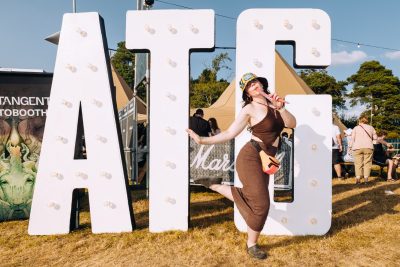
My first-ever music festival was Download 2016, affectionately known as “#Drownload.” With memories of the apocalyptic weather of that event fresh in my mind, I was somewhat apprehensive about attending ArcTanGent (ATG) 2025.
Fortunately, I need not have worried. Not only was the weather excellent, but the whole site was sufficiently intimate that it was only a ten-minute walk from where I pitched up to the main stage. Already, a much better overall experience for this ATG newbie.
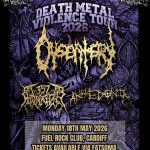
After several mix-ups on my part (arriving at the wrong gate, getting lost trying to find the campsite I was supposed to be in), it was closer to 4pm before I was able to get to the main arena and actually see some live music. So, what better way to start than by catching a band I’d previously missed because of unfortunate circumstances? Underdark were scheduled to play Cardiff’s Fuel Rock Club in February 2024, but due to some technical issues, the gig had to be postponed to a date I couldn’t attend. No such issues at ATG. Perhaps some of singer Abi Vasquez’s more abyssal vocals got lost in the mix, but they otherwise delivered an excellent set. Underdark’s mix of hardcore, black metal, and post-metal might be better suited to a church crypt, but they lit up the PX3 stage, galvanising a growing crowd.
ATG carefully organise the line-up such that no two bands are playing stages next to each other, meaning their respective sounds don’t clash (even though any festival attendee will find themselves at some point torn between two bands that are playing at the same time). On the Wednesday, where the line-up is smaller, this meant there were no bands clashing at all – allowing me to experience Year of No Light’s colossal sound uninterrupted. Their blend of post-metal, drone-doom, and shoegaze is perfect for ATG; no doubt they will be headlining soon enough.
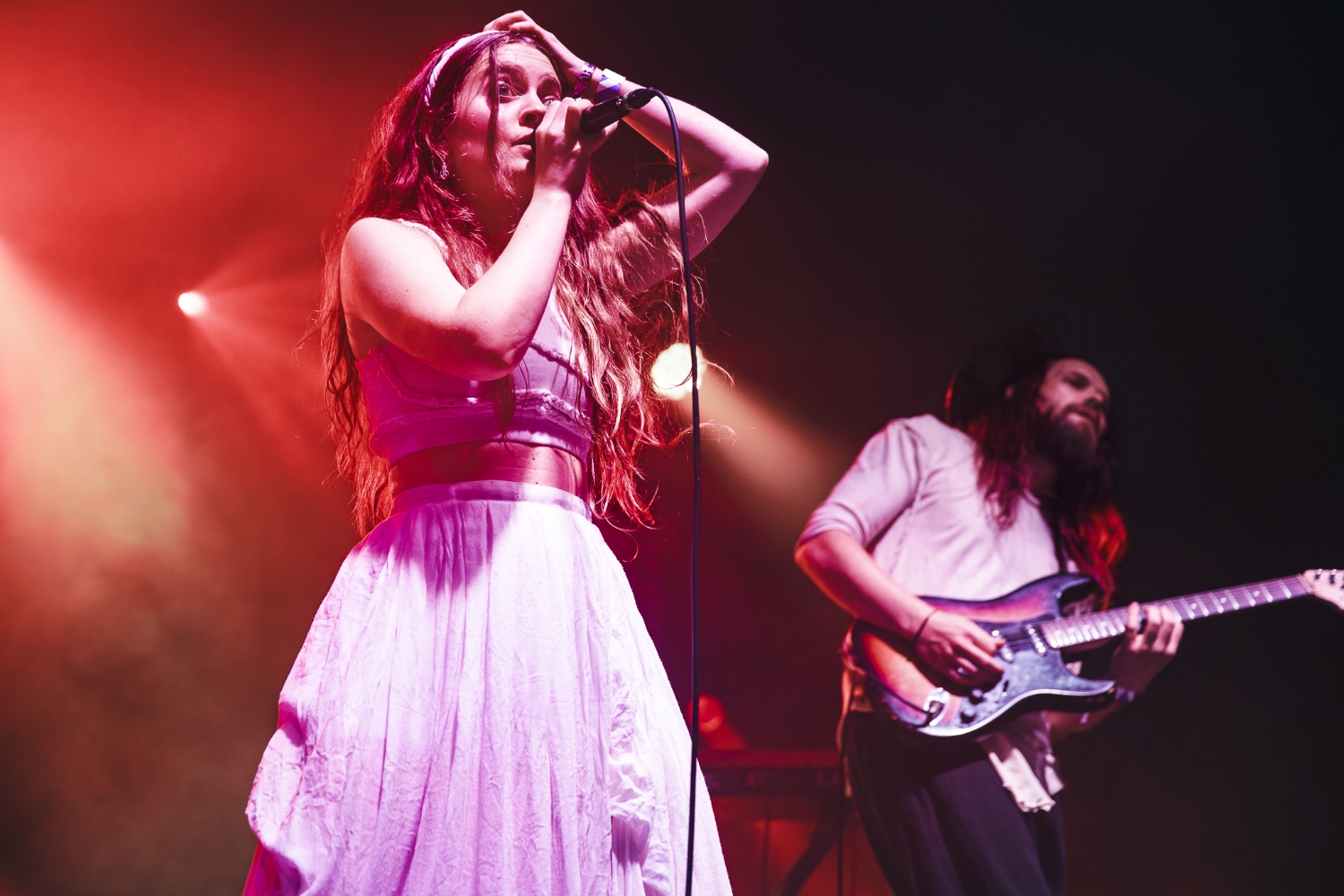
Katrine Stenbekk (Kalandra). Photo: @abbidraperphoto
Norwegian gothic alt-rockers Kalandra were next on my itinerary. 2025 was their second year at ATG, and they clearly relished the opportunity to be on stage. Vocalist Katrine Stenbekk was the stand-out, her mesmerising and ethereal singing managing to fill the space in which it might otherwise have been lost.
I’ve waited a long time to experience the live stage show of Wardruna, and I was not disappointed. From the very first notes, I had full-body goosebumps. Einar Selvik and Lindy-Fay Hella’s voices were incredible, and although they and the crowd were in a large tent in a field outside Bristol, we might as well have been in a long hall in 800AD. Minimalist stage dressing helped amplify this temporal displacement, allowing the audience to freely cast our minds back to the days of the Vikings. Perhaps the set dragged a little in parts, but some creative flourishes helped keep things interesting: there was a strobe-lighting moment that cast the group as sailors wrecked in a storm, and the use of large sousaphone-like trumpets was a personal highlight to this former trombonist. With crowd-favourite ‘Helvegen’, as the first encore, the second and final encore consisted of Selvik singing the audience back to our beds with ‘Hibjørnen’, a soft and beautiful lullaby from their latest album Birna.
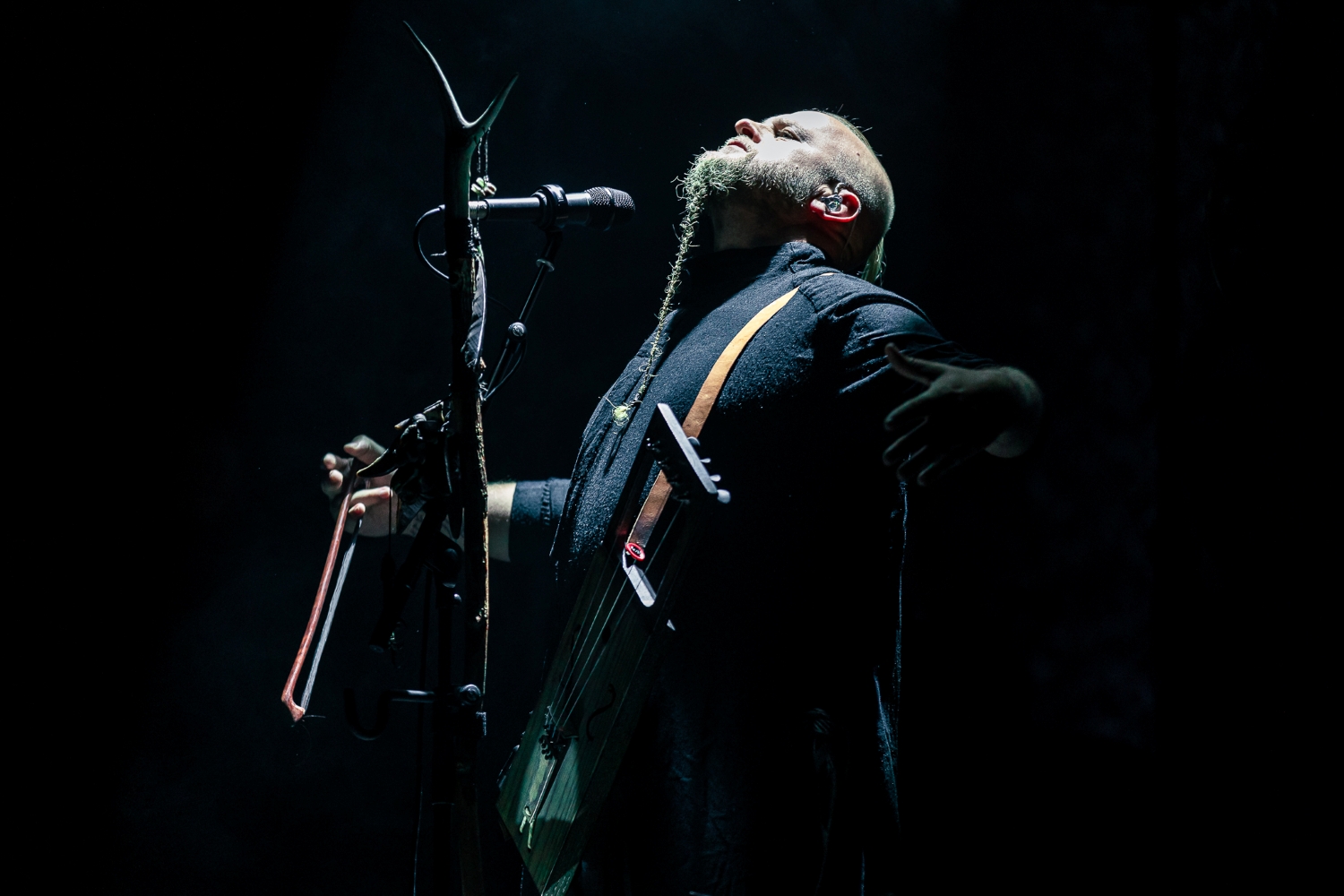
Einar Selvik (Wardruna). Photo: @abbidraperphoto
Having missed the opening sets of Thursday’s line-up, I secured a good spot for The Grey, whose sludgy post-metal helped me through something of a low point during 2021. It was therefore very gratifying to hear the bassist Andy Price give an impassioned speech exhorting the crowd to be vulnerable and not give in the bullshit the world throws at us. However, I felt somewhat cheated when they pivoted halfway through their set to become a Will Haven cover band. There’s nothing wrong with Will Haven, if you like that sort of thing, but I was there to see The Grey, and only got half a set. As it transpired, they had recently been on tour with Grady Avenell, WH vocalist, and so they brought him on to do one WH song. But they then brought on the rest of the band and finished their set as an ersatz mix of both groups. This wasn’t a bad show, but in getting both bands together, the set lacked the full impact of seeing either band on their own.
Exploring the line-up for bands you don’t know is one of the most rewarding parts of a festival. With this in mind, I decided to check out Lemondaze based purely on their band name. It turns out they play music just as bright as the citrus fruit they take their name from, mixing dreampop and shoegaze into a rather ethereal sound, with just a hint of sharpness.
Pothamus’ ritualistic post-metal was up next on my personal agenda, but proved rather dull and forgettable. So, I headed over to Horrendous instead. Fortunately, they don’t live up to their name. They having a whole lot of fun on stage, leaping and running around like the old-school thrash bands they take influence from, manic grins shining out the entire time. But, when you make death metal this good, you can afford to goof around on stage. The crowd responded well to the energy, headbanging almost in unison to the grooves being laid down.
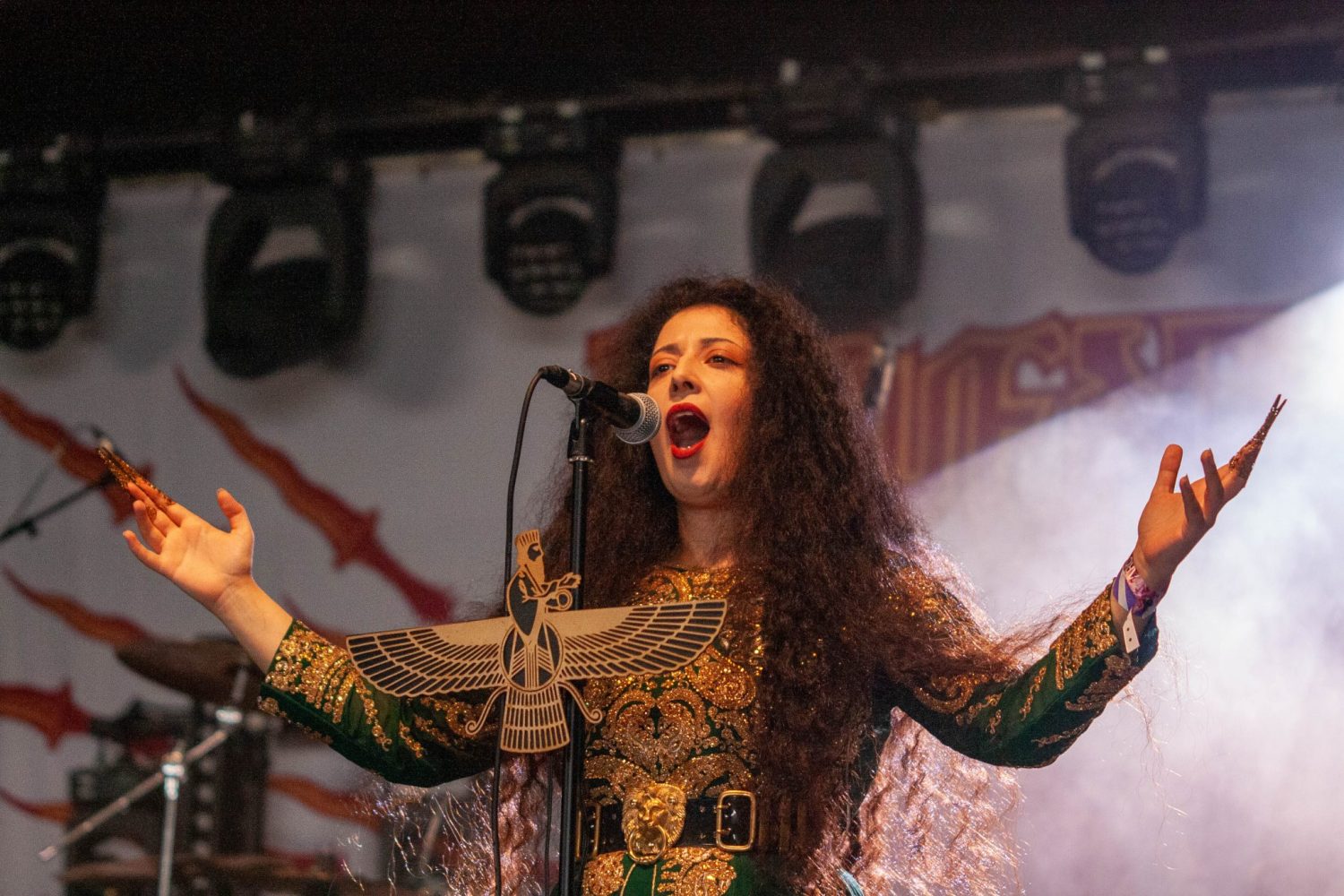
Nina Saeidi (Lowen). Photo: @carlbattamsphoto
Then came Lowen. Having missed their set at Desertfest 2023, I was determined to catch them at ATG, and I was not disappointed. Frankly, it was akin to a religious experience. Nina Saeidi’s tahrir vocals opened the set, and I was immediately awash with goosebumps. And then the guitars and drums kicked in. I’m not exaggerating when I say I damn near fell to my knees at the onslaught. The punchy, riff-laden prog-doom they play just about kept me anchored to the ground, while the drone-infused compositions of guest cellist Arianna Mahsayeh hushed the audience into a rare silence as she introduced ‘May Your Ghost Drink Pure Water.’ But Saeidi’s vocals were the star of the show, piercing through the noise to pluck at the audience’s heartstrings. Epic doesn’t even begin to cover it.
Pulling me very firmly back down to Earth was Meryl Streek. A one-man spoken-word punk act (with drummer accompaniment) might not seem like a big draw, but he had the sizeable crowd eating out of his hand. The palpable anger and energy in his music filled the air so thickly you could have cut it with a spoon. If his words occasionally got lost in the noise, it didn’t matter – his stage presence was that magnetic. No fussing about with polyrhythms, no effects pedals, no theatrical gimmicks: just one man and his anger at the problems of the world we live in. And it was electrifying. Truly cathartic stuff: that the crowd was most animated when ‘Death to the Landlord’ came on speaks volumes about our collective anger at the cost-of-living crisis.
That they entered to the sounds of Ozzy Osbourne (RIP) coughing very loudly on ‘Sweet Leaf’ should tell you everything you need to know about Kylesa. Of course, they are much, much more than a Black Sabbath tribute, indebted as they might be to the foundations laid by the Birmingham quartet. The crowd was ecstatic at their arrival, signalling the end of the hiatus announced in 2016 alongside appearances at Roadburn and other European festivals. In response to the crowd’s energy, the opening bass notes quite literally rumbled through the entire tent – local seismometers were unavailable for comment. Somehow, the Yohkai tent stayed standing. The hiatus has clearly done nothing to diminish their energy or their chemistry, with their return heralded by a truly infectious groove that had the crowd headbanging in unison.
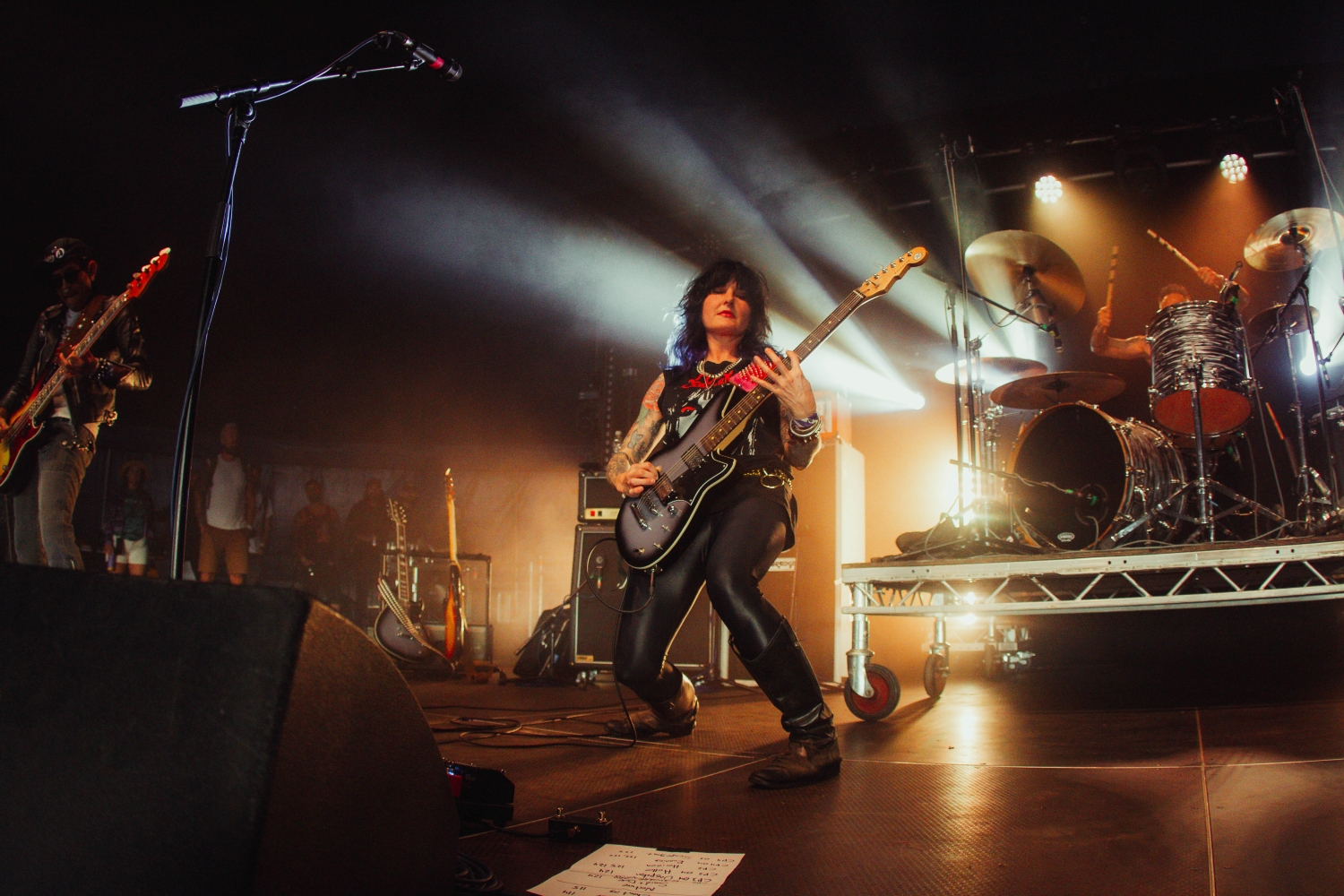
Kylesa. Photo: @carlbattamsphoto
Deciding that I didn’t want my teeth rattled out of my skull by colossal bass notes, I made the mistake of ducking out of Kylesa’s set to try out Tangled Hair. No, that’s not a description of what my long curls are like in the morning, it’s a band that somehow made the unappetising blend of indie rock and math rock (imagine indie-rock with some slightly angular riffs and polyrhythms thrown in for good measure) sound bland.
Another disappointment followed from Leprous. Opener ‘Silently Walking Alone’ lacked the gravitas to really support Einar Solberg’s voice. It’s a thin song on record, and sounded even thinner live, lacking any real bite. The same could be said not only of the rest of their set, but also of their music as a whole. Any really meaty ideas are so rushed-through, or buried under plinky guitars and synths, that there’s no depth to the music. So, despite some impressive pyrotechnics and visual backdrops, I headed elsewhere.
It was up to industrial noise-pop band Tayne to pick things back up, and they just about managed it. They offer a sound that comes off rather like the darker, grittier cousin to pop that the pop world would rather not talk about. Mixing the harshness of Nine Inch Nails with the catchy hooks of Lady Gaga and others, it was an interesting experience.
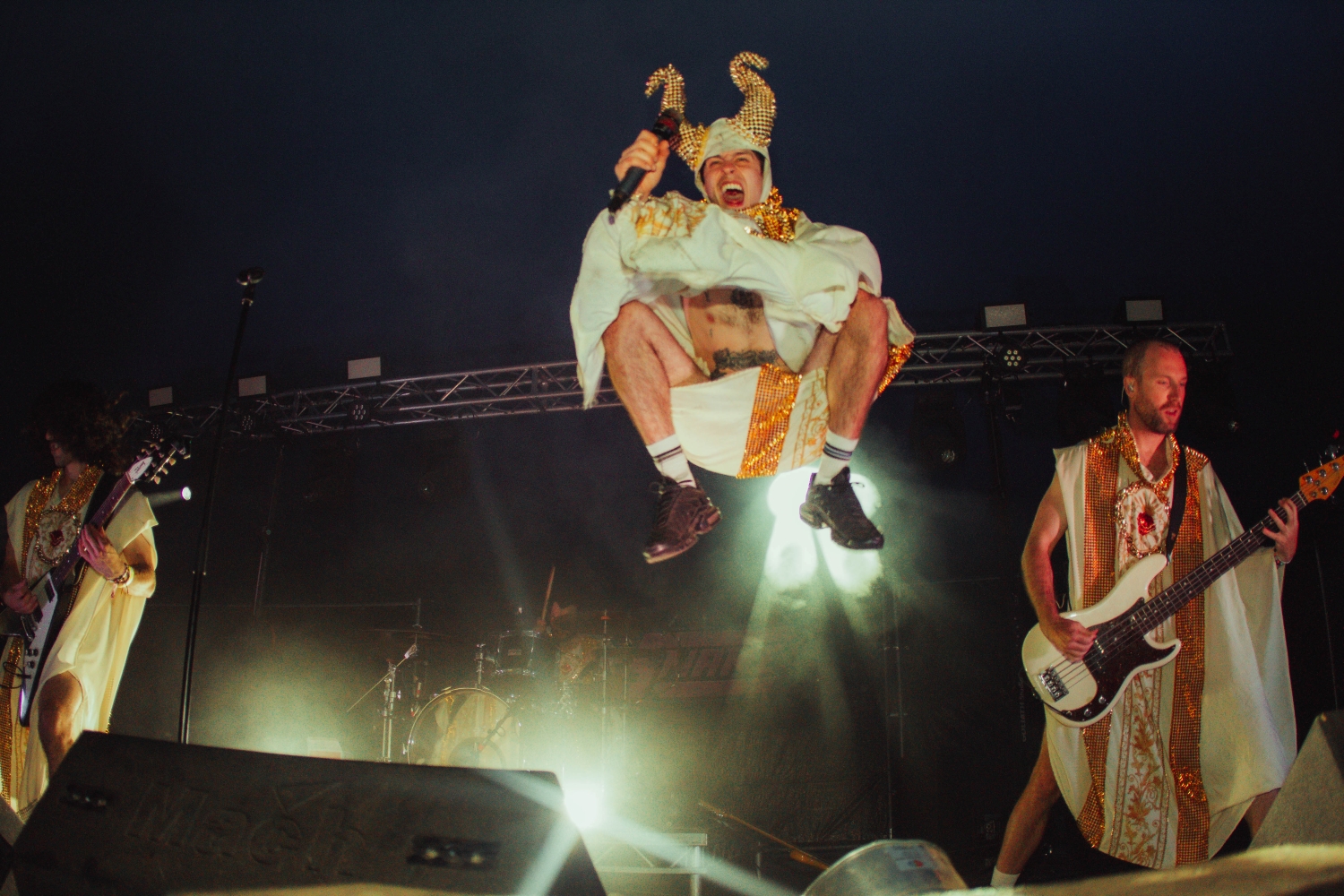
Battlesnake. Photo: @carlbattamsphoto
There’s definitely something strange going on down under: Battlesnake are probably the silliest of the recent crop of Aussie bands to make waves on the global stage. A slightly delayed start did nothing to diminish their energy as they piled on stage in their glittery, gaudy outfits to the Pie Jesu requiem from Monty Python and the Holy Grail, albeit without smacking their faces with wooden boards. Their scuzzy glam rock immediately set the audience’s respective Motorsteeple engines going, opening the set with ‘I am the Vomit.’ If the vocals got a little lost in the mix, it didn’t matter – the vocalist was having far too much fun playing with his gigantic wizard’s staff which, of course, had a knob on the end.
Palate cleansed and the novelty of Battlesnake’s antics wearing off quickly, I decided to head over to the main stage for Godspeed You! Black Emperor. Before this set, I had never properly tried them out: the long runtime of their songs has always felt a little intimidating. I had been assured by a friend, however, that going into their stage show with no preconceptions was the best way to immerse myself. He was right. Taking their setlist largely from 2024’s album protesting the Gaza genocide, NO TITLE AS OF 13 FEBRUARY 2024 28,340 DEAD, it was a truly mesmerising experience.
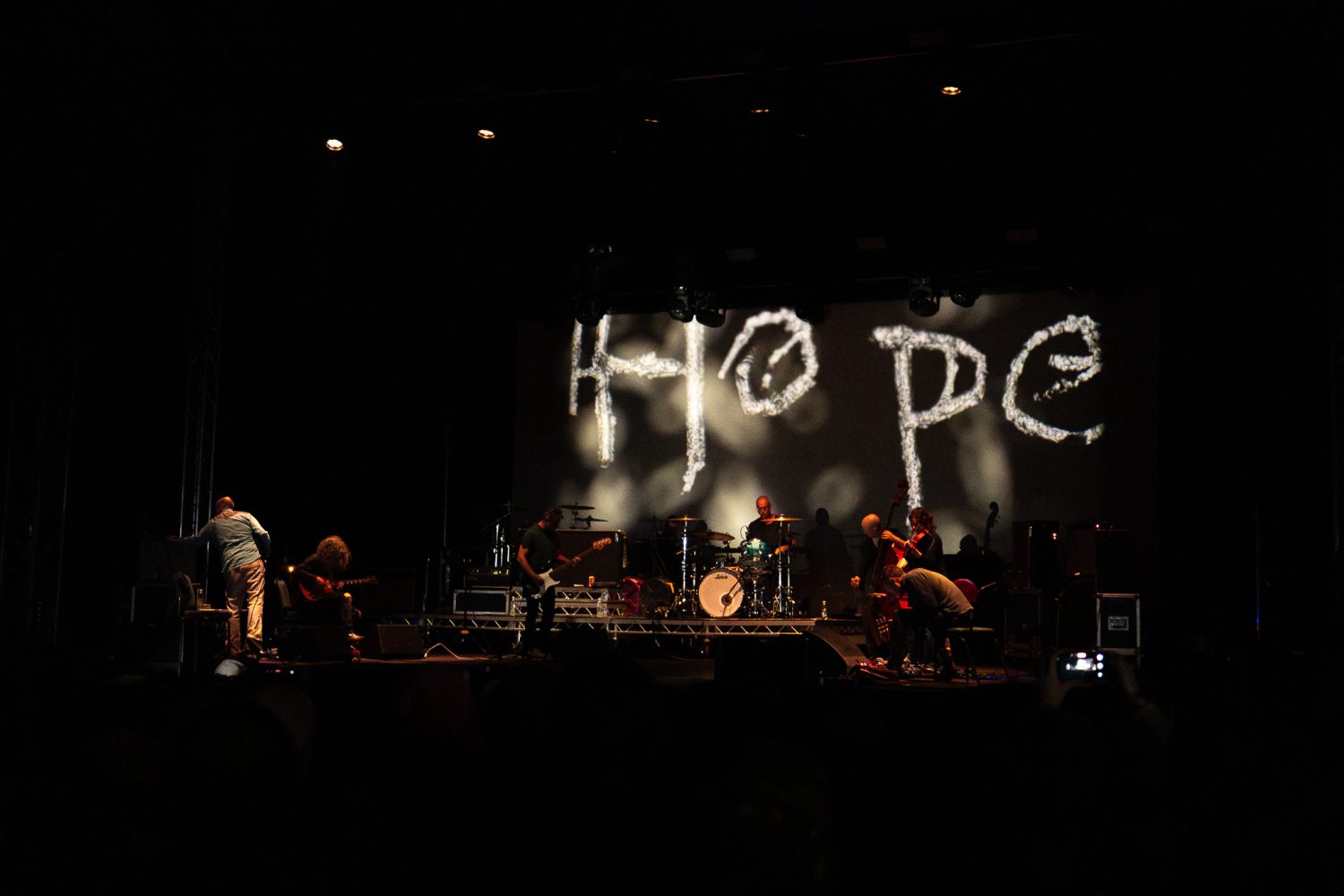
God Speed You! Black Emperor. Photo: @abbidraperphoto
One of the most prominent post-rock bands of the early 00s, and amongst those who laid the foundations for the very festival they are headlining, they both embody and exceed the maxim I saw on a fellow attendee’s t-shirt: “It’s ambient. Then it’s loud.” Their songs (or are they better thought of as symphonies? Two sides of A4 on my desk by Monday) are fully immersive, shifting effortlessly between light and shade, heavy and soft, loud and quiet as they wash over the audience. The beautiful visuals, comprised largely of oneiric footage of cityscapes, clearly took inspiration from the Qatsi trilogy of films. And nothing was lost in the mix: the violin and glockenspiel, more prominent in the quieter moments, were still audible even as the guitars crescendoed. Truly epic, and absolutely incredible to witness.
Sadly, Friday brought with it the last-ever performance from Ithaca. A leading light in the British metalcore scene, they nonetheless demonstrated a sense of humour about the occasion by coming onstage to the dulcet tones of Robbie Williams singing ‘Angels’ and then launching into some of the most brutal music of the entire festival. Djamila’s stage presence was arresting, and the band were clearly having a blast levelling the stage with their crushing riffs. To celebrate their legacy, they even brought on some guest musicians, including Kate Davies of Pupil Slicer and Ed Gibbs of Devil Sold His Soul. Farewell, Ithaca, you will be sorely missed.
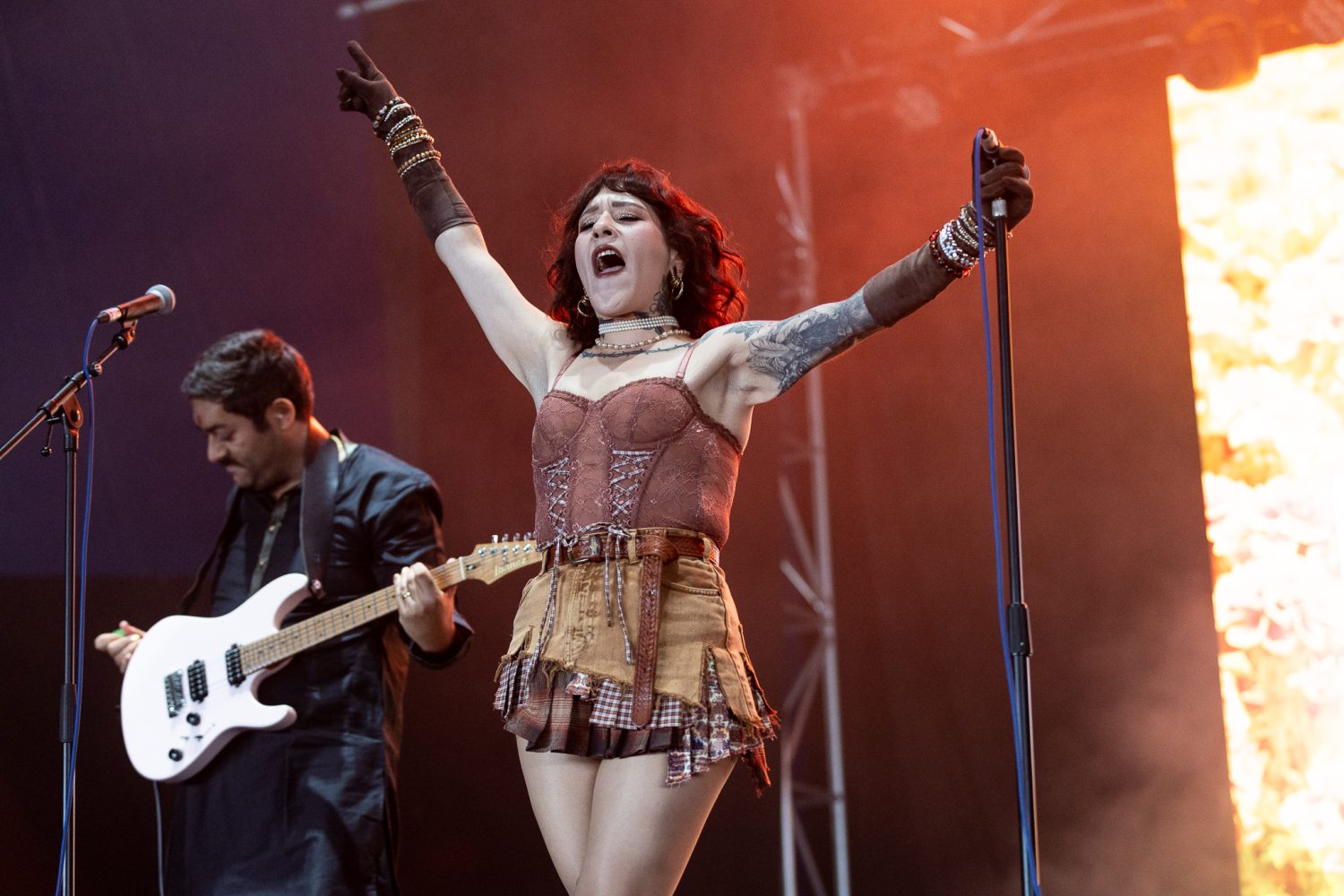
Djamila (Ithaca). Photo: @abbidraperphoto
Up next were newly-minted Echoes & Dust faves Dimscûa. ArcTanGent, by pure coincidence, was their first-ever live booking, but they certainly didn’t come off as naïve beginners. They played their haunting debut EP, Dust Eater, in full to an eager crowd. From the very first notes, it’s easy to see why they’ve quickly become favourites in the post-metal underground: crushing riffs that echo with cavernous reverb, thundering bass, mournful melodies, and a blistering delivery of screams from vocalist Alex Rowlands. They fit perfectly into the ATG niche, while simultaneously standing out as ones to watch. Although, how much “watching” one could do given the overuse of the smoke machine (or was that just the cloud of vapes from the crowd?) is another matter. Sleep on Dimscûa at your peril.
One woman, her guitar, and some effects pedals might not sound like much, but Emma Ruth Rundle had the main stage crowd absolutely enthralled. Rarely has an acoustic guitar sounded quite so heavy, nor a fragile voice filled a space so completely. George Harrison wishes he could have had his guitar gently weep like this. Even her whispers, particularly on ‘Blooms of Oblivion,’ held the crowd’s attention. Her emotive doom-folk is incredible on record, but it’s quite another experience in a live setting. Something about seeing just her, dwarfed by the stage, giving voice to songs about grief, death, heartbreak and more tugs at every heartstring in the audience. It’s not all doom and gloom, however: by introducing ‘Citadel’ from 2021’s Engine of Hell as “another uplifting number,” Emma showcased a particularly wry sense of humour about her musical niche. It was truly a privilege to experience Emma’s live set, and one I hope to repeat soon.
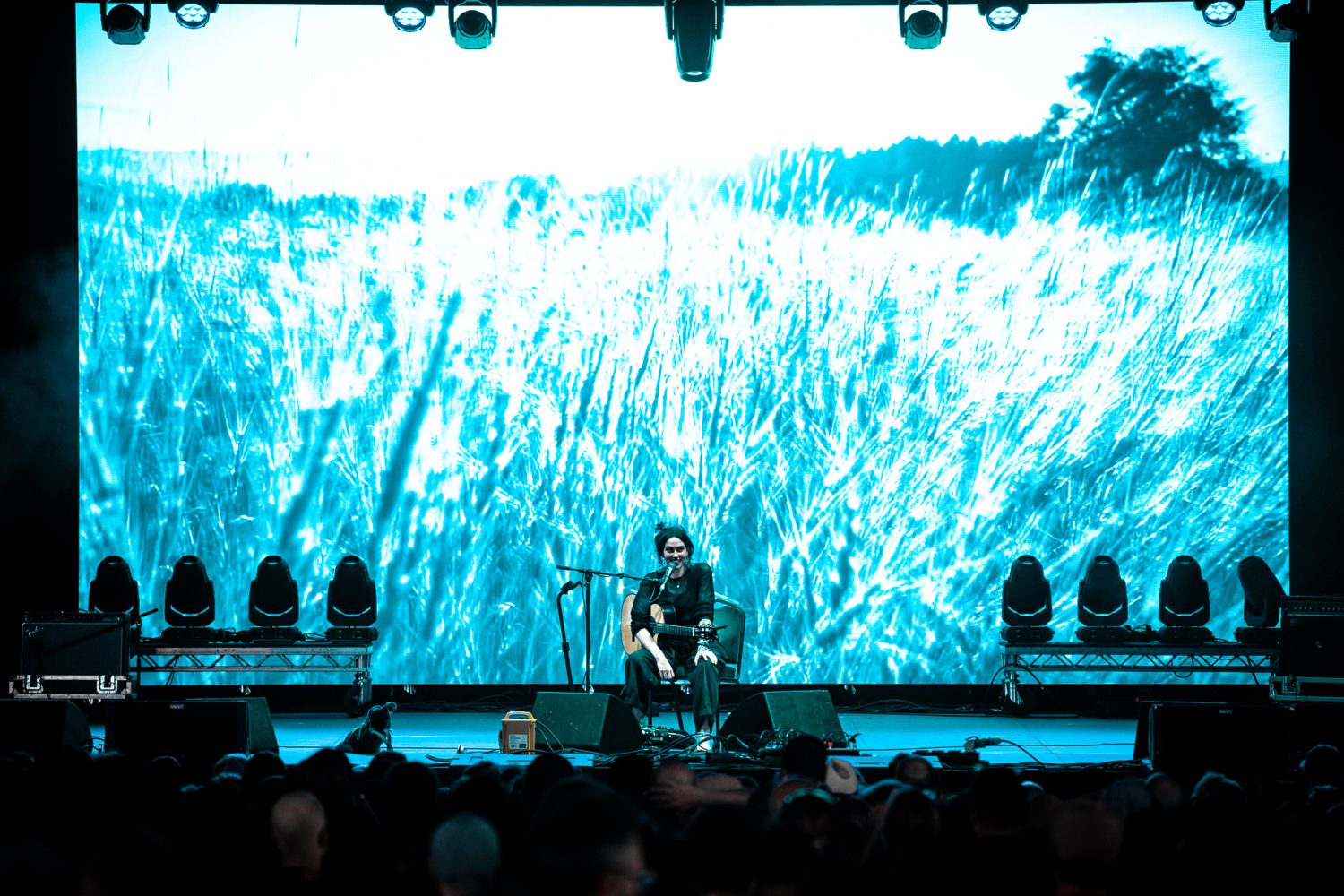
Emma Ruth Rundle. Photo: @abbidraperphoto
Following ERR would always be a challenge, so with the choice of either delving or Future of the Left, I chose FotL first purely because they’re a Cardiff band and therefore local to me. I had no idea what I was in for, but as the angular riffs of ‘The Lord Hates a Coward’ kicked in, it was clearly going to be a good time. Their dedicated fans were almost as loud as the singer for ‘Arming Eritrea.’ FOTL are on the heavier, punkier end of things than most of the ATG line-up, though the alt-punk music on display is no less complex, shifting time signatures and tempos at a dizzying rate. Their infectious energy was almost too much to handle in the heat, but the flagging crowd ate it up.
Deciding to give delving a try, I was pleasantly surprised to discover they play a kind of bright ambient prog that sounds a little like the more psychedelic parts of Tool if they were more interested in soundscapes than disappearing up their own behinds. The proggy instrumentals were excellent, merging catchy riffs with bright synths in an energetic sound that seemed to match the afternoon sunshine.
Breakout stars of the doom underground, Green Lung were played on to the stage by an actual fanfare, from a trio consisting of tenor sax, trumpet, and tuba called the Horns of the Ram, whose music segued seamlessly into the colossal riffs of opener ‘Woodland Rites.’ The lead vocalist Tom Templar is a magnetic stage presence, even if he couldn’t quite hit the high notes he was aiming for. His description of the band’s sound as “Old English Black Magic Mushroom-Eating Forest-God-Bothering Heavy Metal” is perfectly apt: British folklore has rarely enjoyed so glamorous or raucous a setting as the music of Green Lung. For those uninitiated into the Forest Church, imagine if Ghost were a) good, and b) collaborated with an act like Grand Magus to write songs about The Great God Pan or The Wicker Man rather than mucking about with whatever nonsense lore they’ve come up with for Papa Emeritus. No complex time signatures, no blastbeats, just good riffs, catchy hooks, memorable choruses, and a damn good time had by all. I may not personally count among their number, but I have no doubt that many in the audience became converts to the Forest Church by the time ‘One For Sorrow’ finished proceedings.
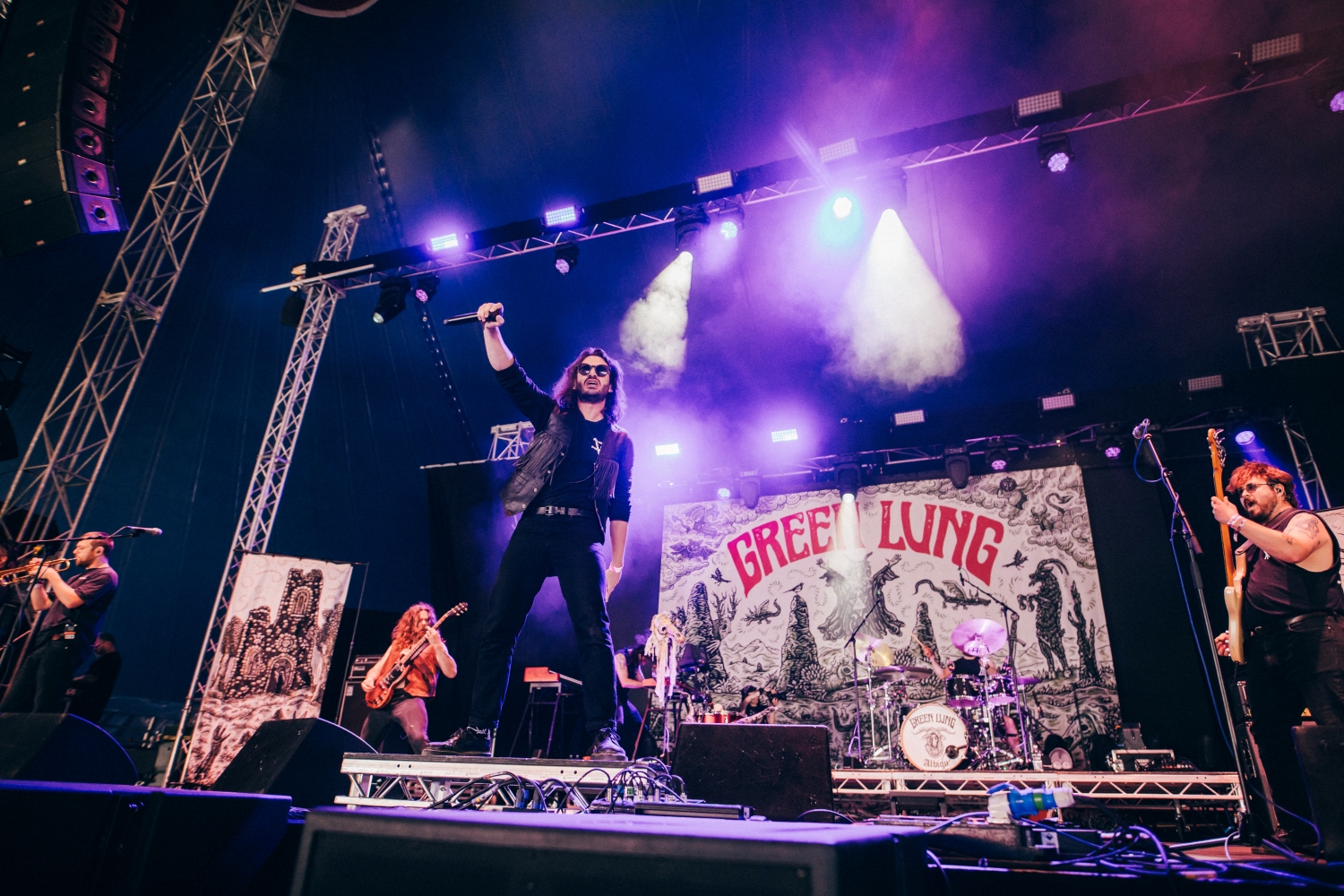
Green Lung. Photo: Derek Bremner
Departure Songs is not just celebrating its tenth anniversary this year, but is also arguably the crowning glory in the discography of Australia’s We Lost The Sea. So, it’s only fitting that it was given its own slot to be played in full. The band marries Explosions In The Sky-style post-rock to the more expansive, cinematic sound of GY!BE, crafting a beautiful exploration of dynamic contrasts alongside some heart-wrenching melodies, set atop some of the heaviest riffs of the entire festival. I can’t do any more justice to the music than our own Nick Dodds did in his review, so I’ll let that speak for itself. But experiencing it live was truly a unique experience.
How disappointing, then, to go from beautiful post-rock to bland prog with Karnivool’s headlining set. The light display was suitably dazzling, and I’ll admit that their melodic prog was a tad more arresting and grandiose than Leprous’ efforts. But the singer was straining at the high notes, and the music was ultimately too bland to be of much interest.
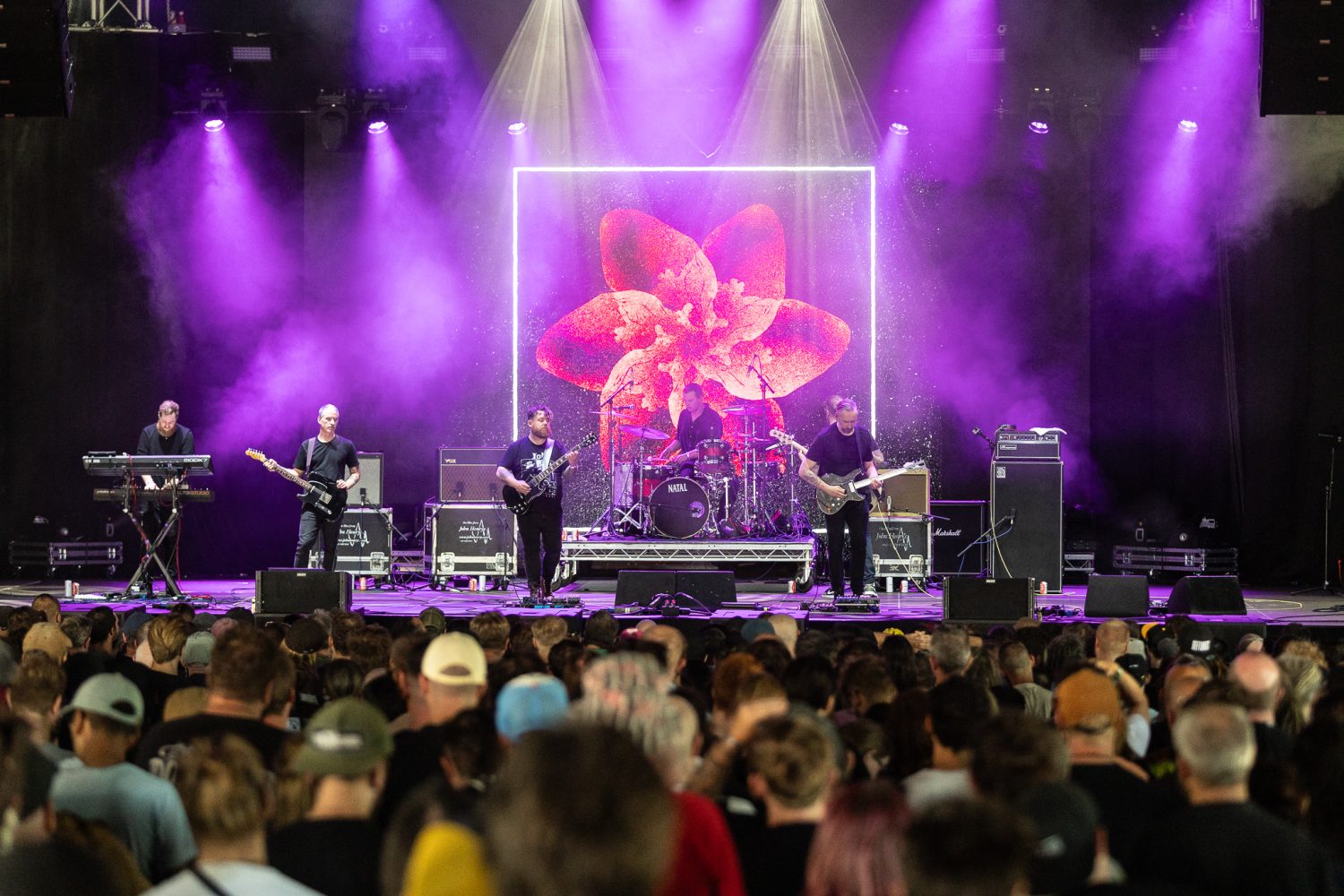
We Lost The Sea. Photo: @abbidraperphoto
The evening was rescued somewhat by the Nordic Giants silent disco set. If you’ve never experienced one, a silent disco requires the use of over-ear Bluetooth headphones through which music is played by a DJ. You can thus experience something approximating a live set without risking eardrum damage and also shut out the incessant chatter of the crowd around you. I’ve only ever attended one other silent disco, on my first day at Cardiff University almost exactly fifteen years ago in September 2010. It was a bizarre experience, and one I hadn’t wanted to repeat until now. But with Nordic Giants as the live DJs? Consider my arm twisted.
Perhaps it would have been better as a properly live set. Certainly, the brilliant lightshow and fascinating visual backdrops would have worked better in service of a proper live show. But a silent disco confers a sense of intimacy: the over-ear headphones make it seem like it’s just you and the music. This made my own personal favourites – ‘Taxonomy of Illusions’ and ‘Spirit’ – hit just a little bit harder than they might have done as a live show, so any gripes with the format were forgiven.
Waking everyone up on the last day of a festival is a thankless task, but Sugar Horse may just have been the right choice. Starting with an angelic synth choir and a colourful backdrop reminiscent of the Star Gate sequence from 2001: A Space Odyssey, they opened gently, but the music soon crescendoed to envelope us all in reverb. Fan favourite ‘Office Job Simulator’ was the highlight of their set, as bright as it is heavy, centred around driving riffs and the singer’s echoing voice.
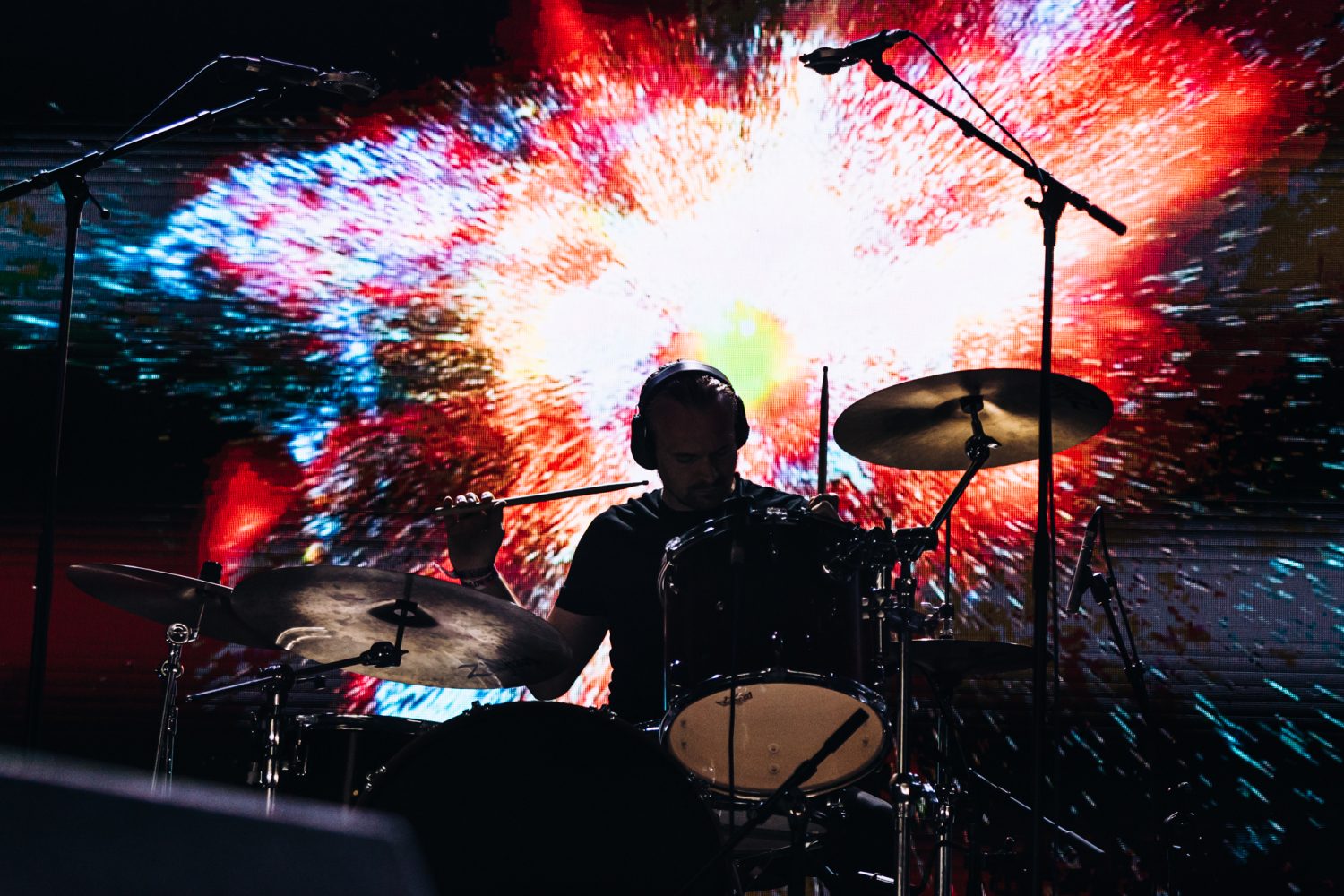
Sugar Horse. Photo: @snapraockandpop (Joe Singh)
Very firmly awake, I banished the last remnants of my hangover by checking out Swamp Coffin. Self-styled “architects of the world’s slowest wall of death,” that particular epithet says almost as much as you need to know. Their music sounds exactly like you’d expect from their name: no complex polyrhythms, no funky time signatures, just loud, slow, swampy sludge-doom dredged up from the hellish pits of, er, Rotherham. Even though they introduced ‘This Was Always Going To End In War’ as “another quick one”, its tempo and squalling riffs were more reminiscent of a pitch-drop experiment than anything else. They closed their set with ‘As Cold as Blood’, finally delivering on that fabled slow wall of death. It was a rather surreal experience to be part of a crowd lumbering slowly at the other half of itself. Many of the participants pretended to be zombies, which they continued when the two halves eventually met and formed what was probably the world’s slowest circle pit. Great fun, and worth checking out if the stench of their fetid sludge invades your hometown any time soon.
Coming back off hiatus is a challenge for any band, especially if the hiatus lasts thirteen years. Tool made fans wait that long for the ultimately-disappointing Fear Inoculum. American avant-prog maestros Sleepytime Gorilla Museum, however, came roaring back last year with Of The Last Human Being.
Having never experienced their live show, I went in with only the knowledge that I was in for a strange time. And a strange time was indeed had. In full face-paint, evoking Japanese kabuki theatre masks, and colourful, heavy-looking dresses made of what looked like old tents, they drew in a decent crowd of faithful fans and the avowedly curious. The percussion set-up included a rattle made of an old bike wheel, a set of large kitchen pots on a stand, some broken cymbals, and a glockenspiel. An enigmatic stage presence before even playing a note, they were so exceptionally precise in their soundcheck that they delayed their start time to get things exactly right.
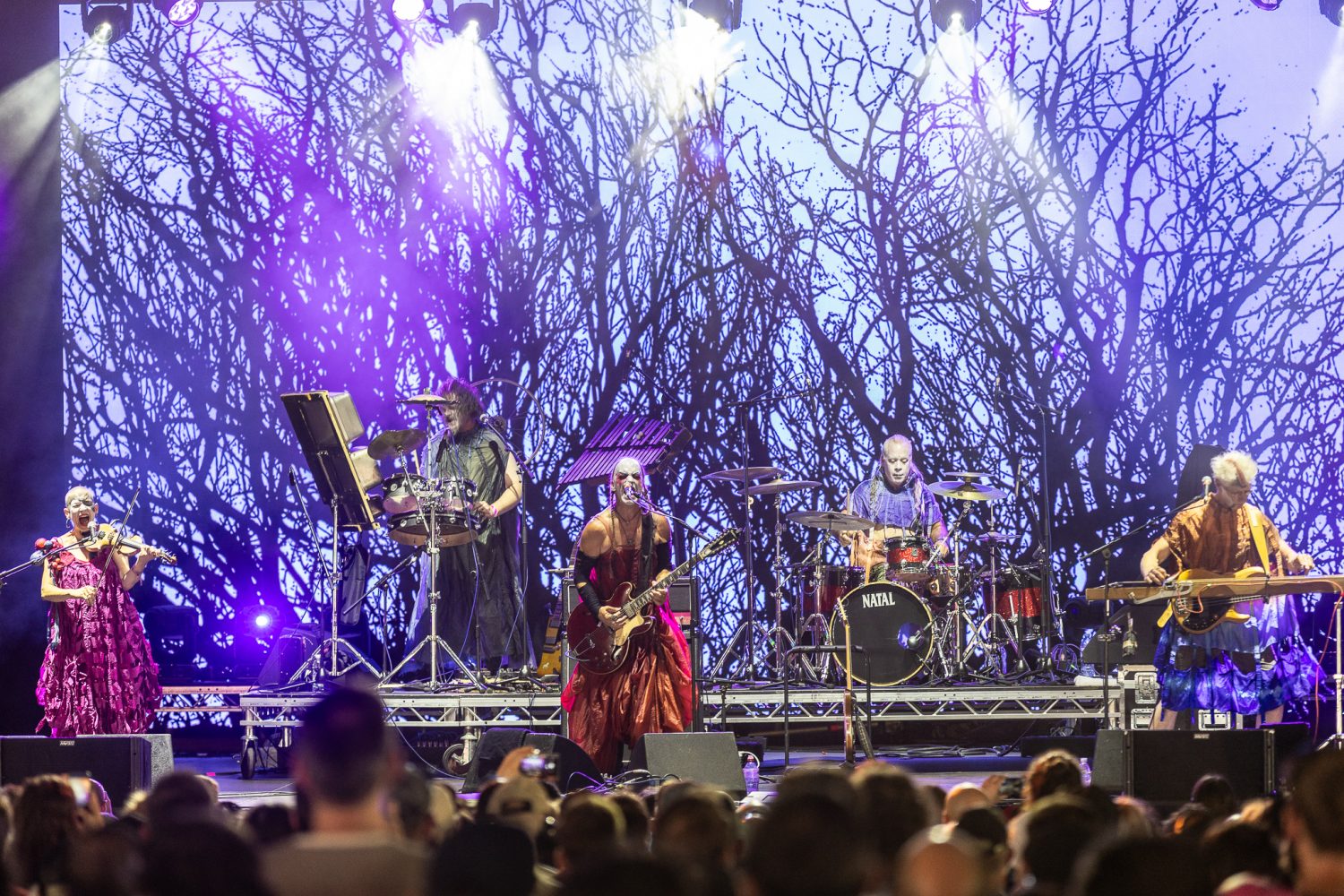
Sleepytime Gorilla Museum. Photo: @abbidraperphoto
Using flute and violin to mimic birdsong, they kicked things off with ‘Salamander in Two Worlds.’ Their set was made up almost entirely of fan favourites, including ‘Powerless’, which they dedicated to both the victims of the Gaza genocide and victims of oppression everywhere. Violinist Carla Kihlstedt also spoke in appreciation of the presence at the festival of Heads Above The Waves and Safe Gigs for Women. Triumphant closer ‘The Donkey-Headed Adversary of Humanity Opens the Discussion’ had the crowd enraptured: their show was easily the most theatrical of the entire festival.
Switching through time signatures quicker than you can blink, it’s safe to say SGM are very much not your dad’s prog rock. Their music almost feels entirely improvised, even though everything is precisely composed and hangs together on the electrifying chemistry between the performers. Thirteen years away has clearly done nothing to put rust on their gears as they played with the same vigour as if they were fresh out of art school. Here’s hoping it’s not another 13 years before they come back – though even if it is, I will definitely be there to witness it.
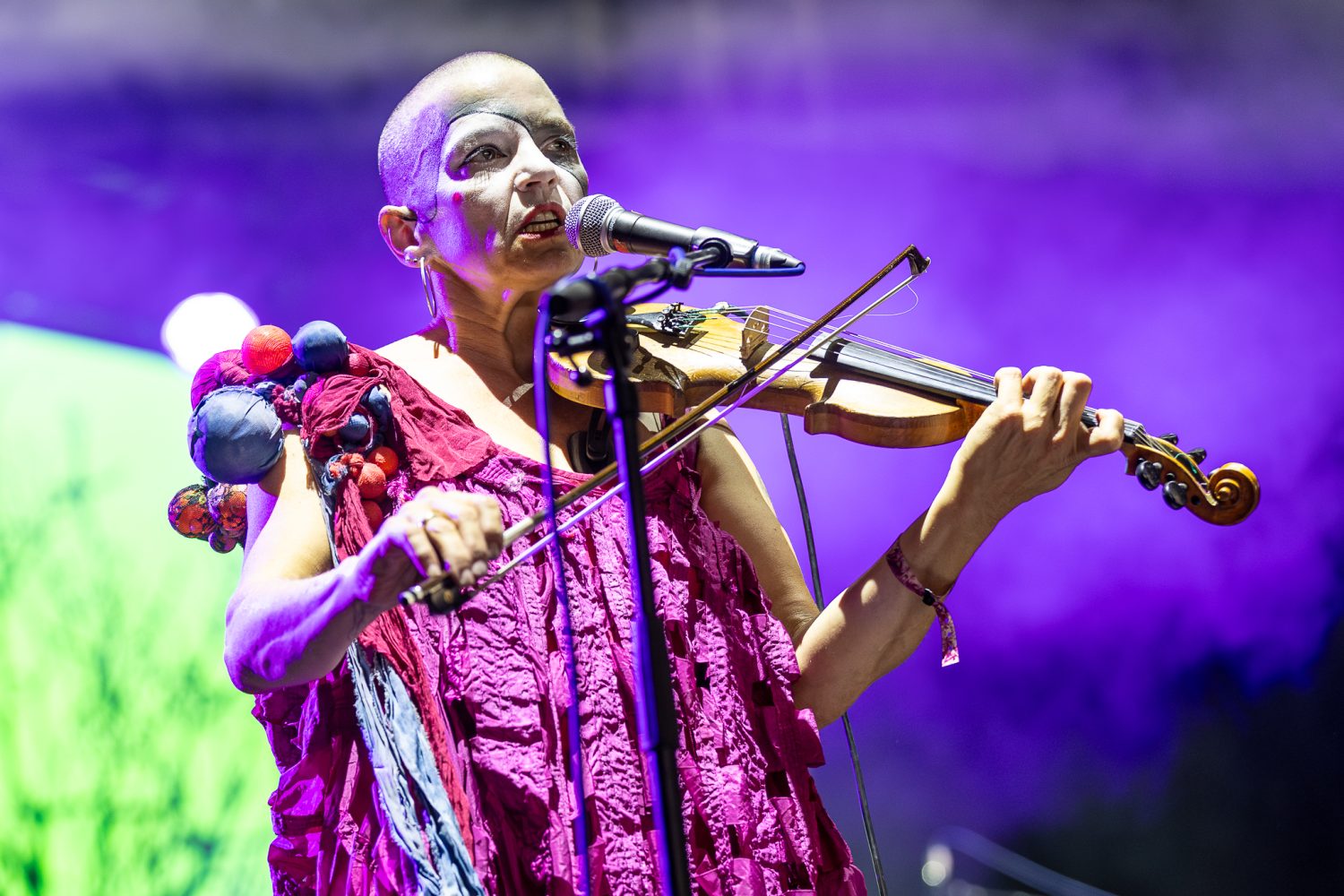
Carla Kihlstedt (Sleepytime Gorilla Museum). Photo: @abbidraperphoto
In need of something more “normal” after SGM rearranged my brain, I sought out Waldo’s Gift. It turns out Waldo’s Gift is not a wrapped seek-and-find puzzle book, but an experimental trio from Bristol. Mixing the jagged, angular guitars and jarring time signatures of math rock with glitchy electronics and the heady melodies of post-rock, this wasn’t quite the palate cleanser I needed. But, if you can wrap your head around the semi-improvised music on display, it has a certain beauty to it.
Completely resetting my brain from weirdness were Inter Arma. They battered the Bixler stage with their outsize riffs as their vocalist segued easily from visceral screams to some incredibly guttural howls, his voice impressively louder than both guitars and drums. That he was also wearing a PJ Harvey shirt speaks to the wide array of influences on their music – they’re not just a battering ram of blackened sludge. They mix post-metal, psychedelia, and more into their music, making for a truly potent force both live and on record.
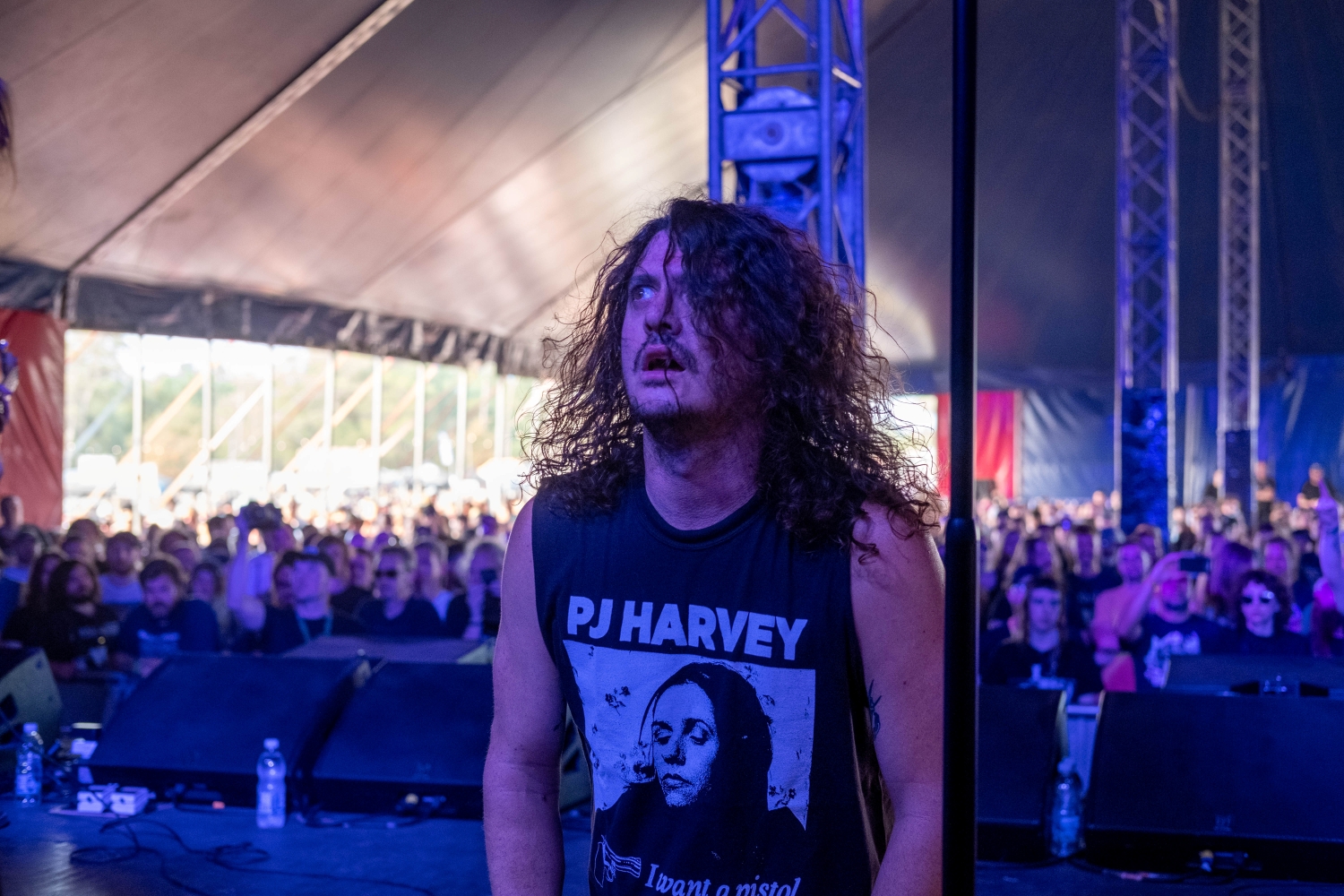
Mike Paparo (Inter Arma). Photo: @carlbattamsphoto
Sinking back into the depths of doom, I found myself watching Ahab. They play funeral doom so heavy it’s like being hit full force by the tail of a gigantic white whale. The colossal riffs and abyssal howls are juxtaposed with some quieter moments. But this is funeral doom, so even the ‘moments’ move forward at a pace even glaciers might consider slow. Of course, this means that when the riffs come back, they feel even heavier. Excellent stuff.
Returning once again to the realms of the weird, I checked out Adebisi Shank on the advice of a friend, arriving part way through a very frenetic number. Another band returning from hiatus (only ten years this time), theirs is a bright and energetic brand of post-rock, blending synths with truly impressive guitar playing. If their live show is anything to go by, and they don’t go on another hiatus, they’ll be a bright spark in the Irish post-rock scene for some time yet.
Another band I had never fully tried before, Kayo Dot failed to live up to the hype. The music was impressive: a complex mix of prog, space-rock, post-rock and more that would work wonderfully without vocals. Unfortunately, it’s all set up in service of Toby Driver’s vocals, with which I could not get along. It also speaks volumes that the PX3 tent was less than half full, with much of the audience either packing up ahead of leaving on Sunday, or watching two guys in clown costumes play something called “techno jazz”.
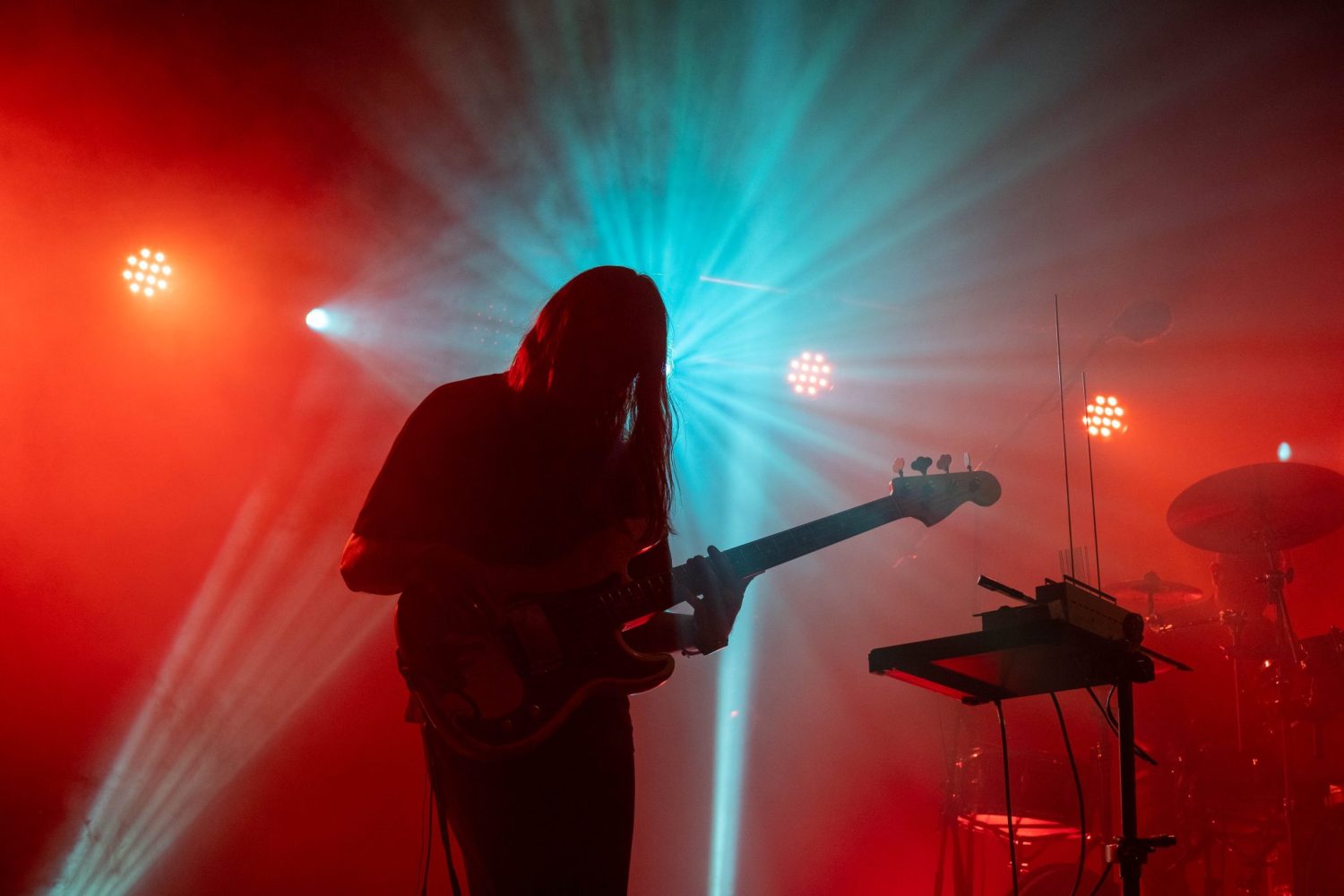
God Is An Astronaut. Photo: @carlbattamsphoto
However, the night was saved by God Is An Astronaut. My only complaint is that I wanted more. I wanted a full headliner show from them, and am gutted that they were relegated to the Yohkai stage for a truncated set. It was an extremely packed tent though, speaking to how popular and beloved the Irish post-rock trio are. Starting with ‘Floating Leaves’ from 2024’s Embers (my Album of the Year pick), theirs was a beautiful set. Their mastery of dynamics, and the contrast between light and dark, was on full display as they segued from ‘Falling Leaves’ into ‘Epitaph’ and ‘Séance Room’ from 2018’s Epitaph. The crushing emotional weight of their music was amplified a thousandfold in a live setting; frankly, it was so beautiful I could have wept. After a pummelling rendition of ‘Suicide by Star’, frequent collaborator, the cellist Jo Quail, was brought out to round out the set with her two songs from Embers, and finished things off with the title track. It was an incredible experience, and one I am keen to repeat for a full show.
As my first introduction to the world of ArcTanGent, this year’s festival was an excellent offering. I’ll definitely be back again.
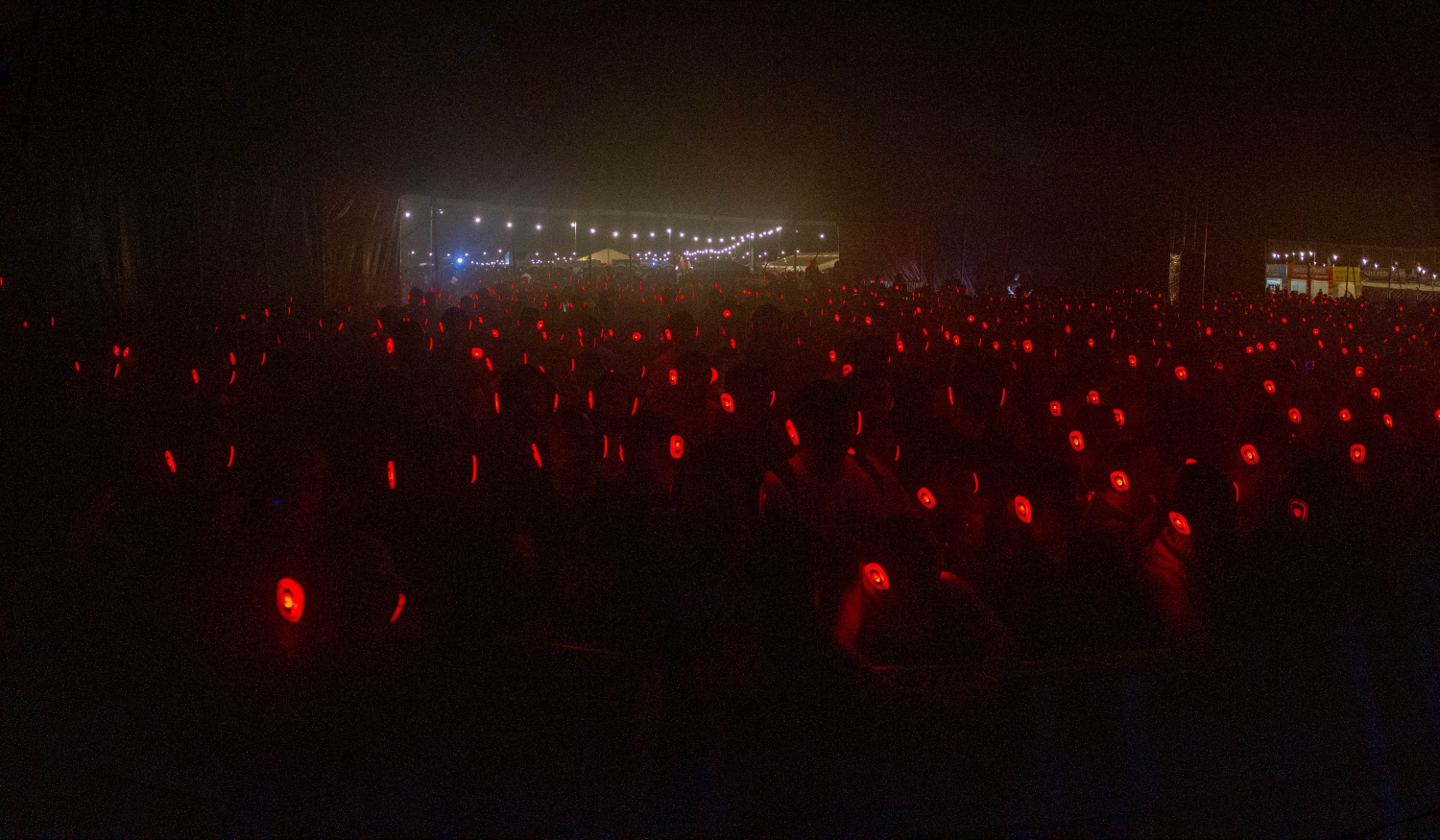
Nordic Giants Silent Disco. Photo: @carlbattamsphoto
ATG Header Photo by @snaprockandpop (Joe Singh)