Interview: Agriculture
At first I wondered if it was going to come off as kooky if I’m just smiling, making friendly gestures to the other people on stage, but I realised after just one show where we didn’t do the robes and corpsepaint that it serves as an invitation to others. You can say, “Look, I’m having a good time. You’re welcome to have a good time too.”
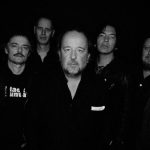
In a never-ending swirl of AI-generated playlists, TikTok reels and songs that are more sample than original material, for many music has become relegated to so much background noise, a way to drown out the silence of our own thoughts. Except that’s not the case and never has been. For as long as disposable music has existed, there have been acts who have broken down barriers and defied convention to create works that challenge as well as comfort the listener. The Spiritual Sound, the second full-length from sort-of-black-metal quartet Agriculture is firmly in the latter camp, a sprawling yet concise gem that takes in Zen mysticism, social activism, metal, jazz and the mundanity of everyday life and spits out something life-affirming. David Bowes spoke to guitarists Dan Meyer and Richard Chowenhill to find out what went into its creation.
E&D: How do you feel about being back from the tour? Is there quite a comedown for you?
Dan: Yeah, it’s always weird. Being on tour is kind of like being a baby, at least when you have a tour manager which we do when we’re in Europe. The schedule is kind of the same every day and you’re just relaxing when you’re not playing a show. Not that it’s always easy, you’re always in new places and it’s not always comfortable, but you’re not doing chores, working in a real way. I teach music to kids here, which I really love, but it’s always a very humbling experience to go from, “Okay, I just played all over Europe and it was really exciting for all these people” and now I’m teaching ‘Für Elise’ for the 300th time, but both of them are equally important. The kid I’m working with deserves just as much attention as the show. But yeah, there is definitely a comedown for sure. The hardest part of tour is not being with my dog and my wife so it’s good to be back.
Richard: I love the road. It’s fine, being back is fine. I have my projects that I’m working on and it’s great to see my cat, I always miss her when we’re gone, but my girlfriend is out of the country for the next six months. So, it’s fine but also I’d be just as happy if we were still out on the road. What I realised was that it was fully fall, like Autumn weather when we were in Europe, and then it’s like 86 degrees here day. I’m not sure what that is in Celsius but it’s hot here in LA. It’s very much still summer.
E&D: Congratulation on the tour, the band and especially the album. Could you say a little about the philosophy behind The Spiritual Sound?
Dan: When I start writing, I’m never writing a song coming from any place other than music. It always starts with a sound. The philosophy, or message, is communicated most explicitly through the lyrics but I almost think of the lyrics as being in the same category as the cover, or the title, or maybe how you talk about it. It’s important to the music but it’s framing what the sound is actually doing, especially when you’re screaming most of the lyrics and it’s not exactly comprehensible. The spiritual aspect of the music, as far as it’s expressed verbally, is kind of added after the fact. The background to the record to is that we were looking for a sound that felt exciting. There was such a specific thing that we were going for with the first record, and with Living Is Easy as well; there were obvious things that were important, having to do with big textures, and black metal techniques and melody, and I really wanted to write songs on this record that would be a little bit more straightforward, partially because I was thinking about playing the live show a lot. I wanted something that was really direct because when we play live we have some songs that are really all over the place and overwhelming, and then we have ones songs like ‘Bodhidarma’ and ‘The Weight’ which are just right there; It’s pretty clear what’s going on.
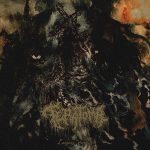
That was the background, and then it became clear once a lot of the music had been written what the album was going to sound like. Then it became “How do these sounds relate to my life, my spiritual life, or Leah and her spiritual life” as she wrote a lot of the lyrics as well. That’s where the packaging, what the album is doing in a way that we can talk about, the philosophy comes in. We’re not setting out to write a record that’s spiritual in one way or another, we’re more looking for a sound that feels spiritually appropriate and then figuring out what that sound does, maybe not after the fact but at least in parallel with how the music is being written.
E&D: I read that you and Leah will typically write songs yourselves, and then those will be brought to the whole band, picked apart and then reassembled. It sounds freeing but also like it could be frustrating. How do you feel about it?
Dan: It’s super frustrating. Richard can probably speak to that more than me.
Richard: It’s intense for sure and it requires quite a significant degree of trust in many ways – trust that you’ll be heard if you have an idea, trust that no one is going to get offended if you’re really sure that something is going to work, trust that someone will be able to play something, trust that you’re going to be able to convey the idea to someone else. Going back to your previous question on spirituality, there’s an element of tight, dense fellowship that’s only grown in the band over the years as we’ve worked together and played together. We do have a way of working but at the same time, every song is totally different. You also never really know what you’re going to become wedded to in the process, which part you’ll really like and not want to give up. There’s a lot of this back-and-forth and trust. At least on my part, what helps bolster the trust is all the past experience of “Well, this has always worked.” As long as we trust each other, listen and are willing to try out each thing and give that the time, then it has always worked and as long as it keeps working, we’ll keep doing that. It’s a different workflow and it’s one that I’ve come to love because everyone’s voices are heard, every sound is explored, and that’s really cool. It also does mean that maybe it’ll be a year or more from when a song idea is brought in to it being totally done and ready to ship. Sometimes it’s less than that but yeah, it’s really trust and fellowship.
Dan: I agree. It just takes a long time – sometimes it doesn’t but most of the time it takes a long time until it feels like a song is right. When it is right it’s sort of obvious but it takes a while to get there, and I think Richard’s right in that it does require trust. I think that developed a lot over this record. This one was written much more collaboratively than anything we’d done in the past.
E&D: One thing I loved about your live show was that there was such a visible sense of joy from you as you were playing. Was that always the goal with Agriculture, that you could have something which could bring about that shared joy?
Dan: I think it’s part of it. I can’t help myself, I just really love playing music and I really love these people, and I love playing with them. It’s a lot more sincere and easier for me to just be who I am and allow that to show. There was one show on this past tour where I actually started uncontrollably laughing because something just hit in the right way. There are all these little moments that, internally for us, where we’re like “Are we going to hit that?” Over the years they’ve becomes almost these little checkpoints through the set and somebody hit something that was so on that it tickled me in just the right way. I was facing Kern, the drummer, during that part so it was relatively contained. For me, it’s just sincerity. It’s easier for me to do that than to cover up and pretend that everything is some great mystery. I’d rather be real than put something on.
We did used to perform in robes with corpsepaint and I think there is value in insincerity, also. At first I wondered if it was going to come off as kooky if I’m just smiling, making friendly gestures to the other people on stage, but I realised after just one show where we didn’t do the robes and corpsepaint that it serves as an invitation to others. You can say, “Look, I’m having a good time. You’re welcome to have a good time too.” This extends this issue of fellowship that I think is important. We’re all here leading by example, having a great time, so it’s an invitation for you to have a great time if you want to share this moment with us.
E&D: One thing that stood out in the press release was that you described your music as “music that asks”. What is it asking and what should we be asking as listeners?
Dan: I think that asking is another way of saying inviting. As Richard was saying with the live show, that there’s an invitation that we are sending out by being earnest and enjoying ourselves on stage, there’s an invitation to an audience member to have a similar experience. Not necessarily be smiling or laughing but to have an authentic experience. We make a lot of choices on the record that are maybe a little bit confusing. It doesn’t really settle into one groove. What I like about most metal records is that they may be really aggressive, but when they are they’re usually aggressive the whole way. I often fall asleep on tour listening to black metal records because it’s like one note; it’s an amazing plane to be on but it is quite flat. I don’t mean that in a negative way, it’s something that I really like about it. It’s the same with Cannibal Corpse or Slayer, these bands who really do one thing, where you just get into a groove with the music. That’s something I’ve never really been able to do. I love listening to it but making my own music, I always feel like I need to go to all these different extreme places. The ask is that we’re asking the audience to really listen. It may strike you as discombobulated or disorganised, or confusing at first, but we’re trying to create a useful frame of confusion to allow the listener to maybe have a slightly deeper listening experience; to say, “Why did this happen?” and maybe pay attention. In another part of the press release we say ‘demands’ and it’s not demanding in the sense that you can’t make demands as a musician, people can always turn the music off, but if you’re going to enjoy this music then you’re probably going to have to pay a little bit of attention. That’s the intention there; it doesn’t really work as background music. That is not to say that music that does work more in the background is bad. It’s fine, I really like a lot of it, but I don’t think our record would sound very good that way.
I saw some metalcore blogger do a video about ‘Bodhidharma’ and he was, like “This is so scary! What’s going on? This is crazy music. What are this band doing, this is jumpscare music,” and I thought, cool! This does work really differently from metalcore. If you’re primarily listening to Ice Nine Kills then this is going to be more surprising music. I think the reaction that this internet personality had was a bit more, ‘this is crazy ha ha what are these guys doing’. That’s fine. If you’re just listening to it expecting it to sound like more common metal idioms then it will sound a little goofy because we’re going really big, and really small, and all over the place and not just hitting expected beats most of the time. When we’re talking about asking, we’re saying to the audience, ‘I promise, we really have thought about this’ and if you listen closely you might get something out of it, because we got something out of it making it. In terms of what the audience should be asking, I think that as a listener we should demand that our music be challenging and live up to the complexities of actual life. That’s what we’re trying to do here. At the end of the day, it’s a record about everyday life. Something Leah said before that I think is really spot on is that a lot of metal leans into fantasy in one way or another, whether that fantasy is extreme gore or Tolkien, vampires, whatever it is, that’s where the intensity comes from. We thought, what about if we talk about going to your friend’s apartment and how intense that can feel sometimes because something bad happened to a friend of yours; a lot of my songs are about sitting meditation and how intense that can be. Again, the ask is that let’s make music that is responding to the actual experiences of living.
E&D: You do get a sense of that – the strangeness of the ordinary.
Dan: Exactly. That’s metal. That’s what we’re trying to get at. Ordinary things are really, really metal. You don’t have to lean into the fantastic to find something that warrants the intensity of this music.
E&D: Is there still a part of you that craves that? You all seen like big metalheads so is there a part that wants to go full Tolkien?
Dan: I love Tolkien, I’ve read The Lord Of The Rings so many fucking times – I’ve even read The Silmarillion a bunch of times – but it doesn’t inspire me to make music. It just makes me think, “Wow, that was fucking awesome. I loved reading that.” I want to be really clear that none of this is a value call. None of this music is less valuable, or interesting, it’s just not how my brain works. I was listening to De Mysteriis Dom Sathanas yesterday as we’re starting to think about the third record, and every time we start working towards a new sound I think, “what does black metal sound like?” I’m always struck by how much of that record is just Attila singing about being a vampire. It’s amazing, I love it so much. What’s that song where he goes “Am I a humaaan or am I immortaaalll?” It’s amazing! The thing that works about that record or the Darkthrone stuff is that they are making it sound really eerie and scary, even though it is kind of ridiculous. I couldn’t do that. I don’t think we could do that as a band. We’d just be smiling the whole time when we’re on stage. We talk sometimes about how the definition of ‘trve kvlt’ in black metal is that you aren’t in on the joke. I think we’re a little too in on the joke to do something like that. It’s not something that I think we would do well. It gets displaced instead onto spiritual or religious texts. For example, I reference the Old Testament on the first record because it has a gravitas to it that Tolkien doesn’t but it’s just as wacky. A lot of the more recent songs draw from the Zen mythology which is also really intense but again has a certain weight to it that feels more appropriate to what we’re doing.
E&D: How do you feel that the band has evolved so far, be it in your tone or your approach?
Richard: It’s gotten a lot more direct in a lot of ways. This goes for the way the music is written, performed, arranged and produced. I find the musical gestures to be more direct and less genre-referential or within a specific world and more idiosyncratic through the directness. In terms of the pure concrete musical sounds on the new record, I think there are a lot of idiosyncrasies there whether it’s in the gestures or the presentation of the materials. Songs like ‘Bodhidharma’ and ‘The Weight’ are pretty straightforward songs, at least relative to the way we have operated in the past. I think that is something that has come with experience and with developed interests, finding out what we’re good at playing and presenting, and what we’re interested in as we move away from genre conventions and more toward using these sounds as tools.
Also, we’ve just gotten better at playing with each other. At least theoretically, a band is always getting better at playing with the band, and you get to know the musical gestures of the others in a more intuitive way. I feel I can intuit the moves of my band members more than I could two or three years ago, and I think the music changes as a result of that too. I think the gross sum of that is apparent but in terms of the day to day, each small way that we lock, in I don’t know how much of that is always super-apparent but at the end of a big process like making a record I think we sound a little bit different. A lot of that is the result of us playing, producing and writing together more.
E&D: Another thing that impressed me with the live show was the technicality of it. It was pretty extravagant! Who are your influences as musicians?
Dan: For me, it’s mainly Bob Dylan. In any given year, Bob is probably 60-70% of what I listen to. There’s an infinite quality to his work. I love it and find it inspiring. He takes huge swings, that’s what inspires me more than anything else. Everyone knows the stuff from the first five years of his career, the first six records that are just totally unbelievable and I obviously I love music that but as Richard can attest, in the van most of the times when I’m driving I’ll put on one of his kinda bad records and they’re interesting. They’re always bad in an interesting way and even though they’re bad I love them. I find it inspiring to say, “Yeah, I made seven of the greatest American records ever and now I’m going to make this gospel record for no reason” except that it feels important to him. That’s really cool to me. There’s never a sense of being limited by being Bob Dylan, he just does whatever he wants and some follow him, others don’t. The other thing there is the live show where right now, he’s playing with the lights off on stage for some reason and hiding behind a piano. I saw him a couple of months ago and you can’t see him, he doesn’t say anything – when I saw him a couple of years ago he started playing before they turned the house music off – and it’s amazing! He just does not care. It’s just, “This is how this music sounds to me and this is how I’m going to play it” and people either do or don’t vibe with it. That’s really inspiring to me.
Richard: Thank you for the compliment, we all do our utmost to play as best we can. For me, I think some of the influences are maybe obvious and then there are maybe some less obvious ones. Obviously, Eddie Van Halen and Alexi Laiho from Children Of Bodom; especially when I was a teenager, I couldn’t get enough of that stuff and it was just so cool. A lot of stuff like that is deeply ingrained in almost my muscle memory, in my fingers when I pick up a guitar and play. Also, a lot of it is classical music, especially 20th century contemporary classical music, so Ligeti, George Crumb… these guys who write music that is challenging for the musicians to play but when executed well is just stunning, such a brilliant display of musicianship and also musicality. Combining those two things is really important for me. You want to make sure that what you’re doing always serves the music, right? That’s the common thread for me with these contemporary classical composers and also Alexi Laiho and Eddie Van Halen; within whatever idiom they are writing, whether it’s party rock or blackened melodic death metal or 20th century classical music, there’s a connection there where the musicianship serves the music and the musicality. I think that’s one of the reasons that I love listening to the greats of the classical canon and of jazz as well. Kern is the big jazz guy but I was recently relistening to Coltrane’s solo in ‘Giant Steps’ and I know it’s like a classic, greatest hits…
Dan: Poser!
Richard: …but because of that, it’s like ‘Stairway To Heaven’. You’ll go a long time without listening to it because you already know how it goes. Everyone can hum the first few bars of the solo to themselves but we were joking around at soundcheck the other day, humming it, and I thought to myself, “When is the last time I actually listened to that recording?” I listened again and yeah, it’s great. It’s just a young guy with chops for days and a lot of big ideas really going for it, and that’s really cool on all levels. It’s very much like listening to ‘Stairway To Heaven’ again, which I also did a few months ago for the first time in maybe five years and it still hits. There’s a reason that this is one of the greatest rock songs of all time.