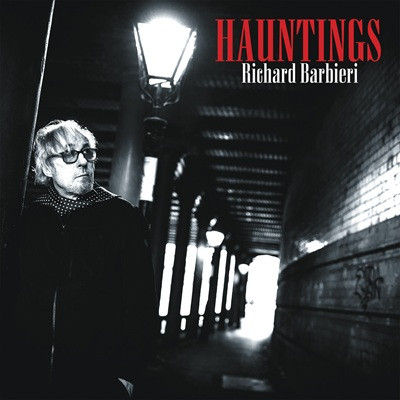
“I realized I was quite obsessed with this nostalgic feeling I had for things, and not just for things that happened, but for things that didn’t happen. They would get into my dreams as recurring events, places, and characters. It got me thinking about reality and how much of it is real”. Richard Barbieri explaining his process to Anil Prasad this year on his website, Music Without Borders: Innerviews, describing his ideations on his latest album Hauntings.
It has been five decades since Barbieri has put his heart into his music. From Japan, Porcupine Tree, to his solo work, he has proven to be more than just a member of those incredible bands and going beyond the four-letter P-word. According to Prasad’s introduction about him, he takes listeners on this aural journey rather than traditional soundscapes, experimental and progressive compositions.
With his latest album Hauntings, Barberi pushes his listener deep into the ghostly images of what was in the past during the Victorian-era in London from 1837 to 1901, to the Belle Epoque (Beautiful Age) period of Paris from 1871 to 1914. Released on the Kscope label, this is his first studio album since 2021’s Under A Spell. And this is a trip into the ghost town’s that paints this picture of what it was like living in those two worlds.
The cover, says it all. With its French New Wave design, blood-red logo, and Barbieri looking upon the scenery, speaks volume. The 11 tracks are hypnotic, deep, and almost dreamlike quantities to keep you guessing until the very end. Most of the time, the music does have that nod to the Berlin School of Music which speaks of Popol Vuh, Tangerine Dream, and Klaus Schulze.
But at times, like an alternate soundtrack to the video game worlds such as the BioShock universe and the first two Dead Space games, walking into the worlds of the art deco-like underwater city of Rapture in its decaying structure, to the eerily, yet terrifying atmospheres on the U.S.G. Ishimura and Titan Station. Barbieri goes for that effecting texture on his keyboards. And with a little help from Percy Jones, Luca Calabrese, Morgan Ågren, and vocalists such as Lisen Rylander Löve, Suzanne Barbieri, and Sophie Worthen, they know they have to embark on this journey in which Rick himself has placed a spell upon this album.
You don’t know what’s happening, you don’t know what’s going on, it becomes this dangerous tightrope walk in the coroners that you could feel a pin drop as you enter these buildings which have been abandoned for quite a long time. The smoky turned electro trumpet sequences Luca endures on here, feels like you’re in a dream, walking down the empty streets of the two locations Richard has put into the album.
There are moments where he would go into this researching monument to find more archival ‘Perfect Toys’ and its wall writings on the ‘Last Post’ which have been scattered inside either in a hallway closet or in a child’s room, seeing that they’re in okay condition or viewing the graffiti and the destruction the buildings in its deterioration collapse on the opening track ‘Snakes and Ladders’ with a little help from Percy Jones’ bass work.
The other two tracks ‘Victorian Wraith’ and ‘1890’ owes plenty to the worlds of the Zeit-era from Tangerine Dream and Pierrot Lunaire’s Gudrun that comes to mind. But with its ghostly vocals that speak during that era with its steampunk vibration, the sound of a child’s toy playing a lullaby in its ominous tone, harsh angelic vocals setting up the scenery of how it all went wrong, and not knowing the danger that’s left behind.
‘Paris Sketch’ opens up its romantic turned rain-dropping synths down in the city of love with its propelling wonder of what the scenery was like in the 1870s. There’s a sense of beauty, grainy film reels, portraits, heart, and gorgeous landscape to look at the city with its camera, capturing that era.
What’s interesting on ‘Anemoia’ and the ‘Traveler’, we see Barbieri going into this industrial Film-Noir attitude, delving deeper into the late 1940s, early 1950s vibration, but in this futuristic techno groove which speaks between David Bowie’s Outside universe which the thin white duke returned to being weird again, and the Kid A sessions from Radiohead. Richard is continuing where Detective Nathan Adler had left off by leaving him more clues to see where he left for him.
Barbieri has always put his visions on the look-out for new ideas planned inside his head, but he never stops to amaze his listeners with its views on the parallel universes left on his new album with intensity, spectral, and phantasmal perspective in the world that is waiting for us.