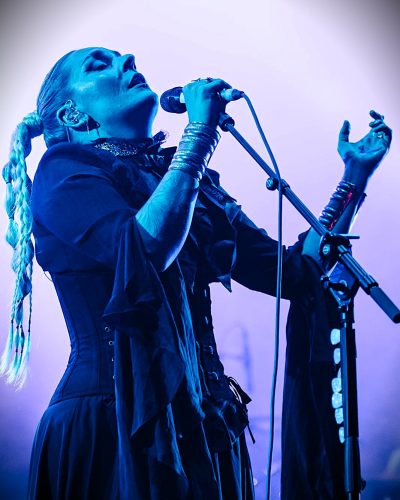
Interview: Eivør
When I made my first album I was curious to make something new out of something old. That's how it all started for me, that curiosity of taking something old and shaping it into something new. . . I don't care so much about genres.
For nearly 30 years, Faroese artist Eivør Pálsdóttir has been regarded as one of the most bewitching and fearless voices to have emerged from the Nordic music scene. Nick Dunn sat down with her at ArcTanGent to talk about eclectic musical styles, viral videos, and her new album, Tungl.
E&D: Over your career you’ve played a wide range of musical styles, from Nordic pagan folk to jazz. What motivates this genre-hopping?
Eivør: I was 16 when I recorded my first album. I had my roots in Faroese traditional music, that was in my DNA, and I was inspired by that. When I made my first album I was curious to make something new out of something old. That’s how it all started for me, that curiosity of taking something old and shaping it into something new. At the time I was captivated by jazz singers like Ella Fitzgerald and Billie Holiday, so that was in my brain at the same time as I was making this folky album, so it became this jazz/folk mood. I’ve also always been interested in different types of music and it all gets mixed together. I don’t care so much about genres.
E&D: You want to just explore. . .
Eivør: Yeah, I want to make music and explore what feels interesting to me. The music I make today is a mix of so many things that I’ve been through, so it’s difficult to categorise what genre it is!
E&D: Does it take more work to make a coherent album out of those varied musical styles than it might if you stuck to just one?
Eivør: I would feel very trapped if I had to stick to just one genre, and I don’t like feeling trapped in my music. I think it’s easier now that I’ve made so many albums. When you start, you’re curious and you try this and that, and then you’re jazz and then folk and rock and pop, and you go through these phases. Today, I’m a bit more free and there’s a little bit of everything.
E&D: You’ve reached that level where your success means you can go off and explore and do whatever you like and your fans will keep up. . .
Eivør: Kind of! And I feel more like I’ve found my sound in a way more than I had 20 years ago. You find something that’s your own and you don’t have to decide before whether it’s this or that. It’s already in you somehow.
E&D: Possibly your most famous moment is the video of you singing ‘Trollabundin’ in a harbour. How did that particular performance come about?
Eivør: Oh yes! That’s just an iPhone video, right?
E&D: Yeah, you’re on a harbour with your drum, but how did you get to be on that stage in that harbour?
Eivør: That’s a harbour in the Faroe Islands and it was just a random gig. It was this statue that was being unveiled and I was asked to sing at the ceremony. And I decided to sing that song because I felt it fit with the statue, which is about this old mythic story we have in the Faroe Islands about seal-women. And because you had to climb down these rocks to get there, I thought I’d just bring my drum, which is partly why I chose that song. I didn’t know before that it was going to end up on the Internet, that’s the funny times we live in! And then you spend millions on music videos and no one sees them, but you perform in a harbour with your drum and someone records on an iPhone and it goes crazy!
E&D: It’s safe to say ‘Trollabundin’ has become something of an anthem for you, and is arguably your most famous song. Some musicians feel hindered or restricted by whatever songs become most famous for them: is that something you’ve also felt, or do you enjoy it?
Eivør: I think I would feel restricted by it if I had played it the same way each time for 20 years. But it’s a song that has lived with me for such a long time because I allow it to evolve and change. It has changed a lot during the time I’ve played it live because circumstances and life inspire me to play it differently. It started as an improvisation and turned into that song. So no, I’m not bored of it yet, strangely!
E&D: Is it your own creation or is it adapted from something?
Eivør: The statue is based on a myth, but ‘Trollabundin’ is a song I wrote. It’s inspired by Faroese rhymes and chants and folk music.
E&D: You’ve done a lot of soundtrack work over recent years, in particular with Bear McCreary and John Lunn. Is there any more of it on the horizon for you?
Eivør: Yes! Exciting times ahead. I have a lot of work on the new God of War game, it’s called Laufey. That’s so much fun because I hadn’t done any work on video game music before, so it’s a new world that’s opened up for me.
E&D: How different is the process of working on a soundtrack to your own studio work? Is it harder, easier, do you enjoy it more or less?
Eivør: It’s different. It’s a different process and I really enjoy it, to do these projects on the side from my own music. It gives me a different kind of freedom. I don’t have the responsibility of creating the whole world, it’s already there, and my job is more to bring in some extra emotion to some of the scenes, so that’s fun.
E&D: You’ve worked with your sister [Elinborg] on your forthcoming album – was it an easy collaboration?
Eivør: Yes! It was actually really smooth. She is an artist and releases her own music. We’ve talked about it many times that one day we should write something together, but we never wanted to force it just because we are siblings and both make music. We don’t necessarily have to work together. This happened very organically. It was just one normal evening in my house, and I had invited her for dinner. We were just hanging out, I was in the kitchen and she started playing something on the piano and I thought “that’s so cool!” It evolved into us sitting in the studio and dinner got cold! We sacrificed a very good meal for that song!
E&D: Are there any bands or musicians you would love to collaborate with in the future?
Eivør: There are quite a few. It’s been a dream of mine to collaborate with Chelsea Wolfe. I’ve also been dreaming forever about collaborating with Massive Attack. But it’s good to have dreams like that.
E&D: What prompted you to sign with metal labels like Season of Mist and Nuclear Blast? Are you still with Season of Mist or just Nuclear Blast now?
Eivør: I made one album with Season of Mist and it didn’t really work out for us. It happens every now and then on this journey. And then I had met Nathan from Nuclear Blast a few times and I really liked him, and he was very interested to release my next album, so I just decided “let’s just do it.” It’s important for me to work with people who are passionate about my music and who have a mutual understanding of things, so I’m very pleased that I get to work with Nuclear Blast for this album.
E&D: If you were curating a festival, who would be on your line-up, other than Chelsea Wolfe and Massive Attack?
Eivør: Those two definitely, and then Royksopp. I’ve never had this question before! Maybe Nick Cave. Those are big acts, it would have to be a big festival.
E&D: I’ve asked this of everyone I’ve met this festival, and we’ve had some weird and wonderful line-ups so far, so go as small or as big as you like!
Eivør: Maybe Nils Frahm. Then if I could travel back in time it would also include Led Zeppelin.
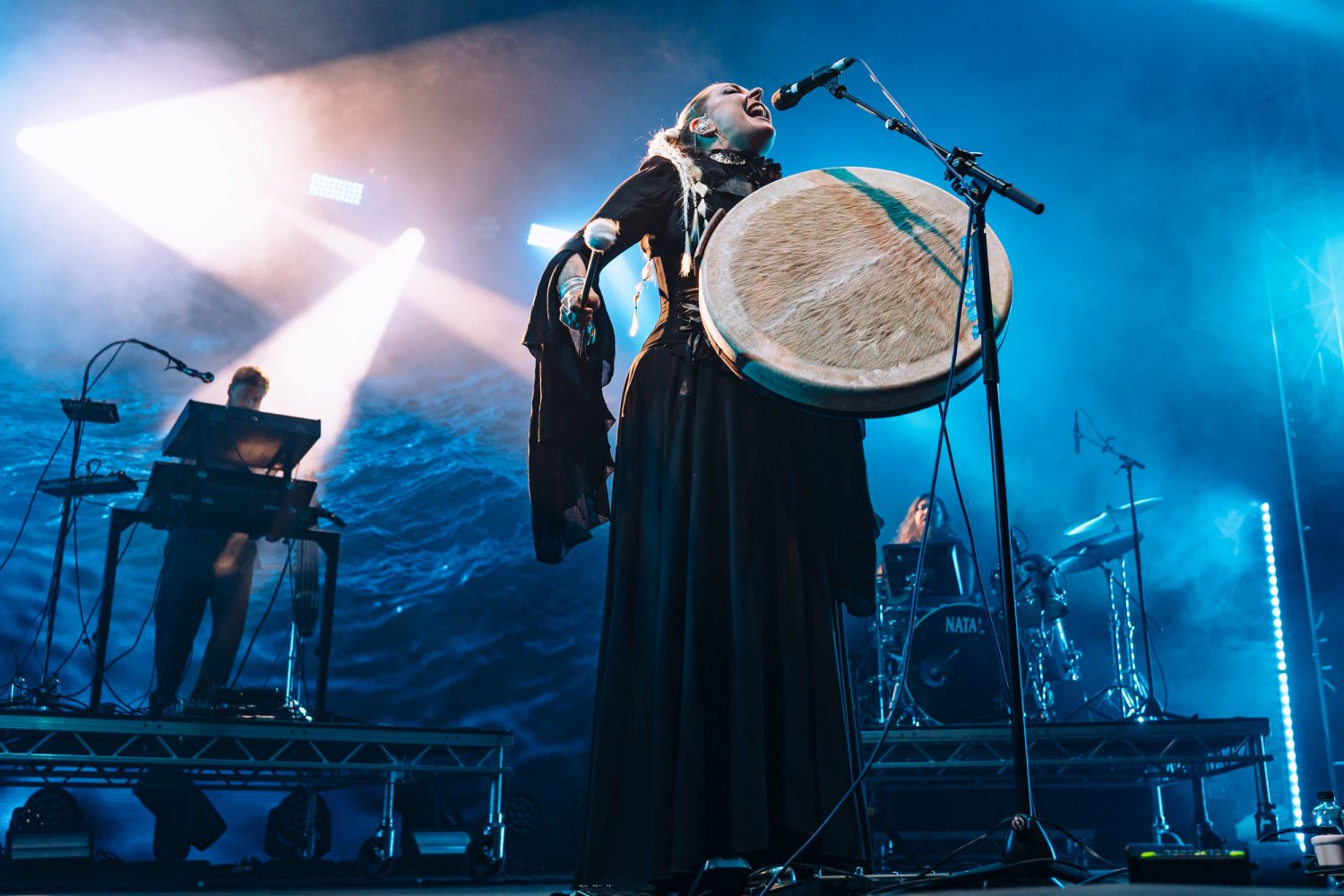
Photo and header photo: Joe Singh (@snaprockandpop)
Eivør‘s new album, Tungl, releases on October 16 2026 via Nuclear Blast and can be pre-ordered HERE.