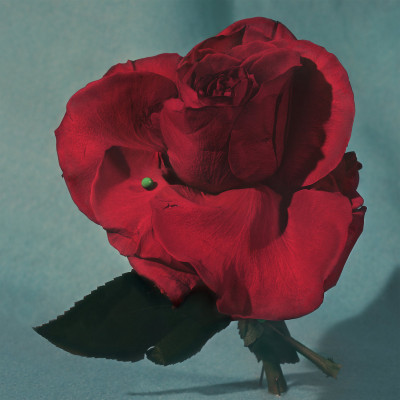
Since releasing their self-titled debut album in 2012, Ontario trio METZ have gained themselves a dedicated international fanbase by playing hard, fast, abrasive noise punk songs that have drawn comparisons with luminaries of the genre like Scratch Acid and harsher, heavier grunge bands like Mudhoney. Their gigs are always incredibly fun and energetic, and they have turned out some very good records too. Their debut LP was filled with impressive songs, as was its follow-up, II (2015). Strange Peace (2017) boasted recording work from the great Steve Albini, but the songwriting on it was not as memorable as that on the band’s first two albums. Atlas Vending (2020) was a definite return to form, with its lead single, ‘A Boat to Drown In’, possibly being METZ’s strongest song to date. After three-and-a-half years, their longest gap between albums yet, guitarist/vocalist Alex Edkins, bassist Chris Slorach, and drummer Hayden Menzies are releasing Up On Gravity Hill, their fifth studio full-length.
What made Atlas Vending such a good album was that it achieved a near-perfect balance between discordant guitars and melodic vocals. Whilst Up On Gravity Hill is by no means a bad album, it focuses far too heavily on the latter and not enough on the former for my liking. Some songs that get the balance right are the opening triptych of ‘No Reservation/Love Comes Crashing’, ‘Glass Eye’, and ‘Entwined (Street Light Buzz)’, but then ‘99’ and ‘Wound Tight’ come along and hit you in the face with their repetitive, cloying choruses. ‘Superior Mirage’ is a decent enough song, but it is let down by an overly clean, soft production job from recording engineer Seth Manchester. ‘Never Still Again’ is an enjoyable, up-tempo song that wouldn’t have sounded out of place on Atlas Vending and retains a fair amount of the frenetic guitar sound that METZ have made their trademark. The instrumentation on closing track ‘Light Your Way Home’ is typically solid, but the song’s overall pace and tone feel plodding and leaden.
Up On Gravity Hill features a decent amount of good songs, particularly on its first side, along with a relatively high proportion of filler that I’m not used to seeing from METZ. It could perhaps have been improved by the band exercising more of a focus on tight songwriting, rather than on delivering a collection of songs that would stop listeners in their tracks with their melodicism. It is not a bad album, and at this point it feels difficult to conceive of METZ releasing a bad album, but it lacks the firepower of METZ, II, and Atlas Vending. The more pastoral textures Manchester brings to the band’s music make for an interesting sonic experiment, if a not entirely successful one. Aficionados of their earlier, more abrasive output may well be left wanting, but fans of radio-friendly, vocally driven indie-punk in the vein of David Comes to Life-era Fucked Up should enjoy the album. Irrespective of everything else, the live shows the band do to promote the record will no doubt be as energetic as ever.