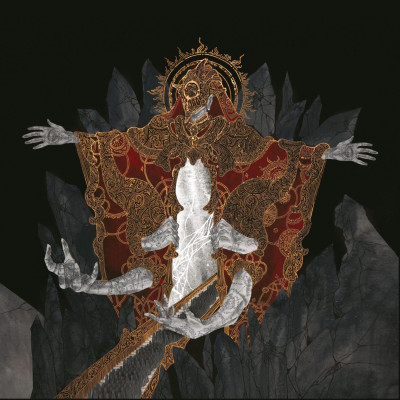
Edinburgh-based 5-piece DVNE are a tricky band to pigeonhole. Their music is as dense as it is heavy, incorporating aspects of post-metal, doom, and a touch of prog in places. Much like their inspiration, the Dune series by Frank Herbert, their sound is complex and multi-layered, revealing more the deeper you go. Their third album, Voidkind, follows the stunning Etemen Ænka (2021) and Asheran (2017), continuing to blend various genres of heavy music seamlessly.
The opening track, ‘Summa Blasphemia’, explodes with a fast-paced riff and screamed vocals before transitioning to more melodic clean vocals. It’s big and epic, as listeners have come to expect from their previous work. The vocal styles switch places, and the intensity builds as the listener is pummeled with riffs seemingly coming from all angles. Clean vocal harmonies add a melodic touch, while the band effortlessly switches pace and tempo throughout the track. ‘Eleonora’ opens with a complex finger-picked guitar piece, building in intensity and pace. Again, soaring clean vocals vie for position alongside harder screamed vocals. Midway through, the track falls back to just bass and drums, creating a feeling of impending drama. Instead of a dramatic climax, the track takes a more melodic turn before the rest of the band crashes back in. The end of this track is stunning, with the band going full bore for about 20 seconds before it falls away to a quiet synth.
Listening back to some of the band’s earlier work, it’s evident that DVNE has chosen a path and stuck to it. Rather than pivoting around with different sounds, they have built upon their original sound, refining and adding to it. Voidkind is not the easiest or most accessible record; it took quite a few listens to really appreciate and understand what the band is trying to achieve.
‘Reaching for Telos’ opens straight into a high-intensity maelstrom of noise, with clean vocals leading the way. The track peaks and troughs, with drums and angular guitar riffs bouncing off each other. Guitars and synths add colour, and vocal harmonies give the track an epic feel. ‘Reliquary’ keeps this intensity going, with call-and-response vocal parts adding an aggressive touch. A traditional guitar solo is heard for the only time, and the intensity mounts before suddenly paring back to a long guitar and quiet vocals, completely wrong-footing the unsuspecting listener before the rest of the band rejoins. It could easily sound disjointed and messy, but the band manages this with ease, making it sound deliberate and coherent.
‘Path of Dust’ has a totally different feel, with a simple guitar part and quiet vocals drawing the listener in. Swirling synths build the tension, acting as an intro to ‘Sarmatræ’. The guitars have an unusual timbre, almost Middle Eastern, backed by the synths. Bass guitars are given more space to breathe while the guitars and drums swirl around. ‘Path of Ether’ provides another atmospheric break and a brief respite before ‘Abode of the Perfect Soul’ explodes into existence. DVNE manages to be heavy without falling into the usual metal tropes. Guitarists Victor Vikart and Dan Barter play almost exclusively riffs and sometimes picked phrases, avoiding heavy power chords. Drummer Dudley Tait uses a heavy dose of fills and cymbals, playing in more of a prog style than traditional metal drumming. It’s technically excellent and complex without being self-indulgent.
‘Plērōma’ has a lighter and more positive feel in contrast to the overall dark tone of the album. The clean and melodic vocals slowly build to an epic crescendo. Ending the album is ‘Cobalt Sun Necropolis’, a nine-minute epic. Long, feedback-tinged guitar builds to the full band, with spoken and whispered backing vocals sitting behind the main vocals. The track teases a build-up before falling back to a lone guitar, starting the process again.
DVNE’s Voidkind is a complex, well executed and multi-layered album that rewards repeated listens. The band has refined and built upon their sound, creating a technically excellent and emotionally resonant work. While it may not be the most accessible record, its depth and intensity make it a must-listen for fans of heavy music.