Throughout his 62-year ride, Jack Bruce has made a name for himself. From The Graham Bond Organisation, John Mayall & The Bluesbreakers, to success with Cream, followed by The Tony Williams Lifetime, West, Bruce & Laing, and The All-Starr Band with Ringo Starr, whom I had the pleasure of seeing at Six Flags AstroWorld on May 25th, 1997, Bruce carried the forces of blues, jazz, and rock like no other. Yes, he was known for the bands he’d been in, but his solo work is often under the radar.
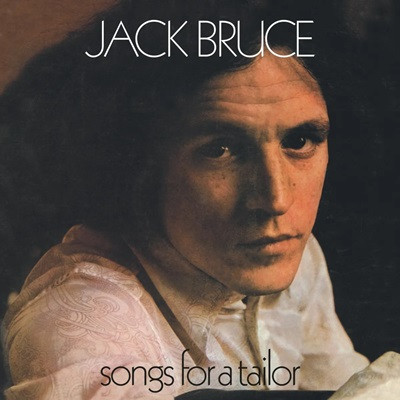
His first solo album, Songs of a Tailor, originally released on the Polydor label in the UK, and on the ATCO label in the States, he wanted to prove to listeners that he was more than just a member of Cream. That and this incredible 2-CD / 1 Blu-Ray set, reissued by the good folks from the Esoteric label, gives Bruce the proper recognition he deserves.
Recorded in a month from April to May of that same year, and with Mountain bassist Felix Pappalardi handling the production levels, the album’s title came as a tribute to Jeannie Franklyn, not only was Richard Thompson’s girlfriend at the time, (Genie The Tailor), but a clothing designer who helped handle the wardrobes for Cream, sent Bruce a letter that simply said this; “Sing some high notes for me”.
The letter was sent two days after she was killed in a motor vehicle accident in Fairport’s touring van on May 12th, 1969. Once Bruce received the letter on his 26th birthday, he knew, right there and then, that it was time to get down to business. And a tribute to Jeannie. Now, this isn’t the first time Songs of a Tailor had been reissued before. It was reissued 21 years ago from Universal.
For label manager Mark Powell, who had worked with Bruce many times, and revisiting Songs for a Tailor for Esoteric, it was like going through an old scrapbook, that reflected the best memories the label had with Jack many years ago. And to be allowed to have Stephen W. Tayler handling the remix on the second disc, was a daunting challenge.
“I remember I was a bit frightened when I listened to this one because I thought it sounded bloody brilliant from the outset.” He explained to Sid Smith in the liner notes, “One of the main reasons I was brought in was to do a surround sound version and that’s sort of the biggest point about revisiting these classic albums. But at the same time, you might as well do a new stereo mix while you’re there”.
Going through the original and Tayler’s new mixes of the album, I couldn’t tell the difference on which (original mix vs. Tayler’s mix) was better. The opening track ‘Never Tell Your Mother She’s Out of Tune’, which has the opening trumpet and sax section between Art Themen, Dick Heckstall-Smith, Henry Lowther, and Harry Beckett, there’s a little clearance from Tayler’s mix of this whistling effect from the intro.
And of course, who couldn’t forget George Harrison’s riffs on the song. He was credited as L’Angelo Misterioso. It brings a Jazzier approach with a heavier brass section, followed by the late Jon Hiseman’s incredible drum patterns to keep up with Pete Brown’s lyrical textures.
The folkier arrangements between ‘Rope Ladder to the Moon’ and the shuffling drive along the highway for ‘He The Richmond’, backed by John Marshall’s drumming and Felix’s percussion work, Bruce channels the styles of Jim Croce and a darker approach of the seas parting as the fifth track which considers Bruce taking his Cello into heavier territories by spending a weekend in the heavy thunderstorms approaching.
But one song. One song is one of Brown’s powerful pieces of lyrical beauty that refuses to die. ‘Theme for an Imaginary Western’ still holds up many years later. It would later be covered by Felix’s band Mountain, followed by Colosseum and then Greenslade for their third studio album Spyglass Guest in 1974. According to Sid Smith’s liner notes, the song was originally offered to Cream in early form, but rejected by the band until it found a home for Bruce to sing. Jack wrote the music back in 1962 and its one of the pieces both he and Pete are very proud of.
And you can’t argue about that. The lyrical structures dealing with going on the road, traveling in vans, you feel as if you’re in the wild west, looking to see where the next chapter will be, thanks to its beautiful Procol Harum-like organ sound, Spedding’s clean country guitar work, and laid-back drum beats from Hiseman.
Then, we get down and dirty with a heavier brass, blues-jazz rock for a delicious meal at ‘The Ministry of Rag’ which sounds like a continuation of Cream’s ‘SWLABR’ in its 12-bar route. The sax and horn sections add in that welcoming hand-shake for customers to walk inside the restaurant for that delicious aroma that is waiting to be the no. 1 place to go to in England.
Bruce’s bass line, bursts through the flood-gates for the ‘Boston Ball Game, 1967’ with a style of ‘Freddie Freeloader’ that Jack envisions from Miles Davis’ Kind of Blue album thanks to the horn sections channeling the styles between Davis and Coltrane taking jabs in the opening section. Then, we head back into the country-folky lanes, leading home ‘To Isengard’ for the first three minutes and ten seconds.
And then, the last two minutes the band break into this chaotic frenzy reaching towards the mountain top, thanks to Spedding’s insane guitar work as he goes batshit crazy on the wah-wah pedals whilst Jack frenzy’s his bass improv with Hiseman keeping up the pace. But its Tayler’s mix on ‘The Clearout’ where everything is clear from the original version as Hiseman brings out his militant drumroll to give Bruce and Spedding carte blanche.
Bruce shines on his vocal range, bass playing, and heavy organ work to reach towards the heaven with ascending chorus to make sure the rhythm section follows him in hot pursuit. The documentary which was unavailable during the time this review was in the works, was broadcast on the BBC Omnibus series on the first day of February, 1970.
Director Tony Palmer (200 Motels, The World of Peter Sellers, and Cream’s Farewell Concert) documents Jack Bruce returning to his roots in his hometown of Glasgow, reflecting his life, heritage, recording and making his first solo album, and buying his own island. It’s quite an incredible reissue for Esoteric to tackle upon since doing his catalog.
Ranging from the 6-CD box set Can You Follow?, Out of the Storm, Live ‘75, Automatic, A Question of Time, to his final studio album Silver Rails, Songs of a Tailor is a start for anyone who wants to go beyond the work to prove how much Bruce can take it a step further from his psychedelic and hard rock boundaries into something brilliant and poetic that you need to take notice of.