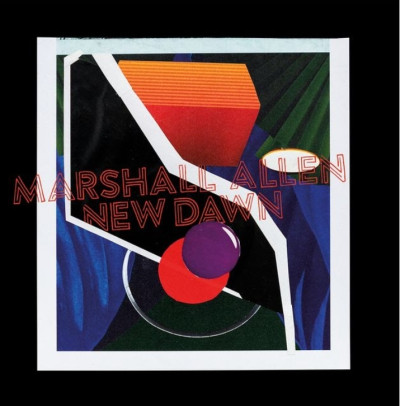
When Marshall Allen was born in Louisville, Kentucky, in 1924, the Wall Street Crash was yet to happen, as was The Great Depression, as was World War Two (in which Allen would serve with the 92nd Infantry in Europe); Rosa Parks was yet to take a seat in the whites only area on her bus home in downtown Montgomery, Alabama; Malcolm X (born 6-days earlier than Allen) and Dr Martin Luther King (not born until a few years later: 1929) were yet to fight for black emancipation. In Calvin Coolidge’s USA, African Americans faced discrimination, violence, and racist laws throughout The States, where the Jim Crow laws not only held sway but were enthusiastically enforced by White America. Lynchings were commonplace and Ku Klux Klan membership was somewhere north of five million, with members openly parading in rallies in Washington DC. 14-years later Billie Holliday would sing Strange Fruit, making this period and the Black struggle viscerally real for the listening public.
Fast forward to 2025, and we live constantly with the very real fear that President Donald Trump (Gods forever curse his tiny orange gonads) will take America back to those dark days: what he calls, without irony, ‘A New Golden Age of America’. These, once again, are frightening times. We fear a reversal of the civil rights struggle – movements paid for in blood and tears – which sought to create a more equal America for all its citizens. The death of George Floyd and the #BlackLivesMatter movement teach us that the goals of emancipation are hard fought, and hard won, and we aren’t there yet.
As a white person born in the UK, I cannot begin to understand the weight of Black history and how not only historical events, but whole systems and institutions are gamed in favour of people who look like me, to the exclusion – overtly or covertly – of those who don’t. The music business itself is also riddled with conscious or unconscious bias against Black people. White people ran the early jazz clubs for white audiences with mostly black artists. White people ran the record labels and businesses which recorded black music. But American jazz is not without its visionaries: Ella Fitzgerald, Billie Holliday, John (and Alice) Coltrane, Miles Davis, Sonny Rollins are all artists you’ve heard of – even if jazz isn’t your bag – but even these knew more than their fair share of exploitation, poverty, and drug addiction alongside the creation of some of the most inspiring music ever committed to wax.
Marshall Allen then, was contemporaneous with these legends. As a young man, and young Jazz fan/musician this was the world in which he walked when in 1957/8 – during the golden age of African American jazz – he met Herman Poole Blout, better known as Sun Ra arguably one of the greatest jazz visionaries and experimentalists of the Twentieth-Century. This was the age of be bop or hard bop, of high tempos, complex chord progressions, improvisation, and experimentation. Allen, having picked up a copy of Sun Ra’s second record Super Sonic Jazz found out that Sun Ra’s band rehearsed a few blocks away from where he lived. After joining them for an all-night jamming session, it wasn’t too long before he became a full-fledged member of the group.
Sun Ra’s experimentalism and boundary pushing jazz is the stuff of legend, but jazz was more than that to Sun Ra, it was a total and entire way of life. Sun Ra embraced the notion of Afrofuturism – even before the term had been coined (and ahead of Afrofuturist artists such as Herbie Hancock, George Clinton et al) – as a visionary, hopeful Black future, where the African American diaspora was united, if not in a future utopia, then certainly one of self-determinisation and self-realisation. It wasn’t lost on Ra that the first great cultures such as the Egyptians and Ethiopians were also Black cultures. His philosophies, or as he preferred to think of them, equations, form the backbone of his work which embraced not only avant-jazz but also early electronics. At the core of his decidedly sci-fi approach was Sun Ra’s claim to be an alien from Saturn sent to earth, in receipt of broadcasts from his home world, which commissioned him to spread a message of peace to all humanity.
However outlandish this might seem, Sun Ra’s central equation of peace, love, hope and joy in the face of a society that was outwardly hostile, was a revolutionary act (as peace, love, hope, and joy have often been for millennia), and one as powerful as those of Parks, X, and King, and with as much cultural impact as Holliday, Davis, the Coltranes etc. This was core to his personal beliefs and that of his music. Watch any footage of the many variants of his Arkestra and this central equation is readily apparent. Watch any footage of the Arkestra and you’ll also see Marshall Allen following Ra’s teachings, playing with the fervour of a man possessed.
In 1995, following the death of Sun Ra in 1993 (and the short tenure of John Gilmore who passed two years later) Marshall Allen took over leadership the Sun Ra Arkestra and has steered it, its beliefs, and Sun Ra’s legacy ever since. Taking charge of such a legendary jazz band in your 70th year seems like a massive undertaking, but Allen has continued this work for the last 30-years, so it’s almost extraordinary that New Dawn is his first solo record as a musician. There are few centurions releasing records, let alone ones that have had as a remarkable life as Allen. Probably the nearest equivalent I can think of is the late actor Christopher Lee, comparably a spring chicken when releasing a death metal album at 90.
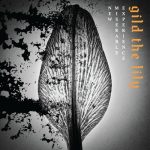
Allen clearly has nothing to prove, but New Dawn is as fitting a way as any to celebrate a centenary and a lifetime of musicianship. The album has been pieced together by Allen and fellow Arkestra traveller Knoel Scott both of whom picked the seven pieces on the record from Allen’s archive of unrecorded compositions. It features musicians drawn from the Arkestra and the Philadelphia jazz scene, and a sultry smooth guest vocal turn on ‘New Dawn’ from the great Neneh Cherry (who’s father, Don, was a fixture in the same rich groundbreaking jazz milieu as Ra and Allen).
If there is a weight of legacy on the shoulders of this recording, then it wears it lightly. Yes, it acknowledges the past, but also imagines future directions, or paths of discovery. Perhaps personal ones for Allen, but also an intriguing voyage of discovery of us as listeners. The record doesn’t have the showy, intensity of youth; but as befits the senior jazz guru, there is space for reflection, development, and a sense of ease. Remember, these seven recordings, reflecting hope, peace and love – and although it isn’t a Sun Ra recording (Allen clearly asserts his own creative direction over the compositions) it positions itself within Ra’s equations. Joy, if you like, as an act of resistance.
The music on the record draws on a wide range of styles and influences while keeping Allen’s distinct musical voice in focus, from traditional rhythm and blues (‘Are You Ready?’) to komische tinged afrobeat (‘Boma’), to dub (‘Angels and Demons at Play’), to laconic, sweeping sound savannahs of ‘African Sunset’, with it’s electronic chirrups sounding out between the notes like the calls of African night birds. The record steers clear of the more extreme Arkestra sound, and the wide-screen jazz maximalism of contemporaries such as Kamasi Washington; instead, it opts to let each piece unfold under in its own pace and time, subtly steering the listener to reflect on the resonances within. As an album it sits very nicely alongside those recent releases of Allen’s younger contemporaries such as Andre 3000, and Shabaka Hutchinson, and the latter Arkestra releases in general.
It’s clear that this record isn’t a full-stop in Allen’s career. In May 2025 he’ll hit 101-years and shows no signs that this record is anything other than a new and exciting step on his cosmic journey.
A final observation: When Marshall Allen was born in Louisville, Kentucky, in 1924, the winner of the world-famous Kentucky Derby just a few days earlier was a horse called Black Gold. Perhaps that was a prophecy. Perhaps that was another equation.