Given that it has been 50 years since Led Zeppelin had unleashed their sixth studio album Physical Graffiti, it’s hard to describe why this album still holds up and stands the test of the time. Following it up to their 1973 magnum opus Houses of the Holy, it was the band’s first album to be released on their new label Swan Song Records. It’s one of those albums that had a big influence not just in the hard rock genre, but classical, progressive rock, blues, electronic, and folk.
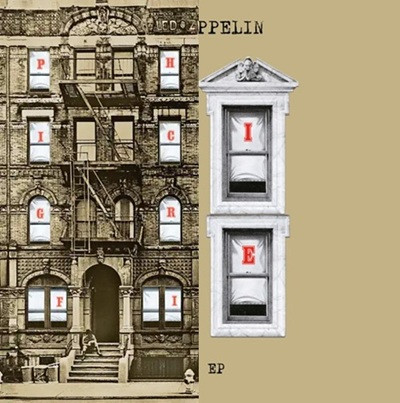
The artwork, designed by Peter Corriston, which was the five-story 96 and 98 St. Mark’s Place in New York’s East Village, you can’t go wrong with that. When you have the power of Jimmy Page, Robert Plant, John Paul Jones, and John Bonham, there is the energy, the power, the electricity, and the thunder that comes with the music that Zeppelin brought to the table.
Whether it’s the funk-orientated stomp on ‘Trampled Underfoot’, the attitude behind those power riffs, Jones’ clavinet, and harsh bluesy wah-wah attack on the opening track ‘Custard Pie’, you know all bets are off for this band to get the machine going. There’s so much vibrations on this album, you almost couldn’t let it go, because it is such an incredible album. Such an incredible piece of work with other Zeppelin albums that go with it.
But there are others including the slowed-down, A-chord tuning that Page brings on his slide going up and down on Blind Willie Johnson’s ‘In My Time of Dying’ which JPJ plays a fretless bass and Bonham’s reverbing drum effect will keep you guessing until the coughing part at the end as Bonham asked at the end “That’s got to be one, hasn’t it?” Proving whatever take fitted well to put on their albums, it also showed that Zeppelin was a work-in-progress band in the recording studio.
Meanwhile, ‘Houses of the Holy’ which was originally going to be on the band’s title-track album, adds the joy, the fun, and the magic carpet ride thanks to Page and Plant having a ball going to the movies and into the land of the unknown. Elsewhere, we head back into the countryside once again as Page lends his acoustic guitar with his fingerpicking textures on the composition ‘Bron-Yr-Aur’ which would later be used in the 1976 cult concert film, The Song Remains the Same.
But what’s this? Zeppelin heading down for an underwater dive with nods to Neil Young’s lyrical compositions with a country rock orientation for ‘Down By the Seaside’ while the loss of a loved one can hit home with the beautiful, yet stirring arrangement on ‘Ten Years Gone’. Again, Physical Graffiti is one of those albums that needs to be played and represents the best of what they were doing back in 1975 when they unleashed it at the peak of their golden-era.
Meanwhile, Plant belts his heart and soul as he shines throughout his vocal arrangements on ‘Night Flight’ and the tribute to Ritchie Valens (don’t get me started on the lawsuit) on ‘Boogie With Stu’ with a 1950s rock style. For those who may or may not know, Stu is actually Ian Stewart, often known as the 6th Rolling Stone, plays piano with a boogie-woogie arrangement.
You can tell that Page, Plant, and Bonham are having a ball with Ian to lay down the remembrance of 1950s rock when they were young before returning to bring it all back home for ‘Sick Again’ which dealt with teen groupies, as Plant refers to them as L.A. Queens. This is Zeppelin in their hardest and glam-rock push, and paying homage to Slade in this piece.
Speaking of Physical Graffiti, the new Live EP which came out on September 12th of this year, consists two performances and four songs from the album. Two of which were from their performance at Earls Court in 1975, and at Knebworth, 1979. The live version of ‘Trampled Underfoot’ is a crowd pleaser. Here, Page, Bonham, Paul Jones are extending the piece by taking the funk elements in the venue with a mid-fast paced section, clocking it in at nine minutes.
When you get the crowd-pleasing take of ‘Kashmir’ at Knebworth, the audience are hypnotised to Plant’s lyrical textures, not just as a rock god, but telling a story whilst Paul Jones plays the Yamaha Keyboards, Page playing his Danelectro stock ’59 black-and-white guitar, and Bonham sets up the adventure that’s waiting for us.
Also included which is the third disc of bonus material which was issued ten years ago, you have the rough orchestra mix on ‘Driving Through Kasmir’, overdub guitar and vocal lines on ‘Houses of the Holy’, and the bare bone take on what was originally called ‘Brandy & Coke’ before it became what is now known as ‘Trampled Underfoot’. There’s no denying that Zeppelin remains one of those bands whose legacy keeps the airship flowing with mind-blowing music.
While the Live EP is a bit of a disappointment as we hoped for a Live 1975 release either as a 4-CD or 6-CD set, which not just include the Earls Court performance but their two-night performance at the Long Beach Arena in California, recorded by avid concert taper, Mike Millard, but it’ll do. However, Physical Graffiti is the album that refuses to die.