Plight & Premonition, Flux & Mutability by David Sylvian & Holger Czukay
Release date: June 22, 2018Label: Groenland
These delicate collaborations were the most notable absence from Cinema, Groenland’s wonderful 5 disc Czukay retrospective earlier this year because, of course, it makes far more sense to reissue them together. Indeed, it seems entirely natural that the two albums come together in one package. It’s where they always belonged. Together and somewhat apart from both artists other work. Out of print for a while and apparently unappreciated, everything has been remastered for this release, Plight & Premonition is a new mix by Sylvian from 2002 and there’s also wonderful sleeve notes from David Toop. What is to be said for a 30 year old bundle of abstract improvised ambience? Does it show its age? Is it due the love of a wider audience?
Like the states evoked by its titles and the elusive half thoughts of its drifting sounds the age of this music appears indeterminate. As if it stands just to the side of time. In the late 80’s interest was fairly low for an album of two fifteen minute plus sound puddles, especially from a guy who was only recently a proper pop star but had spent his solo career getting increasingly weird. Due to record company disinterest Plight & Premonition, recorded in the winter of ’86 didn’t come out until 1988. Nowadays that doesn’t seem that long a drag but then nor would the idea of an hour plus four track album like this set seem at all out of the ordinary either. Flux & Mutability would follow in 1989 just a couple of months before the Berlin wall came down. Taking the collage techniques pioneered by Czukay to a different level The Orb and others would soon bring the idea of ambient music to whole new and much bigger audience. Considered like this Sylvian and Czukay’s efforts seem like the last melancholy stand of an artisanal, analogue form of ambient. Soon to be washed away by the bright, wasted, digital dawn. Maybe so, but when that new audience got too old for soaking up ambient music in a stupor on the floor of nightclub at 5am, they found they still liked it enough to listen at home. Then the Internet came along and flattened out musical time, everyone discovered how lovely old synth sounds were and here we are thirty years later with plenty of people making records like this so that it sounds, if not contemporary exactly, still pleasingly just to the side of time.
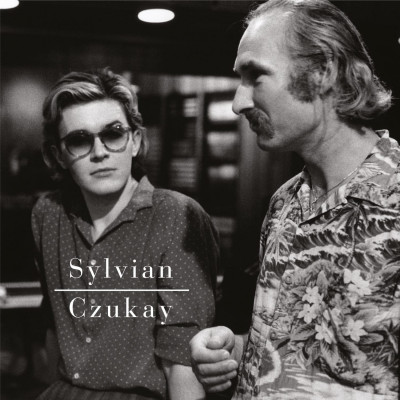
And so, a confession. Despite being familiar with the sleeves and the poetic loops of the titles of these albums for years I have never actually listened to any of this music before now. This is basically because, well, I never really liked Japan. You heard. Look at Sylvian with his Lady Di hair and ridiculous Sue Pollard glasses, convinced of his own worldly sophistication, mouthing arch nothings in his mannered croon. It didn’t help that they were held in such regard. They had their moments, but I instinctively took against things about them I couldn’t then put into words. Their pretension, orientalism, the suffocating debt to Bowie and Roxy, and a sense they felt above being the new romantic pop group they clearly were. Oh, you called your live album Oil On Canvas? How unimaginably gauche, darling. These qualities aren’t especially unique to them, nor are they inherently undesirable in pop groups (Orientalism isn’t so great but it’s a slightly unfair charge). Talk Talk made a parallel journey from synth pop to art rock without annoying me at all. I think the actual truth is that Mick Karn’s fretless bass, a celebrated element of their sound, just made my teeth itch.
Having got over that, I can now see my way to loving these records. Czukay had popped up on his first couple of solo albums and Sylvian was supposed to be repaying the favour by recording a vocal for Rome Remains Rome. They ended up accidentally making the first of these albums instead. Plight & Premonition was made in one long night of Sylvian messing about with the various instruments set up in Can’s old studio and Czukay recording bits of it, floating found sounds into the studio. They’re out there, pushing half heartedly at the uncharted edge of avant-garde dicking about, no map, no guiding principal. Whenever Sylvian brought what he was tinkering with into focus Czukay would tell him to stop and move to another instrument. This gives a sense of exploratory uncertainty to the music. Intention or the ‘hand of the artist’ seem absent from the picture as if the tape had captured ghosts in the studio. The music is full of soft drones and washes of sound in which more recognisable instrumentation appears briefly before dissolving, Czukay’s beloved short wave radio burbles in from time to time. The first side is subject to Czukay’s signature edits and additions the other appears as it happened. Flux & Mutability continues in very much the same vein with perhaps a clearer eye to the desired result, a slightly more musical through line. Or perhaps it just feels like that listening to the four pieces together. They follow entirely naturally on from each other, parts of a whole.
These are possibly the last truly great albums Czukay was involved in. He made a few more, a number of collaborations, but nothing to match Rome Remains Rome or as singular as these. Sylvian took a brief step backwards reforming Japan under the name Rain Tree Crow but has since wandered further out into the abstract musical landscape. His 2014 album there’s a light that enters houses with no other house in sight was an hour long piece that still carried within it echoes of the ideas and approaches found here. These four slices of organic ambient stillness make no demands of you but offer you calm and beauty, I’m glad to have finally got around to them.