Death Angel | website | facebook | twitter |
By: Gavin Brown
Death Angel are rightly considered as thrash metal royalty and the band were right there at the beginning and during the glory years of Bay Area thrash. Having disbanded in the early 1990s, the band reunited in 2001 and have been going from strength to strength ever since. The band’s latest album The Evil Divide is out now and sees the band’s brand of thrash sounding as good as it ever has. Gavin Brown had a good chat with guitarist Rob Cavestany about The Evil Divide, the beginnings of Death Angel, the Bay Area thrash scene and the triumphs and tragedies along the way.
(((o))): Your new album The Evil Divide is out now, and having listened to it, it sees the band continuing in a heavier vein as with the previous release The Dream Calls for Blood. Was it your intention to keep on getting heavier?
Rob: The way I look at heavy, I feel it is definitely heavy. Most of the people would define heavy in the aggression or the speed or the sonic sound of the songs rather than the depth of where the songs are coming from. I think The Dream Calls for Blood is heavier in the way that most people would think, more aggressive, faster, just outright fucking pissed off! I still meant to keep this album really fucking heavy, but I think it’s stylistically more diverse than our last album to be honest, but yes, it was still meant to be totally fucking heavy that’s for sure!
(((o))): Along with the heaviness, there is still that trademark Death Angel groove and melodic nature at times especially on songs like ‘Father of Lies and ‘Lost’. Is that combination of styles something you like to put into every Death Angel release?
Rob: Yes, you hit the nail right on the head. On this record we definitely put in more of the melodic and the groove mixed into the thrash and that is the core of our sound so we allowed more of our other musical influences and things that we love to infiltrate what we were creating and I love the freedom to do that because I most definitely like listening to all kinds of music and it’s not only thrash that inspires me and that I listen to so yeah a lot of other types of metal are in there, classic metal or straight up heavy metal mixed in with thrash and whatever other elements are finding their way in there.
(((o))): How did the recording of the album go?
Rob: It was brilliant, it was one of the most enjoyable recording experiences I’ve ever been involved in and ever experienced, that was definitely the plan and it happened by design. We went for a third helping of more of the same so we went in the same studio, working with the same producer Jason Suecof who we did our previous two albums with. We really knew what to expect from each other and we were on the same page to outdo anything we’d done before and we were on a mission to create the best piece of work that we could possibly create and we joined forces. Things went really smoothly and we let loose spontaneous ideas and letting a lot of pure emotion flow through into the recording. This is definitely something that is made possible by being comfortable enough with your surroundings and the people you’re working with and you can just let it all out and that’s what happened in this recording. I absolutely loved it!
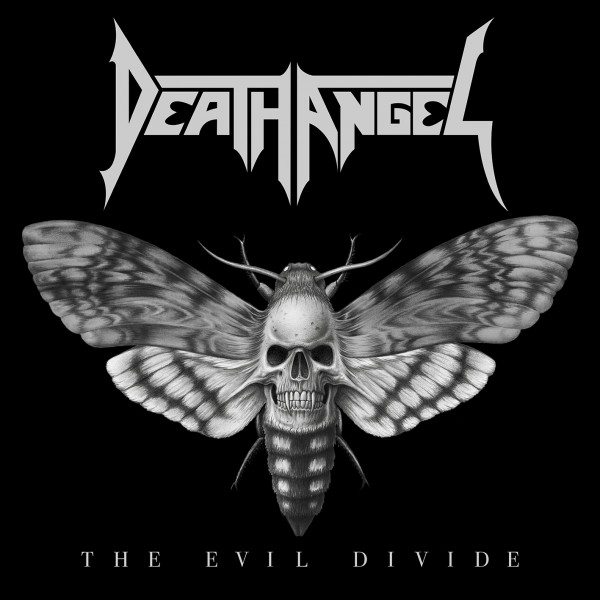
(((o))): Was the album’s artwork based on the death’s-head hawkmoth from the movie The Silence of the Lambs?
Rob: It is based on the death’s-head moth, but The Silence of the Lambs movie was a pure coincidence, it’s funny none of us had even thought about that until the album cover was completed. Somewhere along the line, someone who saw it brought that up and it just blew my fucking mind at that moment! I was like “Oh Shit!”. The fortunate thing is that I love that movie, I love that book, and it’s one of my favourite stories. I’m glad for that because had it been something I despised then that would have sucked pretty bad! It’s a pretty wicked way that they used the death’s-head moth in the movie so there you go, it was not on purpose but it’s a fortunate coincidence.
(((o))): There is a song called ‘The Moth’ on the album too, is that based on the albums cover?
Rob: It’s the other way around actually, but yeah, they’re tied together and they represent a number of things to us conceptually. Why we’re using the death’s-head moth and connecting it to the evil divide and the songs and general lyrical content for the entire album is a bit of a ‘Cause for Alarm’ as the second song is titled, it’s a sign of the times, or a Sign o’ the Times as a nod to the master Prince. It’s talking about current events and all these intense, fucked up things that are happening around the world and it’s on the tip of everyone’s tongue these days. It’s striking a nerve with everybody as things are happening in a negative fashion, left and right we are dividing humanity and the death’s-head moth, in some cultures traditionally when you would see a death’s-head moth, it’s a bad omen so that’s resign we have on the record as this sign of this beautiful organic moth with the beautiful wings and patterns but then with this wicked and evil skull pattern that’s happening on the moth simultaneously dividing the good and evil in one image.
(((o))): You started the band with your cousins in the early 1980s. What was the beginning of Death Angel like?
Rob: It was part of our childhood really, we weren’t thinking twice about it because we fell in love with music and we wanted to form a band even though we didn’t know how to play instruments really so we just learned with the idea of making the band when we were practically writing songs while still learning to play. We grew up hearing music, playing music, hanging out and that was just our thing, we knew nothing else! It was a fun thing to do and a fun way of growing up, it definitely kept us out of a lot of trouble, it got us into trouble, but it kept us out more than got us into trouble to be honest! I’ve no idea what path I would gone down if music hadn’t taken us off the streets and put us into our drummer’s garage working on our craft. We definitely lived in the inner city and there’s a lot of trouble to be had so it led us down a productive path. It’s a curse and a blessing where it made music my life ever since and you end up devoting your entire fucking life to the thing. It’s an addiction you can’t get away from, but it’s a lot of fun and it’s very rewarding, but at the same time it sucks the life out of you and makes you sacrifice everything and everyone around you. As a child it was a lot more fun and there was no thought to the business and reality of it do it was definitely the riots if loving music which is still at the core of it all.
(((o))): You were one of the youngest bands around at that time and released your first album just out of high school. Would you say your youthful exuberance helped the band at that time?
Rob: Absolutely. We were chock full of it! We were definitely on fire. Every one of us, we were so excited about the music scene and everything we were discovering on a daily basis. The bands, the social networking, which at the time meant real life not through a computer and you’d be hanging out every weekend at multiple shows, parties after the shows and we were just riding along with the wave. We were being mentored by a lot of the older bands, that being Exodus, Metallica, basically everyone as like you said we were the younger guys around. People were buying us beer, getting us into clubs and we got to experience I’m sure a lot more than someone at that age would experience in terms of street knowledge and it was definitely a fucking cool way of growing up.
(((o))): What are your memories from when Death Angel first started out and the early Bay Area thrash scene, was it as vibrant as exciting as it looked at shows and with all the music that was coming out?
Rob: It was even more vibrant! I’m absolutely proud to be a part of and have been part of it and absolutely thankful to have been in that spot at that moment in time, growing up in the Bay Area and being smack in the middle of that whole thing. At the time you didn’t realise or think twice about it, you don’t think twice about things at that age, you’re just living through it. At that age, the idea of people in their thirties seemed like old people! We were teenagers the whole time that was happening so you didn’t think about shit, you just lived through the moment and went fucking hog wild having a total blast. All the things of legend, the people, the pictures and every time I’m asked, that must have been amazing, you’re damn right it was! I’ve never experienced another era like that so I just feel glad I was there when it was going on. It was incredible.
(((o))): Thrash exploded worldwide in the mid to late 80s. How did you feel that a sound that was defined in the Bay Area had such a huge influence across the globe?
Rob: Looking back on it, I feel great. I feel proud to have been there. Now that I see the impact it did make, really the only things that come to mind is I’m just proud to have been a part of it and contributing to it in a big way. We were all over it, we were right there and I feel fortunate. At that young age we still had some of that intense drive and work ethic to practice so hard and work so hard on what we were doing that we were able to be respected and appreciated for the work that we put into it.
(((o))): What was the story behind Death Angel disbanding in the early 1990s?
Rob: It was a series of events really that put us into a position where we literally had no choice, such is the case of every musical project I’ve been a part of. Something just happened to us, we never wanted to stop doing what we were doing, and the main catalyst was the bus crash that happened to us on tour supporting our album Act III in 1990. Sometime in November of 1990 we were on tour and the bus crashed, it flipped and we had a near death experience, massive injuries happened, our drummer was critically injured and experienced many surgeries over the course of the next year and couldn’t play drums and it derailed the band completely. We were just in shock, we were fucked and during the course of dealing with all the shit that’s going on with hospitals and everything, it just caused us to look at the situation we were in and we couldn’t immediately just pick up and carry on. We weren’t about to replace our drummer, heartlessly replace Andy and just move along. We just supported him on his recovery at home and tried to make sense of the fucking tragedy that happened and during that time we had pressure from our record label to get back on the road immediately and replace the drummer and all this shit and we basically told everyone to fuck off and so one by one, shit happened. Geffen dropped the band because we wouldn’t immediately go out and support the record. We ended up in a huge situation with our management and ended up in a lawsuit with them and at that point our singer Mark had moved away to New York to clear his head, he couldn’t deal with the really ugly situation. We just came unglued and thought Death Angel had reached its course and the accident was like the sign and it was time to move on from it.
(((o))): After that happened, you formed The Organization who were an extremely underrated band. I was a big fan of the album Savor the Flavor in particular. That band were less heavy and more funk orientated than Death Angel. Was heavier music something you wanted to move away from after Death Angel ended?
Rob: Absolutely, and thank you for knowing The Organization and Savor the Flavor. Awesome, that’s definitely a rarity! I have a very warm spot in my heart for those two records and we believed in everything we were doing at that time. It was a really heavy time for us, it was our expression and other emotional trigger response from what we had been through and going through what we had at that point, we had strong music for eight years from when we just formed and we were so young at that point, I myself had just turned 21, three albums in and eight years of your life touring at that age puts you through a lot and things ending up the way they did with the accident was a really fucking painful and confusing experience. When all that happened, the only reaction we could have to protect our souls and our hearts was to depart from what we were doing. Looking back at myself and us now, I can picture the mindset we were in, it was a really dark place and we just wanted to come out of that darkness so badly, but we still wanted to play music together and Mark had moved to New York so we wanted to run away from the black cloud that was Death Angel. That meant just letting go of everything, that style of music, the thrash scene, everything. We’d just had it by then, we loved music and we loved heavy music still, but that’s why we stylistically departed from what we’d done before. We never played any Death Angel songs. It was very disappointed for a lot of Death Angel fans and I can see that now, but at that time I couldn’t see that at all. I could only see where it was coming from, from our point of view. It was pure individual expression without being able to have the capacity to regard what fans would think. We just had to do what we had to do at that point to fulfil our hearts and souls so that’s why those albums are very personal and very dear to me, but at the same time I can understand now that the reaction our previous fans had. It was an interesting and confusing point of time, it’s captured on those two albums. It still breaks my heart that we weren’t able to take that band further, but it is what it is.
(((o))): Savor the Flavor in particular was one of my favourite albums when I was still in school.
Rob: Thank you.
(((o))): I always remember seeing the video for the song ‘Savor the Flavor’ on Headbangers Ball 20 years ago!
Rob: Oh really, that’s a very rare one as well. It was fun, it was a cool era. It was very, very emancipation, despite the fact the band wasn’t able to break through. I like to go with what some people say whereby unfortunately we were ahead of our time stylistically and musically so were kind of pushing our envelope before that kind of thing became more accepted and by the time it did we were already done with it, though we were not following any trend. If anything we were inadvertently setting one, but we weren’t able to last out long enough and catch the wave of anything. It came and went before anyone could really grasp it and it’s too bad that happened, but I do see that era of my life as a really nice point of time as far as taking hold of what we were doing with The O and felt like we were getting over the black cloud of Death Angel. It was necessary for the future of whatever I did next to be able to let go of that and make music without any restrictions or margins to do just do whatever the fuck we wanted with a completely don’t give a fuck attitude at all, our lives were going that way and we had to rediscover ourselves and reset our existence in our world. It was fucking confusing leading from Death Angel to The O and that was a way of healing.
(((o))): You also had the bands The Past, Smokestack and Swarm. Did you want to try your hand at different styles of music?
Rob: Yeah, that’s right. I’m a music fan and I’m a musician who plays all types of music. If I’m not on stage with Death Angel or in the studio then I’m playing this, that or the other. I’m quite multi-dimensional when it comes to the music I like and I like to play. It was nice to be able to get all these things out of your system and be able to focus on this kind of vibe and again not be restricted to what you’re expected to be doing or creating whereby you have a fan base, and yeah, you want to please the fans and you’re responsible for delivering which is what Death Angel is about and of course I love and embrace that with all my heart. In Death Angel, the way I’m able to do that these days is made possible because I did all the different things at test point of time to get those things out of your system and enjoy and play music so that you can be hungry for the other thing which is what Death Angel dies. It keeps you from burning out on the same flavour over and over again.
(((o))): What was it that got the band back together when you reunited back in 2001?
Rob: We got back together for a specific reason, we played this benefit show for Chuck Billy called Thrash of the Titans that happened in San Francisco. Chuck Billy had cancer and a shitload of bands came together to play this now legendary concert and for us, that was the first time we played together in eleven years. I’m definitely not a person that says never because I believe in the never say never thing, but the one thing I was never for was if Death Angel was to reunite and unbelievably we opened Pandora’s box. I was still against it because we’d already closed the door and moved on with our lives, but Chuck calked me personally and I spoke to him on the phone and asked me a personal favour and that was deep enough of a reason to make it happen. The reformation was absolutely meant to happen for that one show, the fact that one thing led to another and fifteen years and five studio albums later we’re stronger than ever is just a freakish occurrence, an absolute near miracle as far as our band is concerned!
(((o))): You are touring the US with Slayer and Anthrax later this year. How does it feel to still be doing massive tours with your peers after all this time?
Rob: Oh man, this feels amazing! I mean touring is the other half of the musical journey. One half is creating, writing, recording, rehearsing and the other half is getting onstage and doing it live, the energy with crowd, travelling, playing in a different city every night, that’s when the real intense action happens. It puts you to the test in front of people and that’s just what we love to do. It’s in our blood, that’s what we’ve done, we’re known to tour relentlessly. We just have that energy exchange live and to be part of this tour with Slayer and Anthrax, this has never happened before. All of us, being original bands from back in the day, we’re excited as hell. This is the best North American tour we’ve ever been a part of, the biggest one so far. Strangely enough, when the bus crash happened to us in 1990, a fact that many people don’t realise is that, at that time, a tour was booked, the Clash of the Titans, at that time that was the biggest thrash tour around. Slayer, Megadeth, Anthrax and Death Angel was the other band on that bill. We fucking got in that accident and we couldn’t do it. We got replaced by a then unknown band, Alice In Chains and to this day, along with the accident itself, it’s a thorn in your side. It’s a bummer because that tour could have done amazing things for us, that would have been pretty big, but fast forward to September 2016 and we’re still going to go out with that line-up, that’s nearly the original Clash of the Titans line-up bar Megadeth, it’s very exciting and somewhat redeeming for us.
(((o))): Have you any plans for any UK dates at the moment?
Rob: Oh god yes! It’s one of the most important places for us to play. Unfortunately I have no dates I can announce right now, the only dates we have solidly booked are the Slayer/Anthrax/Death Angel US dates, but as we speak, dates are being booked and the rest of the world tour is being pieced together so I’m sure sooner rather than later you’ll hear of the UK dates. I can’t wait!
(((o))): What song that you play always gets the best reaction from the crowd?
Rob: That’s an interesting question! The interesting thing and the thing that I absolutely love is the crowd reaction is equally intense for our new songs as it is for our old songs and of course, one would expect that the old songs are going to rise for the people, that’s the go to thing. Many bands rely on their old songs for their crowd reaction, then play a couple of new songs, but they’re already set on using the old standards and living off that, but we don’t want to be stuck in that corner because we believe so strongly in our new material that we take the risk and play a lot of new songs in our live set. Of course we’re taking note that if the new songs are making the crowd slow down then we’re going to pull back and play more older songs, but the mix of the new and the old elicits the same reaction because we’ve got a lot of newer fans, so the thing I state play old songs and the old school fans will fucking go off, which basically would be anything off The Ultra-Violence, that’s a go to major weapon for us if we play anything off our first album and quite frankly, even for fans who don’t know that album, the style of the songs are so straightforward and balls out thrash tag it makes people go off and the other people see them going off and they join in. At the same time, we play something off The Dream Calls for Blood, the current fans, that’s often the stuff they know so the younger fans start going off on the new songs so that said it’s hard to really pick! I’m going to have to say something off The Ultra-Violence or as far as the newer stuff, ‘Claws in So Deep’ off Relentless Retribution always gets the crowd exploding, the title track from The Dream Calls for Blood or even the opening song ‘Left for Dead’ or ‘Son of the Morning’. People fucking go off, it’s amazing, I love it!
(((o))): Have you played any of the new songs live yet or are you waiting for the next tour?
Rob: We have so far not played any new songs off the new album live whatsoever. We’ve just been rehearsing the shit out of them, get them really fucking tight and see the way we’re going to play them live, sometimes you do a little of this and a little of that compared to the album, just feeling it all out and seeing how we’re going to play these songs live. To celebrate the new album, we’re going to do a free performance at Amoeba Music in San Francisco. It’s the most legendary record store that still exists, we’ve been shopping there since we were kids and what a great way to unleash the new album in the Bay Area with our hometown fans. We’re going to celebrate and play nothing but new songs. We’re going to debut half the new album live all at once. We believe strongly in the songs and the power of the new album, we’re totally psyched and we cannot wait to play a lot of the songs live. These songs are going to be crushing live, they sound insanely heavy at rehearsal, and it’s fucking great!
(((o))): The debut Death Angel album The Ultra-Violence was released almost thirty years ago. What have been the undisputed highlights from your career in that time?
Rob: There’s been a lot of highlights in there! The first highlight and still to this day, one of the major moments of my musical journey would be the day that I held The Ultra-Violence in my hand. The day the record came out. At that time I actually worked at Tower Records and my manager just came up and thrust the record in my hands and said look what came in today! I was working that day and I just sat there dumbfounded, holding the vinyl, it came out on vinyl and cassette that day! CDs hadn’t come out yet at that point. They used to have these cool displays, these full on art displays hanging on the wall of new releases and they had created one for The Ultra-Violence. At that Tower Records they were supportive so that thing went up on the wall and I held the record in my hands and you can imagine how that felt. Back in those days you had to go through that to make a record, there was no recording your fucking album in your home studio on your computer, making your own CD. To have that happen you had to have gone through the process to get a record deal and the whole bit so the proud feeling you had when you had a record could never be duplicated again. That was a fucking high moment!
Fast forward to another highlight would be headlining Dynamo Festival in Holland for the Act III tour, which was probably the biggest concert we ever were the headliners for. Fucking huge, around thirty five thousand people or some insane thing and we’re the headliners with our closing set with all our production and feeling that was our straight up Iron Maiden moment! We were like holy shit, we took to the stage and realising it was all happening was immense and that stands out as an insane moment for me.
Fast forward to the Thrash of the Titans show when we reunited and after eleven years we did not know what to expect at all. I mean, not only the chemistry between the band members who had not come together to play those songs for over a decade as well as the fans. We had no idea, we just hoped that it wouldn’t be a train wreck and people would still actually give a shit about us. We stepped out on stage and the way the crowd accepted us and the way they roared and sung every fucking word to every song. The way we felt onstage playing those songs again was this dreamlike and surreal thing happening and it made the hairs on the back of your neck stand up, goosebumps from beginning to end! It was insane enough to get us to stay together for this long after that. That and I want to give props to our European fans because after that we got a chance to play some shows in Europe so that’s why we stayed together. Let’s play Europe once and we came and did the show as the one in the Netherlands, again, same thing happened, it was just the crowd singing every song. They were singing so loud we couldn’t even hear ourselves onstage over the crowd! It just send chills up your spine and to know that our music had done that and had that string of an effect on that many people, for that long, with that much time of nonexistence was just insane, the emotions ran through us so those are pretty much, the main, total, absolute highlights and I’m hoping to add the release of this album to that because I’ve never felt this confident about a record that we’ve put out, I don’t think ever.