Interview: Satans’s Satyrs
I wanted to have the music. I wanted to say, we're still vital. We still have something to say.
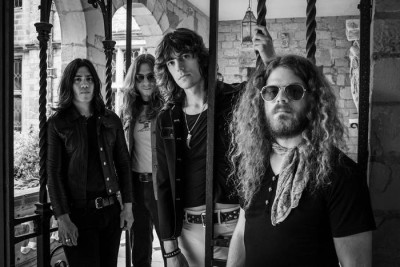
Satan’s Satyrs have returned with a vengeance with their long awaited new album After Dark and it was sees the band sounding even more electrifying than ever with their raw and rebellious music. Gavin Brown caught up with Satan’s Satyrs vocalist/bassist Clayton Burgess to hear all about the return of Satan’s Satyrs and After Dark as well as discussing the musical and exploitation and horror movie culture influences of Satan’s Satyrs, his time as a member of Electric Wizard and much more.
E&D: Your new album After Dark is out now. How does it feel for Satan’s Satyrs to be back with this album?
Clayton: It feels right. It feels like this was the right time. It doesn’t feel forced. It doesn’t feel like some kind of obligation. We were broken up, on hiatus, whatever, for a while, and the impetus to really start this whole thing again, it was irresistible to write music and to write songs and to record it. I couldn’t stop writing, even when we were in recess, so to speak, and eventually, tunes just kept piling up. We took it piece by piece, song by song, and there was no rush. In fact, before we approached any record labels, and before we shopped anything around, we had the whole album written and recorded. We were doing this for us first, and it was important to me, before the world knew that we were back and going to play shows again. I wanted to have the music. I wanted to say, we’re still vital. We still have something to say. So it was important to take those steps and do the music and the recording first, before anybody knew anything,
E&D: Was the recording of the album a smooth process?
Clayton: It was a lot of rehearsing and a really quick recording session. At least initially, it was really bare bones. We all piled into a really teeny rehearsal space in Virginia, and just set up the mics, and for, I think, three days, we just ran through track after track after track, pretty much live. All four of us in a room. There’s some tunes where we have thirty takes, because we would just go through them, take after, take after, and it was really raw. It was really fast and loose. It was really drunken, and I think it had to be that way, at least for this initial album, because we didn’t want to think about it too much. We wanted to do what felt right. Our setup was really primitive, far from anything that would be considered professional, but I feel like I wanted to embrace that lo-fi approach, because, starting again, it gave me the same kind of feeling as when the first album came out. When I was recording the first album, we had nothing to lose. We had no record contract yet. We had no one to impress. We just had to do something for ourselves, and we would do it, the way you do it with none of the resources in the world. Sometimes having no resources makes better results. I don’t think any of our albums have really been recorded the same way, and they all sound very different. I’d rather not try to emulate any process twice. I think going forward, for the next one, I definitely would like to keep it raw, not too slick, not too polished.
E&D: Hoe is the new lineup of the band working out?
Clayton: The lineup, it took a while to develop. I think in some of the initial stages of this kind of reformation of the band happened when me and the guitar player, Morgan, were just jamming up here in New York. This is when I didn’t necessarily have any ambitions to do Satan Seders again, or any real serious projects, but he and I kept in touch, and we just kept jamming, kept working on material, and after a while, it started to sound like, to me, it fell in line with everything we had done before. It didn’t sound exactly like what we had done. But I could see it standing up there in the repertoire at large, and it started to feel right, started to make sense, to reform it as Satan’s Satyrs. After Jared came in, he’s our guitarist from way back in the day. It just all sealed together. I like having those two as contrasting guitar players, because Jared is really noisy and more loose. He’s really textural with his guitar, whereas Morgan is, really a lick slinger. He’s more on the Michael Schenker side of guitar players, and Jared is more on the Ron Asheton side. But to me, those are both great places to come from, and I love like contrasting them together in the music.
E&D: The music of Satans Satyrs has been described as soaking Sabbath, Venom, The Stooges, who you just mentioned there, and Blue Cheer in acid and acrimony, is that statement still accurate when it comes to After Dark and who else have been a big influence on the sound of this record?
Clayton: It’s kind of funny, because it took some time for me personally, being away from the band and doing band stuff and just being aware of the scene, being aware of other bands, not going to shows, stuff like that. Over that time, you just kind of learn to revalue your initial influences again. They become more important than ever, and you realize what an impact they had on you. I don’t need to apologize for loving the Stooges, Blue Cheer, Sabbath, Pentagram, Witchfinder General. It doesn’t stop being important to me, but hopefully we just take those influences and do it in a new way, specifically on this album. I can think of stuff that inspired me, even like some B-52s and early Alice Cooper, just some stuff that wouldn’t necessarily be in the in the doom metal wheelhouse, so to speak, but just stuff that just made me want to approach production and songwriting in a different way. Even stuff as far out as Ariel Pink, stuff like that is to me, it’s it’s stuff that inspires me, stuff that gets me excited about music, and even if I kind of instill in this heavy rock, heavy metal mode, I still love feeling inspired by different different things but the core is always there. I’ve definitely said this in conversations to friends before, but we were always inspired by the kind of loser bands, Pentagram never made it, at least initially, and then the Stooges, there’s the story of their last gig, they were beaten up on stage by a biker gang or something like that. They never made it. They were never cool in their time. They were never popular in their time, but the music transcends, and we’re still talking about it and listening to this day. So I take inspiration from the music, but also the ethos of those bands as well. Blue Cheer, the second album is great, but the first album is like the high water mark of heavy metal, almost, and then that’s it, they didn’t produce work as good as that, but we can still obsess about that one album that changed our life, and it feels good to do that. It feels good to spread the word about bands that maybe aren’t as well known.
E&D: You’re playing at the NYC Desertfest Tee Pee records party, are you excited about that?
Clayton: Yeah, It’s something we never really did back in the day, we never did the Desertfest on the US side. I’m not sure if it was even around before we split, but, you know, we did it in Europe a few times. And like I said, even even back when we started the culture around this kind of music was more prevalent in Europe, so we always thought we had to go to Europe to make it, and that’s where our audience was. Now it’s really cool to see this stuff happening Stateside. Our first real gig, besides playing like a couple punk houses in DC, was Roadburn Festival in 2013 and that was our first gig with actual stage monitors and a sound guy and all that, and that blew us away. We had this notion that this was where you come to make it as a band of our ilk, and America was just like a total crapshoot, but it’s cool to see thing catching on, there’s actually, like a base there for it now and I’m looking forward to it, for sure.
E&D: Are you also looking forward to coming back over to the UK with Green Lung next year?
Clayton: Yeah, for sure. I’ve always been an anglophile. I wouldn’t have been in Electric Wizard for four years if I wasn’t, you know, I love the UK, and we’re really glad to have this opportunity to play with Green Lung on their tour, and it is perfect timing. We’re gonna come in, we’re gonna do our thing, and I think every band has a different vibe to offer. I love tours like that. I love tours where it’s not just the same band down the bill, We’re gonna be different, and they’re going to be doing their thing and we can’t wait for that. We’re really excited.
E&D: You mentioned Electric Wizard there. Do you look back on your time with the band with fondness and how was the experience of living in the UK?
Clayton: Yeah, I absolutely do. It was a great four years. It afforded me many opportunities personally, I learned a lot and it afforded us as a band a lot of opportunities. I’ve been forever grateful for that. It was, in fact, them who brought us over for the first time we played Roadburn. It really all started from there, and I learned a lot from them about just being in the in the music industry, professionally. I can’t say enough about that, their kinship and their influences. I can’t overstate how important that was then and still is. You know, they’re still really good friends to me, and I’m still a fan, really, because before I joined, I was a total obsessed fan. The quintessential obsessed teenager, any movies that they were into, I tried to find, any records that they were into. I tried to find and whatever they did that was gospel to me. Satan’s Satyrs, we definitely took a lot from them, whether it was Justin’s guitar tone on our first album. I literally bought the same effects pedal that he used on Dopethrone and using the movie clips and soundbites in our music, like that. It’s so obvious how much we took from them. I can’t even try to deny any of that, and even now, I’m still a fan.
E&D: Did it feel surreal being in the band, having been such a fan?
Clayton: For sure! I literally used to have dreams about being on stage with them before I even knew them. I would wake up, thinking that I’ve just played a concert on bass with Electric Wizard! So it was a totally surreal experience joining and it was a very fruitful experience. It was great for me being in that band, and it was great for us as Satan’s Satyrs, because we got to open for them a lot and get a little bit of that exposure. An eternal debt to then for us when we got started.
E&D: Aside from Electric Wizard and Sabbath, who are your favorite other British bands?
Clayton: I remember on, Die Screaming, that was like our British wannabe album. I always thought Wild Beyond Belief! was our Blue Cheer, American biker rock album and then Die Screaming, we were into like Atomic Rooster. We were looking up to Iron Claw and all kinds of more progressive rock. Even something like Curved Air. But like I said, I was like an anglophile, and I loved things that sound particularly British, especially around that time. Black Widow, that album, I could probably go on. I mean, of course, you have the usual stuff, Motörhead and Venom were some of the first influences we ever had. Judas Priest, I always grew up listening to Maiden. Witchfinder General. We owe a great debt the UK for the all the groups they produced for us.
E&D: Are you still very much immersed in exploitation and horror movie culture, and what movies have had the biggest impact in the sound and outlook of Satan’s Satyrs?
Clayton: Looking back in a broad sense, Satan’s Sadists was kind of a really crappy biker film, but it’s great, and that’s where we Hit the name from but changed it slightly. I always liked those zero budget biker films when we started out. Some of them are great. Some of them not so much. Werewolves On Wheels, I think that really gave me everything I wanted out of a film, and it gave me a way to approach the music with the kind of wild, raucous sound was the biker element of that film and the intrigue and the horror elements were another element of our band, and that movie melded the two things perfectly. In fact, the first song we wrote was called ‘Lycancycler Cult’ and it was all about that film, because it felt very American. It felt like one of ours. I love the British horror films, l grew up watching Hammer and all the Dracula stuff but I liked how this rough and ready, low budget film could perfectly blend the expansive American West imagery, desolation of the desert, and the feeling of that sense of freedom. I think it’s uniquely American, but at the same time incorporating that undertone of horror and dread. Yeah, that’s probably the most important film for the ethos of the band, at least starting out. Every album I can point to a different movie for every track. I mean, ‘Carnival Of Souls’ was on our first record. That’s still my favourite film. I have a personal connection to it. It’s not really like a flesh and blood type of film. It’s more on the psychological side, but I’ve always felt a connection to it. We used to rip off stuff, like our first T shirt. We ripped off Black Sunday artwork, I think our first demo tape, we ripped off the Black Sunday artwork. That was our source material, American biker films, Bava in Europe, Hammer in England, and other production houses like Amicus with The House That Dripped Blood. I could go on forever, but I think the combination of that admiration for the British horror thing, whether it was with Electric Wizard or Black Sabbath or Witchfinder General mixed with the American raucous sounds of the biker soundtracks like Wild Angels and Devils Angels, those were all done by Dave Allan And The Arrows, which I still love, and Blue Cheer who kind of fit into that wild sound as well, that was what informed us when we started, and that’s what we wanted to blend together.