Interview: Tim Bowness
I think Powder Dry is the most eclectic album I’ve released because it was very much based on how I was feeling on any particular day. So, a track could come out and it was perhaps the hardest, hitting, or the darkest. And the next day something would come out that was ethereal and ambient, or even upbeat.
Tim Bowness has made a leap forward by being a part of the Kscope family, following the release of his eighth studio album, Powder Dry. This album is a cinematic experience; combining the forces of electro-pop, alternative music, singer-songwriting arrangements, eerie soundscapes, and industrial music.
The themes behind the album tackle subject matters such as; radicalism, the loss of innocence, paranoia nod to online discourse, and struggling to find human love during those hectic times. Bowness himself is very much like a filmmaker in disguise when it comes to his solo work.
His collaboration with Steven Wilson, who has mixed the album in 5.1 surround sound, and as his right-hand man, being a co-host for The Album Years podcast since its launch during the pandemic-era, and a part of No-Man for nearly 38 years. Not to mention, a co-founder of the online music label Burning Shed since 2001.
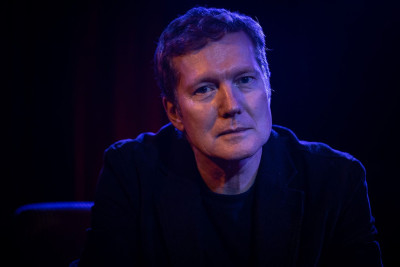
To find out more about Tim’s new album, Zachary Nathanson caught up with Tim Bowness, face-to-face on Zoom, talking about the new album, Steven Wilson, The Album Years podcast, and where will the next adventure awaits him.
E&D: Tim, your latest album Powder Dry marks a leap forward for you. Going from the InsideOut label to a new home with Kscope Music. How does it feel to be a part of the Kscope family since they had reissued the No-Man catalog?
Tim Bowness: It’s changed quite a bit. I know a lot of the people from Kscope and it’s a familiar organisation to me. And the reason I went with them for this album is because Johnny Wilks, who’s the head A&R person, was very enthusiastic about the album.
I was out of contract with InsideOut, but they were happy to release the album. I still get on incredibly well with the people there, and respect and liked the label, but this was kind of more of a case of Johnny being incredibly enthusiastic and me trying something fresh out because the album felt different really. It felt like a good fit. I think that Kscope is a really interesting label that takes quite a number of creative risks, and it felt like a decent match of label and album.
E&D: How will the new album portray itself, going from being a studio album to a live show?
Tim: Very differently I suspect. I always work to the strength of a live band. Whenever I do shows, a song is usually never the same twice, it can sort of change length and feel, depending on how the band are on the day, but also the line-up that I choose.
I’ve already played a couple of these pieces in concert and they’re quite different, slightly extended and much more band oriented. The band I’ve got at the moment is a five-piece band, featuring Matt Stevens from The Fierce and the Dead, John Jowitt, Andy Edwards from IQ and Frost, and Rob Groucutt from Rain. It’s a five-piece rock band, but a very flexible five-piece rock band. They’re wonderful at going from a whisper to a scream. I fully expect that the material will be borderline unrecognisable!
E&D: Were some of the songs that you’ve written for the album originally going to be on your previous one, Butterfly Mind?
Tim: No. This was all written quite a while after Butterfly Mind was completed. Although I wrote a fair bit of the material (and co-wrote the rest with my co-writer/co-producer Brian Hulse), Butterfly Mind was a very collaborative album. This album I started, after not having written anything for about 14 months. I collaborated with a couple of people and produced four or five pieces over that period, but while Butterfly Mind felt really fresh the material that’s been written in the shadow of it, didn’t seem quite as vibrant to me. It felt as if it was going over old ground.
I’ve always written songs and always written full demos for No-Man and my projects. After hearing about the rejected songs, Brian Hulse, who I worked with on the last few albums, said, “Look, I think you should go at it alone for the first time. It would give a very fresh perspective”. And, he also said that he felt that with Butterfly Mind, he just tamed my demos and made them more musical. So, once I got this idea in my head that I was going to go at it alone, the ideas just flowed. After fourteen months of not writing or not co-writing anything that was exciting to me, it was a relief.
From the first song onwards, I was writing and writing and writing, and I guess this album was written in a three bursts of activity. There’d be two months of writing, writing, writing, then editing, producing, and then I’d reflect on that material. Perhaps a month or two later, there’d be another bout of creativity. It was fantastic really that soon as I started along these lines, the music flowed. And it was very instinctive and it took me over. When I was explaining what I was doing to Steven Wilson and Peter Hammill, they both said, “Oh yeah! You should’ve done this years ago!”
So yes, it felt very, very natural and once I’d got the idea for the album, it flowed out.
E&D: What was the inspiration behind the video for the opening track ‘Rock Hudson’?
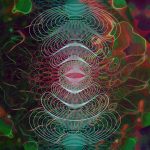
Tim: Well, the visuals were inspired by the process of making the album. It was a very instinctive scattershot, approach to creativity that’s reflected in the accompanying artwork and videos.
Butterfly Mind is an eclectic album and No-Man’s Wild Opera is an eclectic album, but I think Powder Dry is the most eclectic album I’ve released because it was very much based on how I was feeling on any particular day. So, a track could come out and it was perhaps the hardest, hitting, or the darkest. And the next day something would come out that was ethereal and ambient, or even upbeat. So, I was going with the process and I think that Carl Glover’s artwork for the album reflected that process.
The idea is to have a coherent approach visually for the artwork of the album and the videos themselves. I know that in the era of streaming, this isn’t the thing to do, but for me, the album, and ‘the physical item’, still matter very, very much. Therefore, a lot of effort is put into how these things look and into the continuity.
E&D: Now, can you tell us about the genesis behind the album cover, what the inspiration behind the chalk-like, bricks into pieces cover that you wanted to do for Powder Dry?
Tim: As mentioned previously, it’s depicting the creative process. I think the bricks, and the chalk, this is all part and parcel of the creativity involved in constructing something. During the making of the album, the studio was a play thing, instruments were play things, anything seemed possible. The smashed color bricks is reflects that process. It’s about seeing what unexpected shapes emerge.
E&D: When I was listening to your song ‘When Summer Comes’ I felt some tugs between two bands, the French duo Air and 10cc. Describe the concept behind the song and how it fits into the new album.
Tim: Well, this was the first song that I wrote for the album and I wrote it in the depths of Winter! It gave me the confidence to carry on with the album. This was the first piece where I thought “Okay, this is going to be it. This is going to be the complete, finished work”. And it gave me the confidence to continue. It was something I’d written based on however; I was feeling that day. In this particular case, it was quite a reflective, melancholy mood that was being evoked.
It’s interesting that you mentioned those influences because 10cc actually was the first band I ever fell in love with as a kid. ‘I’m Not in Love’ was the first single I bought. I was lucky enough to work with Kevin Godley of 10cc on one of my albums a few years ago, which was fantastic, kind of connecting with somebody whose voice moved me when I was younger.
‘When Summer Comes’ has a very reflective quality lyrically and musically. The way I tend to work is that I write the music first, then I write the melody, and then I write the lyrics to fit the melody. I’ve got the patterns of the melody and the lyrics are written to that. They reflect the music, which has a nostalgic, quality. The lyric itself is about somebody who is praying for a new beginning, while also understanding that they’ll commit the same mistakes again (and again).
E&D: I understand the songs on the new album are shorter. Did you needed to take a break from writing the longer pieces that you had done prior to the recording sessions for Powder Dry?
Tim: I think, again, I responded to what I felt the songs needed. Primarily, I see myself as a singer and a songwriter so I think I tend to listen to things as a listener would listen to things. What should happen now? How should the dynamics be? What sound? What melody? It just felt right to me that the songs were this length. I actually wrote 26 songs for the album.
E&D: Really?
Tim: Yes, I wrote ten that I didn’t use. Partly because again, as I said, I love the idea of the album, and I think of the perfect album length as 35 to 45 minutes. Because it’s the perfect duration for a certain level of concentration, where you can immerse yourself fully in the music. I think that most of the great albums are 35 to 45 minutes long. There are of course exceptions, there always exceptions, but I think, generally speaking, it’s a really good rule of thumb. There’s a level of concentration where you can immerse yourself in music. It took 30 attempts too get he track listing right. A hell of a long time!
When you write, writing can come quite quickly. Let’s say 95% of the process happens, quite quickly. The finessing of that is what takes up most of the time. So, 95% of the writing probably takes 2% of the time creating a song. 98% is spent finessing the lyrics, finessing the sounds, editing the vocals, editing the guitars, and the textures. When I put an album together, I listen to it as a whole. This can sometimes mean that I throw out some of my favourite pieces because they impede the dynamic flow of the album. There were a couple of tracks that I decided would be better with a band, including a six-and-a-half-minute track which was musically quite complicated.
E&D: Now, Steven Wilson has done not only the album in stereo, but in 5.1 surround sound, what were some of the challenges that he brought to the table mixing the new album?
Tim: Well, I think, the thing is with Steven that we’ve worked together for a very, very long time (and still do with The Album Years podcast, of course). The thing is that both of us still love a challenge, both of us still love the fact that our music changes over the years and that we’re still excited by music This is the thing that I loved about Powder Dry, that I still kind felt excited about making music. That experience when you finish something you like and you want to play it to somebody, or you want to play it again and again. That feeling of excitement.
Steven, has a mixing ability I don’t have. He can make things sit better, sound bigger, and so, I know, he knows what I like, and will always work to what the song should sound like. I do mixes myself, but I tend to be quite good at much more, amorphous, ambient mixes. This is something I enjoy and can do, but If I want a particular power or to take it to a higher level, I feel that Steven can add that extra 2% that I can’t.
He would also comment on what he thought was good and that was encouraging. He was very supportive during the process. So, I think for me, getting Steven involved was more important for the fact that he really gave me the courage to complete it myself. His view, rightly or wrongly, is that when I give my demos to other musicians to finish is that the results end up being too polite. He said, “What I’ve always liked about your demos is that you just do what needs to be done.” I don’t consider myself to be a musician, I just have an idea and think “Okay, how can I achieve that idea?” And then I attempt to record it.
So, he was really encouraging in a sense that, if it makes sense, he allowed me to be myself.
E&D: I’m so glad that you brought up The Album Years. Because, this is going to sound silly to you. But you and Steven, are very much like Sherlock Holmes and Dr. Watson when it comes to The Album Years when you launched it during the pandemic. Will you and Steven be doing more Album Years shows prior to the one you had done on June 7th of this year at the West Hampstead Arts Club back in London?
Tim: The live performances? Yeah, I think so! It was very different and it was enjoyable. The audience response was great. We’re doing another one at a festival in the Netherlands [Haarlem Vinyl Festival] in late September. We’re also continuing to do The Album Years as a podcast. We’ve just recorded 1972 a week and a half ago in our new studios, Crystal Spotlight Studios. We’ve probably recorded about seven episodes for 1972, so it was a very good year as Frank Sinatra might sing.
I like the idea of Sherlock Holmes and Dr. Watson but who is who is the question.
E&D: Well, Steven is Sherlock Holmes, you are more like Dr. Watson.
Tim: Do you know the 1940s one? The 1930s and 1940s Dr. Watson, Nigel Bruce? He’s brilliant and Basil Rathbone and Bruce make a great comedy team, but he’s an idiot! [Laughs] So, obviously, if I’m not the Nigel Bruce, Dr. Watson. I’ll take that as a compliment!
Steven and I got on together from the very moment we met, really. We launched into talking about music, books, films, what we wanted to do musically etc. We’ve had other comparisons like The Two Ronnies, Morecambe and Wise, Abbott and Costello! Again, who’s who?
E&D: What is the next chapter in Tim Bowness’ story in the years to come?
Tim: Really difficult to say. Since I’ve finished the album, I’ve written a lot of guitar pieces that I haven’t developed into songs. I’ve also written lyrics and titles for a potential follow-up to an album I did a few years ago called Lost in the Ghost Light. Lost in the Ghost Light and No-Man’s Love You to Bits are the only concept albums I’ve ever made. Lost in the Ghost Light was a love letter to music, a love letter to the art of the album. For whatever reason, after I finished this album I started to write more lyrics about the character that Lost in the Ghost Light revolved around.
Other than that, I’m doing some gigs with the new band and I’ve also been doing some re-recording of Plenty material, which was my pre-No-Man band.
Sporadically, I go through phases of re-recording old pieces and I really enjoy doing that because you come to the old pieces with a fresh perspective and sometimes re-write it and hopefully improve upon it. Generally, that sorts of kickstarts new creativity whenever you’re working on old things. For whatever reason, it kind of kicks you into action and wanting to make new music again.
There are a few things, but nothing definitive at the moment.
Photo credit: Leon Barker