The year, 1971. Robert Wyatt, one of the founders of the Soft Machine, departed from the band, following the release of the band’s fourth studio album simply titled 4, released in February of that same year on the CBS label in the UK, Columbia in the States and formed a new group called Matching Mole.
Taking over Wyatt’s place is Australian-based jazz drummer Phil Howard, who not only appears on the Soft Machine’s Fifth in 1972, but he arrived to London back in 1969, joining the group Caparius which featured bassist Neville Whitehead, guitarist Peter Martin, then replaced by future Isotope guitarist Gary Boyle, and pianist Dave MacRae.
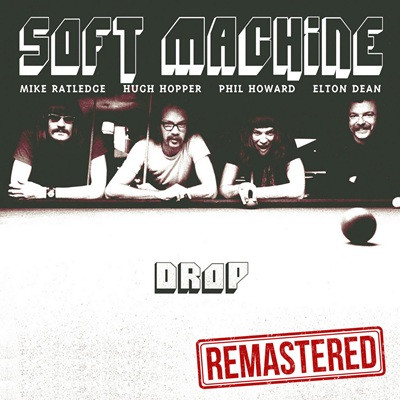
It seemed like a big leap for Howard to fill in Robert’s shoes at the time the Soft Machine, who were on the road during the German tour in the fall of that same year promoting the fourth album, were on fire during those shows on the reissue MoonJune has brought back for the Drop album which originally came out in 2009. With the help of Mark Wingfield handling the remastering behind the live recording, it seems that this live recording is getting another shot at life.
Listening to the live show, you can just close your eyes and imagine yourself being at those gigs in Germany, rooting for the Soft Machine as Mike Ratledge, Elton Dean, Hugh Hopper, and Phil Howard were bringing, massive amounts of fire during the performance by bringing the gauntlet down. From the moment ‘Neo Caliban Grides’ begin from the roar by Dean’s sax, it becomes a volcanic force thanks to the crescendo craziness Howard, Hopper, and Ratledge would endure to follow Elton’s free jazz improvisation.
Howard just goes bonkers on his kit, pounding the living daylights on his instrument to go in this mental roar, reminiscing elements of the Third album which speaks of a continuation of the opening intro to ‘Facelift’ whilst Ratledge goes bat-shit crazy to create this wah-wah effect then walking into this fast, bebop effect behind ‘All White’. You can just imagine Dean channeling the legendary Joe Maneri on this track with its ‘Paniots Nine’ technique thrown into the middle, thanks to Howard’s pounding attack to add-in those intensive beats to the Soft Machine sound which you can hear his return to Maneri’s arrangements behind the improv on ‘Out-Bloody-Rageous’.
Once we get into the crossover between ‘Slightly all the Time’, ‘Out-Bloody-Rageous’ and ‘Drop’, all bets are completely off the table. Ratledge, who sadly passed away this year on February 5th, he deserves more credit for his incredible keyboard work that would send shivers down your spine when he goes off the wall, creating these insane effects by playing nonstop as the rhythm section channels him to keep going.
Elton Dean adds in that reverb effect by creating the spaced-out galaxies coming across our solar system behind the mind-blowing phase of ‘M.C.’ then landing back on dry land and blaring out until dawn approaches while the free-jazz improv bursts the doors down with a roaring cry on ‘As If’. When I say Howard goes nuts, he goes nuts, but he plays a damn, good drum fill to pick up the pieces by laying down the groove to slow down the beats.
Listen to ‘Dark Swing’ for example. Howard takes center stage during the performance where he’s all over the kit, taking vibes between Elvin Jones, Christian Vander, John Densmore, and Ginger Baker, rolled into one. You can’t stop him when he goes into this hypnotic force, knowing when the band needs him to come back in by bringing it all home while ‘Intropigling’, which features Dean’s sax on this loop, he’s walking back down into the middle-eastern texture with the closing piece, ‘Pigling Bland’.
When I was listening to the live version of the piece, you can tell the band are paying tribute to Miles Davis’ ‘All Blue’ composition from his 1959 groundbreaking gem Kind of Blue. There’s a lot of love when it comes to Davis work, followed by labels such as Impulse that brings to mind, then ending on this chaotic high note with incredible applause.
After this recording, Phil would later leave the band as he was replaced by the late John Marshall who was the founding member of jazz rock band Nucleus featuring Ian Carr following three studio albums from 1970 to 1971 (Elastic Rock, We’ll Talk About It Later, and Solar Plexus) on the Vertigo label.
Despite its line-up changes, Drop remains one of the most incredible live recordings from the band’s archives that Wingfield had restored by giving it, the proper recognition it deserves. And as Sid Smith describes in the closing liner notes, “This is Soft Machine at its most acerbic most radical, and most compelling”.