Interview: Oathbreaker
I think this is the first Oathbreaker record that I was happy about. Other records I’ve done didn’t meet the expectations I had for myself. This is the first time where I felt the record sounded exactly like I want Oathbreaker to sound; the art was exactly how I wanted.
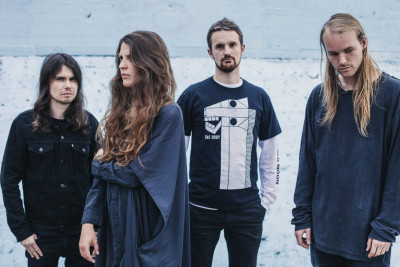
On the evening of October 7th, Oathbreaker came through Austin, Texas – on tour with Skeletonwitch and Iron Reagan. After a fantastic set, Dawson Clawson was able to chat with Caro Tanghe and Gilles Demolder. They talked about how their latest album Rheia was born, their experience with producer Jack Shirley, and just how personal Rheia is to them.
(((o))): First of all, I wanted to say how much I appreciate Rheia. It’s an excellent album and a surprise. I also wanted to congratulate you on coming over to America to tour. I’m not too familiar with your touring history, but isn’t this is your first extended U.S. tour?
Gilles: Yeah, we did a West Coast tour in 2012.
Caro: East Coast.
Gilles: East Coast! East Coast, sorry. We did, like, three weeks from Boston all the way down, through Texas. Then San Diego and up to San Francisco, and that was that. This is the first time we’re doing the Midwest, and up to Seattle, but we’re in the South first.
(((o))): Where did the idea for Rheia come from; how was it conceived?
Gilles: If you’ve been playing in a band for a really long time, you start realizing all the strengths of people. If you start a band… people that are already in bands, sometimes you want too much. It takes a while to learn what people are good at and what can be the best thing about the band. I started thinking that we’re all influenced by these different types of music, and I told Caro “We need to do… there’s these weird things we could do together that we haven’t done before. There has to be a way to have her vocals where they work with these different influences.” It took us three years to figure out how to do that. There was a shit ton of fucking demos. It was hard, but I feel like this is how Oathbreaker is supposed to sound. This is the way it’s sounded in my head for the past 8 years. This is how I’ve been wanting to make this band sound and it worked out. This is the first time I’ve felt comfortable talking about a record, because I feel, 100%, this is what we are.
(((o))): It’s great invest your energy, to hone something, going through it over and over, and having a product you’re pleased with.
Caro: Yeah, it’s been…I dunno, it’s like you’re feeling around in the dark. You’re trying so hard, re-trying and throwing stuff away… locking yourselves up in rehearsal spaces and trying to get it out. It took so much time that when it was ‘there’, we knew that’s what it was supposed to be.
Gilles: The first demo that worked, it was like… [together] YES!
I don’t want a record to be separate songs. I want a record to stand for something; have this story from start to end. So, we had this flow that we wanted to get in there. I’m very happy with how it turned out.
(((o))): I would agree with that: having all parts fit well together…
Gilles: …on the record. That’s what’s hard about doing a live show. Especially with us only playing 30 minutes right now. It’s hard…
Caro:It’s hard to pick out the things you want to play. Because, as much of a whole experience as you do on a record that’s 65 minutes long, it’s so hard to…
Gilles: …make the same story live that we wanted. Doing the same thing at a live show where you have a 15-minute change-over, and a 30-minute set…that’s hard. It’s more song-based than…
Caro: …experience-based.
(((o))): Right, it would be different if you didn’t have a new album that you wanted to share and were playing songs from your other albums that people already might know.
Caro:Exactly.
Gilles: We’re not this band that plays for a crowd, I feel like it’s more that people are watching us do our thing more than we are entertaining a crowd. It makes a lot more sense for me that we’re doing this thing.
(((o))): …and it’s like you’re bringing them in to your space.
Gilles: Yeah. It works on certain shows. Certain shows, it just doesn’t.
Caro: We have to get in the right vibe and everything needs to get together to make it that we’re really pleased with the live show.
Gilles: Entertainer is not the right word. That’s just not for us. This is our performance where we do this.
(((o))): You’re putting a lot of yourselves into it; you’re bringing someone into your space, inviting them in, and saying “Come hang out or go do your thing”.
Gilles: And that makes it also a lot harder. Trying to create a certain vibe makes it… I don’t know… it’s very fragile. Like, if vocal things go wrong it kind of fucks with that. Which makes a live performance a lot more fragile than just playing the songs – which is cool, and sometimes it sucks. I have to be honest about that. It’s just the luck. You’re depending on a lot of things: the venue, the lights…
Caro: Yeah, there’s so many different circumstances that influence you when you’re playing a live show.
Gilles: Sometimes I feel like “Fuck all that stuff, I’ll just play songs.” Sometimes it works, sometimes it doesn’t.
(((o))): It’s hard to have that intimacy without going overboard.
Caro: Exactly.
(((o))): Was it a purposeful choice with Jack Shirley producing this record?
Caro and Gilles: It was.
Gilles: Every record that Jack does has a lot of personality. On the Loma Prieta record, it just sounds like Loma from the first note. The Deafheaven record – if you’re into that or not, ‘cause they get a lot of fucking shit for whatever they do – it sounds like a Deafheaven record! I dunno, I felt like Oathbreaker needed a record that sounded like Oathbreaker. He was very passionate. I loved recording…
Caro and Gilles: …with him.
Gilles: He just helped us make Oathbreaker be this record, if that makes sense.
Caro: It was such a different experience for us to record with him. How he records is so different from what we’re used to. He records analog, at least the base lines of everything. You record everything live in one room then he converts it to digital tracks, then you build from there. But the base lines – not the bass lines – but the basic drums…
(((o))): …the foundation.
Caro: Yeah, foundation that’s it – so, because of that and having been used to recording our other two albums digitally; having to focus on all the details and get everything exactly like how it had to be, and to click track and get everything how we prepared it. With him, he just pulled it out of us.
Gilles: Like getting out of your comfort zone.
Caro: He just pushed us not to care about whether or this little riff was played really correct, like how it should be – or if this riff feels how it should feel. It took us a week to trust him. Because we spent so much time writing this. Especially for Belgians like us, flying to San Francisco to make a record. You get 20 days of studio time and you want to make it worth the trip. It took us a while to trust, to get him in our vibe that we have.
Gilles: In the end, this is the way that I like to record a lot more. Caro and I were recording ‘Stay Here / Accroche-Moi’ – it was the last song we recorded on the record – it was just me and Caro in the room with one mic. We did a couple takes…after a while you start playing like a robot, real mechanical, because you want to get things right. We decided after a couple takes – because it was just us on the song…
Caro: …play how it should feel. It should be natural, have atmosphere.
Gilles: There’s a bunch of things in there that aren’t 100% right, but that makes it more human.
Rheia artwork
(((o))): What was the inspiration for the album artwork?
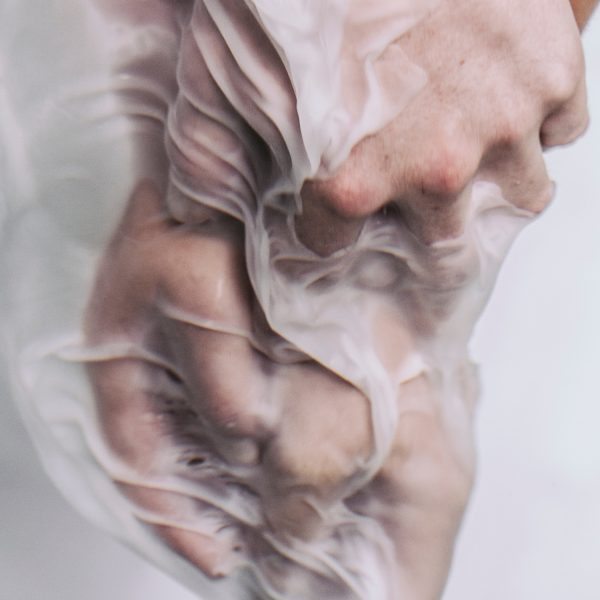
Caro: What is most important on Rheia is that we wanted this record to be as honest as possible. Building on that, I had this imagery in my head of having a second layer of skin that you would break out of. That’s exactly what the lyrics are in the entire record, to me. I have a really hard time opening up about things and he (Gilles) pushed me really hard on…
Gilles: We talked for so long. Caro had, like, a life crisis, I suppose. I’ve known Caro since she was 14. We’ve known each other for so long. We talked about her upbringing and her life for months. After a while I was thinking that maybe she could write these things down, to help reflect. Maybe it will help you. I think that’s really interesting to learn about yourself; to reflect about life. Not a lot of people do it, but it can make you a better human being; how you handle life. Writing things down can give you insight of yourself and how you are handling life.
Caro: Not even ‘can’. It will. Just thinking a lot of how I was raised; a lot of weird family issues at home. It just spoke to me that a lot of how I deal with relationships or how I work… it all has to do with how I was raised. Opening up about that and writing all these things down was painful in a way, but also mind opening. For me, it was the first time I stopped hiding myself behind how I was raised. And I think the only way to break out of hiding yourself behind: “I am like this because I was only taught to see this.” Once I wrote all these things down, it made me think that I’m my own person and I don’t have to deal with things this particular way. I can speak for myself. Gilles was talking about having this candle wax. We were thinking about having this tactile: having something that is touchable. That works with skin and human body parts. Doing the second layer of skin that’s candle wax, and imagining to break out of it, it just made the record whole.
Gilles: Yeah on the cover is our hands together. It makes all the sense in this record to have the wax pulling everything together. And it actually hurt – pulling off all the fucking candle wax. It hurt a lot making the cover art. It makes the entire thing so much more real. Sound-wise it feels very real and then I want the art to feel the same thing. It feels like that for us. I don’t know if it feels right for other people.
(((o))): What is the most rewarding portion of recording Rheia? [To Caro] I think I may have your answer already, but I’m curious.
Gilles: I think this is the first Oathbreaker record that I was happy about. Other records I’ve done didn’t meet the expectations I had for myself. This is the first time where I felt the record sounded exactly like I want Oathbreaker to sound; the art was exactly how I wanted.
Caro: It’s the first time our expectations and our product mesh on the same level. It’s a weird, unique thing.
Gilles: Before this, other records, I wanted people to like my band. Now, I don’t need people to like my band any more.
Caro: I’m happy with how it turned out, so whatever people say, I’m OK. It takes a lot of time to get to that sometimes.
Gilles: This band has been transitioning with us. We’ve been doing this for 8 years. That’s why Eros/Anteros had that cover art: it was a transition record. I feel like everyone was changing – our lives were changing. Now, it’s like I don’t need anyone. I need this band. I need this music.