Interview: Burden Limbs
I'm not playing for the audience. I'm playing to just process my own feelings and my own creativity.
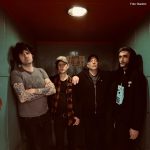
It Hurts, the brilliant new album from Burden Limbs sees the post-psych collective follow up their debut It Can Never Be Satisfied with another collection of eclectically and sublime hard hitting songs. Gavin Brown caught up with Burden Limbs vocalist/guitarist/lyricist Chad Murray to get a deep insight into It Hurts in a very insightful interview.
E&D: Your new album It Hurts is out soon. Can you tell us about the biggest influences on the sound of the album?
Chad: I suppose there’s a bunch of different stuff that goes into it. I really like the sequencing work that Bob Ezrin does on The Wall, and I think he did Nine Inch Nails’ The Fragile and The Downward Spiral. One thing that I wanted for the album, and for my albums in general is for it to flow seamlessly. I think that the album generally was influenced by quite a lot of different avenues of quite intensely depressing music. When I was writing, I was really big into Low, and I grew up listening to Nine Inch Nails. Joy Division. Nirvana. I used to be a very big fan of Marilyn Manson. Sparklehorse is a huge influence on me. Our band name comes from a misheard Sparklehorse lyric. It’s really about blending styles in different ways, sometimes it’s unexpected stuff. I think one particularly large influence on me is my older brother Jake, who’s music under the name in violet and who’s taste in music and production of my music have all played a huge factor in our sound, as has his arrangement contributions.
E&D: How long did you spend making the album?
Chad: Well, we have a bit of a weird process because the first album I wrote when I was about 17 or 18. I moved to London in 2016, and I got a band together in 2017. It was a bunch of my best friends. We started playing all these songs that I’d written five years earlier, and then it took another four or five years to get out as an album. With this one, it’s a similar vibe where I wrote the album in 2017 whilst I was putting the band together. There’s a song on there called ‘The Horrors To Come’, and we’ve played that all the way back since our first gig at Underdog Gallery that Echoes and Dust put on in 2018. There’s a video I’m working on for it on the album where it’s goes through the history of all of the footage I could find of us playing that song because we’ve got it at a live session and we’ve got crowd footage of people filming the shows and filming at a rehearsal and all that sort of stuff just because we played it for so long that we’ve got loads of footage of that one song. In terms of actually recording the album, we did eight songs, we did it over three sessions. The first three tracks we did as one session, and we did that as a trilogy of songs, so we recorded it as one piece. Then I think we did two sessions for the other tracks.
E&D: Are you constantly working on new ideas for music?
Chad: I tend to always be working on stuff but, my plan is to make eight albums and I’ve got the skeleton of 7 of them. I could tell you what every album’s going to be called right now. But, I’m not going to… Another big influence on Burden Limbs and this album is Gnod. I remember the first time I saw Gnod, they completely blew me away because they were doing the the tour for the Mirror, and they were playing songs from Just Say No, and they were playing songs from later than that, and it was just amazing to me that they had their own rig and sound engineer that they brought around with them. They had songs from the future that they were playing live when you watched them, and it was just so great to me that you knew that you were getting something special whenever you watched them. If you come and watch us play, we always play stuff that’s not going to be released for years from now. I think we pretty much always play a new song and I always try and keep the sets as varied as I can and bring stuff in and out of the set.
E&D: Is that how you’ve always been?
Chad: Not necessarily. I think it’s just we’re so long in the tooth now. We’re very lucky in that all the setbacks that have happened over time have ended up making it become a kind of identity as a band. We did our first EP, There is No Escape. I think it was in 2019. When we did that, our original drummer Oscar quit going into the session. Then we didn’t really know what to do. Rory went onto the drums, then Ed came in as a bass player and eventually became a multi instrumentalist. We were getting a bit of traction going, and we were getting ready to start doing stuff again, and then COVID hit, so we went into lockdown, we got to that point again where people can mix households, and then Sam quit because he was like, “I can only really at this stage focus on my job and For Breakfast”, which is his other band. So then, at that time, George came in as a drummer. Rory went off the drums back onto the bass, and then we got a bit of traction going again. We released the first album, and then Rory quit forming the mighty Test Plan as part of the process, and then Ben joined us! When we played the first album release, we did it as an eight piece. So I got Sam and Rory back on, and we played with four bass players, because those tracks like ‘Hypochondriac’, for example, on the first album has four basses on it. We decided that we were going to just add Ed’s part into Sam and Rory’s, but then I’m fairly certain we had Ben playing on it as well. All those setbacks slowed us down, and in that time, my mindset changed completely because when we started the band, I was like, I want to be a musician, I want to tour, I want to make albums, and I want to make money as a musician, and then as I got older, I was like, I don’t really like the idea of touring. I don’t really enjoy festivals very much. Playing gigs, I find to be extremely draining, and I decided that what I want to do is to treat it more like making films rather than making TV. So, if we do something, we do it to this larger extent, I like to get bang for my buck in that respect. If I’m going to play a show, I don’t want me set to be shorter than the time it took me to transport my equipment. Over the time of all the setbacks, I made loads of songs, so we learnt all those songs because things kept delaying us. So whilst parts of the band were changing, the rest of us were getting really tight, and we’ve always had this kind of thing. Omar is now the longest running member of the band, and he comes to probably five rehearsals a year. I call him the wild card because every time he comes in, everything changes. But it just means that we’ve got all this material, so whenever we play a set, we play for 90 minutes, and that means that we can showcase all of this music we’ve made. But if we were still in that original mindset of playing loads of shows and trying to tour and trying to be musicians that people will, listen to, we wouldn’t be able to do stuff like that because, like if you want a support slot with more established band, then you’re typically expected to play like 30 or 45 minutes. I don’t want to do that. I want to play for an hour and a half. So that means that I have to book all the shows myself, and then I have to put us as the headliner. That sometimes means playing without anyone else, and sometimes it means talking to the other bands and be like, “Well, we play for an hour and a half. And sometimes people are a bit weird about that and I encourage them to write more music and play for longer.
E&D: Is that a freeing feeling for you with your music?
Chad: Yeah, for me, it’s just the fact that I have all this music, I know how to put it together. I find it really draining doing things like promoting shows, taking all the gear from the room to the show, waiting around, doing the sound check. I find all of the logistics of playing a show to be very draining and tiresome and boring. I really enjoy going to the room and playing my music and writing songs and jamming and refining music. I’m not playing for the audience. I’m playing to just process my own feelings and my own creativity.
E&D: With It Hurts, can you tell us about a what the songs deal with?
Chad: There’s a couple of things. Firstly, I started off with this mindset of, one thing I always hated in music was when, especially like going to local gigs and listening to local bands when I was younger, is I hated it when people pretended to speak about things that they didn’t know about. Bands, for example, will often decide that they should be political without being politically educated, and it’s especially a trope that you get with like adolescent bands. So you get people up there trying to talk about the issues of day, and it’s like, “you’re not an expert on this stuff” and it’s “you’re talking about things without sincerity because you lack conviction on them”. But the one thing that everyone knows is their own thoughts and their own feelings. So, I started working on stuff about my own thoughts and feelings, and on top of that, I found that I got the most kind of release and gratification from writing about my own thoughts and feelings. So, there was an extent to which I felt from my life that I had to not presented my emotions outwardly, whereas it was very normalized for music to be a realm where anyone can express their feelings however the hell they want as long as it sounds cool. I grew up in a household where there was a lot of chaos, and there was traumatic events that happened in my life that had a scarring impact on me for most of my life. There was a period from when I was probably about 13, from when I was about 23, that I thought about killing myself every single day, so that started to feed into the music. I started writing stuff about trauma and suicide, the second album heavily delves into that. The first album was very abrasive and very in your face and very aggressive because I’m exploding emotionally, I’m lashing out. Then as I kind of matured a little bit, I started to look inward to what I was really feeling and what I was really thinking, what the causes of those feelings were, and what the impact of the traumas that I experienced were. I mentioned the song ‘The Horrors To Come’, which is a song about what happens after you kill yourself, and I don’t just mean on a spiritual level of thinking about is there a life after death and is there a life that people who kill themselves go to and what if it’s worse than being alive, but it’s also what happens to the people that you actually do care about when that happens, and it’s a song that that examines all of that and those feelings. The second track of the album ‘The Sense of Sadness’ has become the mantra of the album. ‘A Sense of Sadness’ is about how even at the best of times when I was suicidal and trying to escape from things being bad or whatever, the only thing anyone had to do to ruin my day was just to say, “how are you doing?” Then I would have to confront those feelings and ask myself the same thing. “How are you” And now I have to deal with that. You can be having a great day or a terrible day, and there’s just this baseline frequency of depression that was in your head. As Thom yorke says it “buzzes like a fridge”.
E&D: Would you say that making It Hurts and your debut album have been a form of catharsis?
Chad: Yeah, it’s extremely therapeutic. It’s extremely cathartic. There’s no point in my life where I feel more like I belong in the world and that I’m a part of reality than when I sing, and my absolute favourite time to do that is in the vocal booth. I love to get that chance to really engage my songs on that level because it feels very transcendent.
E&D: Is there anything else you want to say about this album?
Chad: Something I learnt in the process of making this album was that I have gathered over time, after years of saying to myself, I’m not trying to communicate anything in my music and I’m not trying to express things with other people. I’m just trying to get the thoughts and feelings out of myself. There’s a few things that I’ve decided that I actually do want to communicate because I’ve been thinking a lot about it, and one of those things is that I think for anyone of any age, getting together with your friends, especially your really good friends, and making a band is a great thing to do. It’s a great thing that you can do to be closer to people you care about and I guess strangers too. It’s a great thing you can do for fun. It’s a good thing you can do for your own release and to make stronger connections. And another think that I think is important for me to communicate is saying that it doesn’t actually take any skill. I know people think you have to have talent and stuff to do it, but you don’t. Anyone can do it, and everyone starts off not being able to do it the way they want to. But a lot of the time, when you teach yourself, you have a unique lens on it, and a lot of the time, when you’re nascent in the process, you’re very explorative, and you come up with things that you won’t come up with when you’ve had more practice and training because you’ll fall into habits. I really think that getting away from phones and screens and devices and the internet is a really good thing for people, and a really good way to do that is to play in a band. I would strongly encourage people of any age to play in bands because ultimately everyone has something to express, and when you finally get to that stage of doing it, eventually the music that you make can be your favourite music because it will speak exactly where you want it to.
E&D: Is that how you feel about new music?
Chad: My music is so representative of my feelings and my thoughts and my influences. The tempo and the pace and the emotion and everything is just how I felt at a time. So if I’m stressed and aggy and I play music, then my music is stressed and aggy. And if I’m depressed, then my music is depressed with me. No matter what I’m feeling, my music will comes with me, and it will sound like my feelings. Music is the birdsong of our species – everyone has their own melodies. It made up of all your influences as well as all of your experiences, it just inherently moves in the direction you want it to go. On reflection over the past couple of years I’ve decided that I really want to use any platform I have to encourage other people to play music because there’s a shortage of bands these days. Less and less people make bands because it’s not profitable anymore. AI is going to make that more and more impossible for people. And on top of that, the way the music industry’s changed. It’s been built around soloists, because it’s cheaper. Streaming companies are absolutely insanely exploitative, for example, our new album is not going to be on most of the streaming platforms. It’s only going to be on CD, and the videos are going to be on YouTube. We’re not going on Tidal or Spotify or any of that crap because they are all part of a hugely corrupt capitalist machine, profit is proudly engrossed in the military industrial complex. They’ll exploit anything because they don’t care. When I said that we’re not releasing this album on Spotify, there were people that said to me they might not listen to it if it’s not on Spotify. I said, “Fuck that! If they can’t be bothered to type in burdenlimbs.Bandcamp.com, that doesn’t make me want them to hear the album. If someone wants to listen to it, they’ll listen to it, and if they won’t, then they won’t. It’s as simple as that, and this this takes me onto the second thing that I really wanted to express now, which is that when we first started making this album, I wanted to only release it digitally because I wanted to be representative of how much I hate capitalism. I wanted to have it not be a product, so I wanted it to be free. But then I realised over time that one thing that I hate even more is the kind of way that everything’s becoming a subscription. So if everything’s digital, then no-one owns anything anymore, so I’ve had to backtrack on my own perspective on this and move towards going physical and just try and do it so it’s as little profit as possible. It’s better for people to have it and own it, because if you look at what’s happening with PlayStation right now, for example, where they’re saying you’re not going to own the disc and therefore you’re not going to own the game because if you cancel your PlayStation subscription, you’ll lose the game, therefore, you have to stay on that platform in perpetuity as long as you have the console, which means that they’re making loads of money and we’re getting less than ever in return. They’re charging you the same rate that they would for the disc, but they don’t even have to package anything. So all they’re doing is hosting a server which they already host, and this is happening across the board, and there’s a digital shrinkflation taking place as well – what you used to get included in the price becomes an extra charge and more and more of the original service exists behind a paywall. It’s funny because like I was getting rid of loads of stuff that I didn’t need, and now I’ve realised that I would much rather have the records that I have. I’d much rather be offline collecting this stuff so that I can enjoy it whenever the hell I want, and I don’t have to look at a screen. I’m sick of being hooked up to this fruit machine all day every day. I’m trying to not use a phone as much. This is all stuff that I’ve started thinking about going into this album process. It’s interesting, really, because like it’s such a change in perspective, overarching on this album. It’s the time that goes into things that makes them great. It’s what makes you enjoy them, and it’s also what makes them full of detail and full of life. That’s what it’s all about. It’s about putting the time in because there’s nothing else you’d rather do.