Interview: Rosetta
We don't really have plans for any touring. I mean, I'm not closing the door on that, but there are not currently plans for any touring in support of the album. As much as I'd like to do that, I have a 2-year-old at home that I gotta take care of so I'm not going on tour for 6 weeks but it was always the plan to close that chapter and move on.
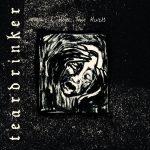
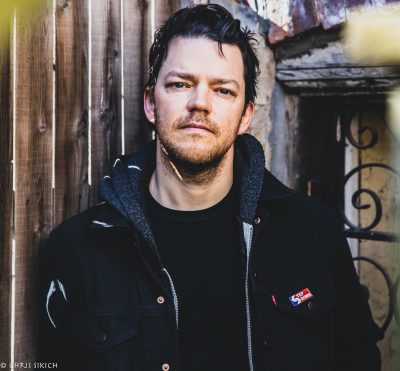
It has been nine years since the last Rosetta album and joy at news of album number seven was numbed by the announcement that this would see the end of the post-metal icons recording career. Gary Davidson caught up with guitarist and engineer Matt Weed to discuss the delayed recording process of Temporal Lapse, developing a record from older demos, the slim possibilities of an album touring cycle, any possibility of anniversary shows and why Rosetta is coming to an end.
E&D: Temporal Lapse was in good shape at demo stage between the end of 2019 and start of 2020 but with COVID, then the loss of your house to a fire in 2022 and some personal family losses and additions, it quickly made a sizeable gap between having songs written and getting into a full recording process. Was there ever a moment where it was discussed that it just might not happen? What did it take to conclude to forge ahead?
Matt: There were so many of those moments. I probably had a little mini-crisis about once a year during that time period, where I just thought it’s not gonna happen, it’s too much work. Some of it is just not even necessarily the grief and the loss that was happening, it was how far apart we physically are from each other. Eric (Jernigan, guitar/vocals) now lives in Texas, it’s an all-day flight to get from here to there, so that was really difficult, and even for the folks who are still close to Philadelphia, we are much farther apart than we ever used to be. We used to be within a few minutes drive or a few minutes bike ride of each other’s houses back in the day, and now we’re all fairly far apart. It’s an hour or more to get to where someone else lives, so it just made it a lot harder to get together. Also we used to have all the trappings of a band that toured all the time. We rented a rehearsal studio that we could have access to anytime we wanted, all day, every day. All of our gear stayed there, we could record there, that just made life a lot easier. Because we haven’t been touring it didn’t make sense to keep that so the equipment is stashed all over the place. So there was just a significant amount of drag on the process apart from all of the life stuff that was going on during that period.
But you are correct that I think the biggest factors were initially just COVID, which people are already starting to forget, but back in 2020 it was weird and sketchy to go and hang out in a tiny little enclosed windowless room with four other people. That was a risk and so nobody’s gonna do that. It took most of 2020 to get out of that. I think our final writing session before COVID was in February of 2020, and we did not get back together as a full group until September of 2021. It was like a year and a half plus later that we finally reconvened and that was when we finished the demos in September of 2021. Then I lost my house to a fire in March of 2022 before we could follow up and do anything further, so then it’s another full year of disruption. I was still settling into a new place in 2023 when we finally kicked things into gear. I mentioned I had a mini crisis every year where I’m just thinking we’re never going to do this, this is never going to come out and I should just move on with my life. But we found out my wife was pregnant in early 2024 and found out that we were going to have a son at the end of the summer of 2024. I got in touch with the other guys and said the clock is ticking here and if we’re going to do this thing, we need to get it done before the baby is born. So I think that imposed deadline actually got us in gear.
So July of 2024 we did all the drum tracking and then August of 2024 we did all the guitar and bass stuff and my son was born two weeks after the guitar and bass tracking wrapped. Because then I had a little baby that I’m the stay-at-home caregiver for there’s just yet another huge lag. So finally in December of 2025 Mike (Armine, vocals/synth/noise) and I flew to Texas to Eric’s place for 10 days, and we actually wrote and recorded all of the vocals for the album in those 10 days. After that, it’s finally done, and we could actually start moving it to post-production. But yeah always some major life thing going on that just kind of adds a year, adds 18 months, something like that. So it was quite a process.
E&D: Between the gaps of having a lot of demos done and going back to them, what is the actual process for picking that up again? Were there notes? How was everything put back together to function?
Matt: Yeah, a lot of the time the way that we work is that we talk about the structure that we want to create before we write even a single note of music. Then we will write out flowcharts on sticky notes and big flip chart papers and put that up on the wall so that we can all see the flowchart and use that. Then we’ll develop the songs, edit those, when they get edited you tear it up, you make a new one, and then we take all of that stuff, and we put it all online so that everybody can access it in a shared folder. And during that period we were also recording all of our practices and I would go back and chop out little sections so we would have these room recordings that were references, stuff like that. I did some before we got together in September of 2021, I had done a few sessions with BJ (McMurtrie, drummer) and put mics on the kit to do the full thing, and try and just play the songs as he remembered it to a metronome. Then we have that in the software, it’s aligned to a click, we can start chopping it up and actually rearranging it in the software. It doesn’t need to sound good, it’s a demo. Then that was it, that created the skeletal structure of the songs that we could then lay the bass, the guitars and all the other sounds into in that week that we were together in September of 2021.
E&D: When you came back to the demo tracks with fresh ears was it a case of making changes or just driving on with what was already there?
Matt: Structurally, the demos were 95% of what ended up on the album. I think we might have made a few small cuts in terms of the number of repeats of a specific part or something like that, but there were no major structural changes after the demos. After the vocals were recorded at the end of last year, I ended up adding a bunch of overdubs at the start of this year. So I was just at home doing a few final reamp chores. There was some stuff we had some technical issues with during the guitar and bass recordings, where I had some tracks that had too much noise and I just reamped them because I have the DI from my original performance. I did it in my basement and it was in the middle of doing that that I just started to have some ideas about adding a little touch here, a little something tucked in over there and there ended up being quite a lot of that. I think most of the songs ended up with just a little bit extra on them, but again not a major structural change, it was just adding a few extra layers to just make a crescendo pop a little bit more, or make something that was quiet feel a little bit more ethereal, things like that.
E&D: Temporal Lapse is the first time you’ve fully engineered a Rosetta album since Wake/Lift, what made you decide to take that on?
Matt: It was a few different factors. In the early days I was doing it because we didn’t have any money to pay an actual engineer to do that stuff for us, so there was an economic motive. I think this time around, for almost the last 10 years I’ve spent my time doing live sound and audio production type work and have built up a massive collection of really great microphones and felt like I had the capacity to do it. What really tipped me over the edge is that when COVID happened, and I suddenly was not touring, I was not able to do live sound because no shows were happening. I was also, at the time, repairing guitar and bass amps, and since no bands were on tour there was nobody bringing amps to be repaired, so it’s just like everything went out the window. I started working for a church, because all the churches in the US needed to begin to do livestreaming, because they can’t have services anymore and that was on a contract basis in the fall of 2020. It turned out to be a really low-stress, wonderful place to work and was amazing. I had no idea that this was gonna be such a great job. So I applied for the permanent position, and I got it. This church, the reason that I had a pre-existing relationship with them was that my family had been a part of that in the 90s. In fact, that church building was the building where Rosetta had its very first practice in 2003, just because my dad had a key and there was an empty room that we were able to use to practice in. So some of the very, very earliest Rosetta rehearsals at the beginning of the band happened in that building. Well, now I’m working there.
The sanctuary of this church it’s a little over 100 years old with stone, plaster and a wooden vaulted ceiling, and it’s acoustically unbelievable. It’s just an incredible space to record any acoustic instrument in. So I really wanted to ask if I can use the Sanctuary to record the drums for the album. Not only did they say yes, they didn’t even charge us any money. They just let us use the place for free for an entire week. And so it was that room and having this specific idea to only do the drums in this room, not only because it sounds incredible, but also because there’s this piece of band history that’s attached to this building. We figured we’ll do all the other stuff in other places, and we did. But I am just delighted that they’re hanging out around the drums, even in the densest parts of the album, you can hear that space around the drum hits, and that’s one of the biggest motivations going in.
E&D: It is the perfect thing for Rosetta because of that space and it sounds incredible. BJ is one of the best drummers in post-metal and it’s very fitting for the final album.
Matt: Yeah. He is something special, and I can say that completely objectively, because I’ve been playing with him for over 25 years now, and I’ve played with a lot of other people, and I’ve just never played with someone who has such a high skill-to-ego ratio. He’s just such an easy-going, humble guy, and he’s incredibly easy to work with in a production process, and yeah, just love the guy to death.
E&D: It just seems like he sees drums in a way no one else really does. It is common to stick to high-hat and a snare, but those aren’t really the main pieces he uses.
Matt: This is something that I’ve actually had to talk about with mixing engineers who have worked on our music. I have to remind them he is actually hitting the toms a lot. You know, you can’t just put a gate on it and forget about it because you think there’s only two tom hits in the song. It’s like two thirds of the drum material is happening in the toms, and I think that’s actually a big part of what he brings.
E&D: It has been mentioned that Rosetta creates songs musically first before adding vocals at the end of the process. Do the vocals ever drive any direction in the song or are they simply recorded in the spaces left for them?
Matt: It has varied over time. Certainly on this album, the instrumentals came first, and not by a little bit, but they came first by 5 years. Those demos that we made had no vocals on them, they were purely instrumental. The vocals are still written to the album concept, I was saying before that we have verbal discussions and we’re drawing up flowcharts and things like that as we’re preparing to write the instrumentals. But that’s kind of where we decide about the subject matter and the concept so, even though the vocals are written and recorded much later than the other stuff, the ideas behind them are part of the process from the beginning. So the music was written according to that plan, and the vocals were written according to the same plan. Some evolution inevitably happens. I think this may have been said elsewhere, but I think the big shift in terms of the conceptual material on this album was that we started out with a concept that was largely based on climate change. We wanted to explore climate change, not through a political lens, but through a lens of grief and loss. What we are losing as humans by destroying nature in this way, and that was the initial idea. Then as all of this personal grief happened over the last 5-6 years from COVID at a social level down to losing family members at a very personal level, it actually ended up flipping, it became the opposite. It was like, let’s talk about grief and loss and that’s the core concept in the album, but we look at it with this lens of climate change and apocalypse that became the language that we use to talk about grief and loss.
E&D: So, Temporal Lapse is billed as the final album. At what point was that decision made that it would be the last studio album you were going to undertake?
Matt: A long time ago, yeah. If COVID had not happened, what we had planned to do was to finish up touring on Utopioid in 2019, release Terra Sola late in 2019, immediately go and write a new album and have it out by the end of 2020. Then do a two-year farewell tour around the world, just hit all the spots that we hadn’t quite gotten to yet, go back to some of our favourite places again, we were calling it a victory lap, you know, just do that, and then be done with it, and then move on with our lives.
It’s still the final album but obviously none of that came to fruition. This has been a very, very different reality, obviously. I think at this point because COVID went ahead and changed our lives in all of the ways that they would have changed with the band ending according to the original plan. Now, we don’t really have plans for any touring. I mean, I’m not closing the door on that, but there are not currently plans for any touring in support of the album. As much as I’d like to do that, I have a 2-year-old at home that I gotta take care of so I’m not going on tour for 6 weeks but it was always the plan to close that chapter and move on.
I keep saying to people who ask about this that it’s not that there was conflict in the band, it’s not that the band felt like we were out of ideas, or that the creative spark had dried up, or anything like that. Obviously, grief and trauma makes it hard to make art. I think people who don’t make art think it’s the opposite. They think that great art comes out of grief and trauma but not while you’re experiencing it. Maybe when you’re reflecting on it later, that informs but you need to feel safe and you have autonomy and you’re self-actualised in order to actually make something significant. Yeah, it’s process got drawn out. But I think we all had felt like maybe it’s time, it’s time for other possibilities in our lives to be open. And it really was just the logistics of being far apart. It was that my wife and I wanted to start a family, BJ has a kid now, Dave’s had a kid for a long time and it just kind of felt like why keep doing the same thing over and over and over again if what it’s going to cost you the possibility of these other things that you want to do in your life? That was really the underlying rationale.
E&D: In the future then, if there were to be tours you’d obviously have to fit that into everyone’s individual circumstances.
Matt: Correct.
E&D: Even if the schedules lined up for a bit of a tour schedule it won’t happen? Would it be something more one off and special that you’d consider?
Matt: That’s the hope. In some respects it’s been a few years now since we’ve had a booking agent, so we’re not actively looking for something like that, but again, if the right offer came along, and it just felt felt compelling, and it felt appropriate to circumstances and to the tone of the material and things like that, then I think we would find a way to make it happen. But we’re not going out and trying to book 100 shows in support of the album, which is what we would have been doing if it had come out on the original timeline in late 2020.
E&D: The original Rosetta albums are reaching a certain vintage, has an anniversary set for an album ever been something that you’ve been interested in doing?
Matt: We’ve thought about it. Most of the significant anniversaries have passed us by at this point. The band hit 20 years in 2023, and then Galilean Satellites hit 20 years old about a year ago. I guess we could do 21 for Galilean, since it’s now old enough to drink in the United States, but yeah, it’s something that’s been talked about. I think because it’s been so long since we were on tour, the time commitment and logistics of needing to get together and not just practice up on the new material, but relearn a lot of like 15 to 20 year old songs just felt like a lot. I think the calculus on that kind of event is different if touring and making music is your primary income, for bands that are in that situation, doing an anniversary show can feel like a way to break up some of the monotony of doing the same thing over and over again. You get to reconnect with fans, you get to reconnect with old material. It’s this very nostalgic experience, and it pays pretty well too because it’s a special engagement. So I think there are a lot of motivators for full-time touring bands to do those kinds of events. But for a band like us, in some ways it’s actually harder than just playing a regular run of shows.
E&D: Rosetta has always been tagged as a post-metal band and it’s certainly one of the top in the genre. Do you listen to many other post-metal bands?
Matt: No, actually. I think that’s been the case for a long time and I think you can hear that in the evolution of the band’s sound, especially since Eric joined the band 12 years ago. I think we’ve all become more omnivorous music listeners. I won’t speak for the other guys, but I think for my part I am just way, way deeper into the world of ambient and drone music than I am into anything heavy these days. When I do listen to heavy stuff it tends to be things that have nothing to do with what we do. I listen to a lot of heavy hardcore and I listen to technical death metal and stuff like that. Recently I’ve been listening to a lot of the Spanish death metal band Wormed which is a favorite of mine. As far as US hardcore, the band Harm’s Way has been really important to me over the last couple of years. So again, stuff that has nothing to do with what Rosetta does in the heavy sphere, but Stars of the Lid is my favorite band ever. I spend way more time listening to Stars of the Lid than anything heavy. There’s this artist from the West Coast of the US called R. Beny who is a solo drone artist. He’s mostly synth-based. I love everything that guy does, and he put out a new album a month ago, and that’s absolutely been the top thing that I’ve been listening to recently. Eric used to be a guy who listened to mostly rock but now he’s spending lots of time listening to ambient and classical and things like that.
And so the tastes of the band members have expanded. The downside of that is that you feel a little bit disconnected from your peers, especially when you’re not on tour with other bands. So many of the deep relationships that we’ve formed over the years have been bands that we played with or toured with. That had a similar outlook and a similar creative process and similar style to us. We’ve had a great relationship with The Ocean for a number of years and Som, which is on Pelagic and most of the guys in that band have played bass on tour for Rosetta. Lots of these relationships. But if that’s not the bread and butter of what you listen to day in, day out, I think sometimes it’s easy to kind of feel disconnected from what’s happening in the scene and what these other people are up to.
E&D: What is it that then makes the separate entities of Rosetta come together and play a style of music that you don’t really listen to that much anymore?
Matt: That’s a good question that I’m not sure I have a good answer for. I think when the band started, this very much was my style, and it was what I wanted to do, and so I personally cultivated my instrumental skills towards the type of music that I was listening to and wanted to play. And that was the case for probably the first 10 years of the band. I think at this point, It’s almost more just that style of music and the way that I am trying to communicate with the guitar, that style of music is like a native language, essentially. Even when we are deliberately trying to subvert that, like some of the tracks on Utopioid have this shoegaze, or kind of Krautrock and post-rock sort of vibe to them, or there are ambient passages. I think again, it’s more like a dialect, almost. You’re still based out of your native language, and you’re just kind of appropriating these other pieces, but I can’t just change the type of guitar player I am from A to B overnight, and go and do something completely different. It doesn’t work that way, because I’ve spent 25 years playing guitar this way. So when I feel like I have something to communicate emotionally when we go to write a new album, there’s always going to be some baseline of that original style that’s present in the music, because that’s just always the language that we have been speaking.
E&D: Rosetta has been a part of your life for over 20 years, what are some of the things that would never have happened if it wasn’t for Rosetta?
Matt: Good things that would never have happened or bad things? I mean, of course, I’ve been in a band for 23-plus years now, and I’m 43 years old, so more than half of my life has been dedicated to this band. It’s hard for me to imagine what my life would have been like without Rosetta, because Rosetta is such a massive, overarching, dominant, shaping force in my life and the life of these guys, and it has determined most of my peer relationships for such a long time. I can’t even really conceive of what my life would have been like without the band and I guess in that sense, it becomes a little bit like your family of origin. It has shaped you in ways that are visible, and then in many, many more ways which are invisible to you that you just have no perception of. It’s just your whole way of looking at the world has been shaped by this thing. Certainly a part of that with Rosetta is the amount of touring and travel that it involved. I definitely would not have gone to 45 countries if I hadn’t been in Rosetta and I would not have developed the value for cross-cultural relationships that I did from the band. One of the most transcendent things that I experienced in all of those years was being able to go to a place where I did not know anything of the language, I did not know anything of the local culture or customs and having somebody come to the show, who’s already familiar with my music, and welcoming me and appreciating me for something that I’ve done and wanting to connect and have a relationship. I don’t deserve that, nobody deserves that. That’s just an incredible gift to receive, and I just feel incredibly grateful that that was something that I got to experience over and over and over through all those years.
Temporal Lapse, the final Rosetta studio album, is released through Pelagic Records on November 27 2026.